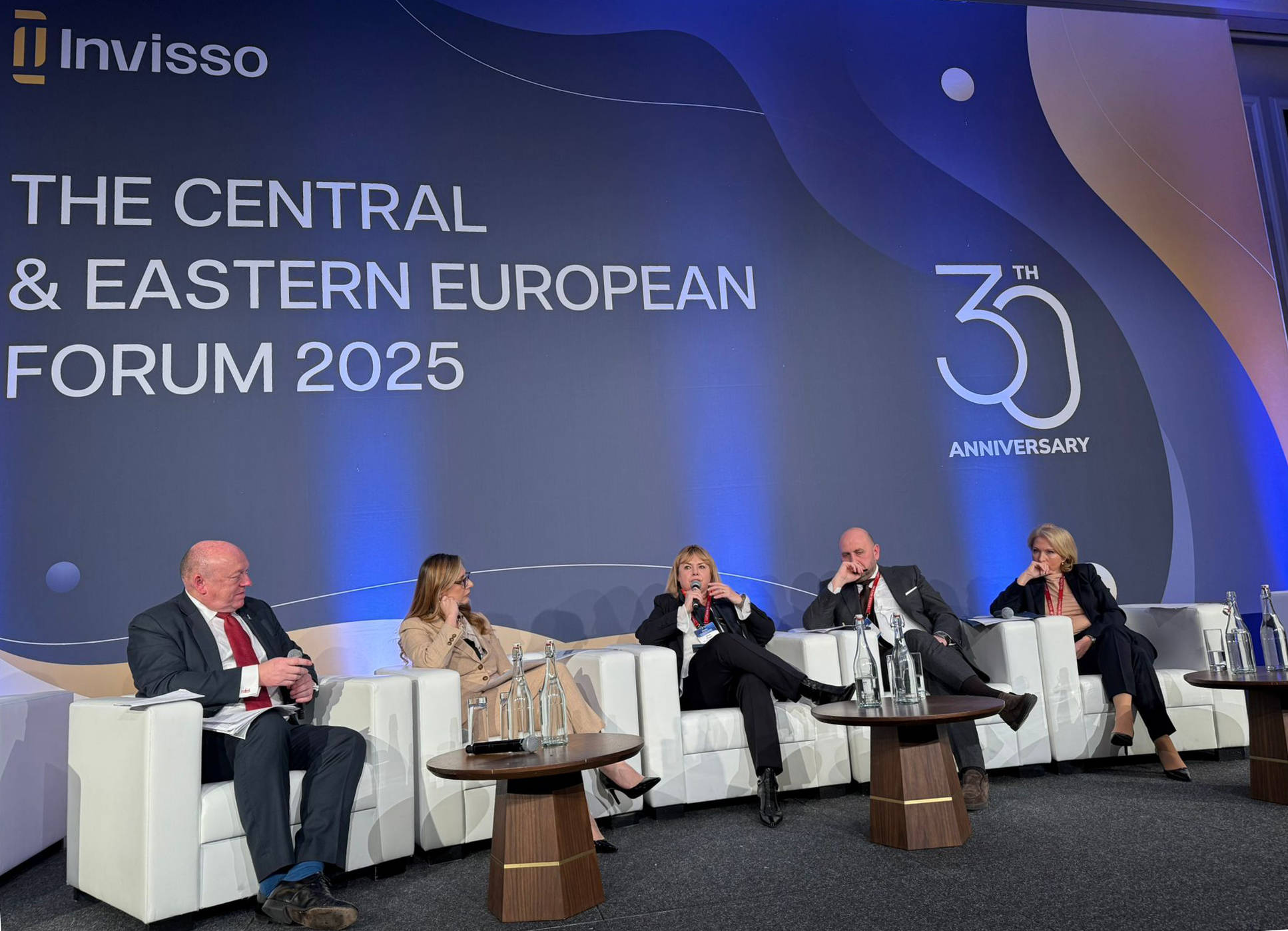
"In the current global economic context, marked by volatility and uncertainty, new opportunities are emerging for innovations in the financial sector and the transition to sustainable finance. At the same time, ensuring the stability of the financial sector through the appropriate use of monetary policy instruments contributes to stimulating economic growth and strengthening global economic resilience", stated Anca Dragu, Governor of the National Bank of Moldova, at the panel "Central banks after the storm", organized as part of the Central and Eastern Europe Forum (Invisso), held in Vienna.
In her presentation, Governor Dragu emphasized the importance of adapting monetary policies to the new realities in order to mitigate inflationary pressures and mentioned that the monetary policy of the National Bank of Moldova has contributed to limiting the inflationary shock, the second-round effects on core inflation and anchoring inflationary expectations.
"Through sound financial policies and a forward-looking vision, the National Bank is contributing to aligning with European standards and building a resilient and sustainable economy", added Ms. Anca Dragu.
The Governor further addressed the challenges related to financial stability, highlighting the extensive role of the NBM in supervising the financial system and preventing risks. In this context, the macro-prudential and resolution mandates of the NBM play an important role in aligning Moldova in with the highest international standards.
Another key point of the presentation was the NBM's commitment to sustainable finance: in this regard, the NBM has created and approved the Roadmap for Sustainable Finance - a strategic guidance document for entities in the financial sector as well as other stakeholders involved in the development and promotion of sustainable finance in the country. "This initiative supports both national and global objectives for the transition to a sustainable economy," the Governor noted.
The panel explored the lessons learned from recent economic and financial developments, in particular, the challenges faced by central banks in the region in managing the transition to a greener future and rebuilding economies, with a focus on the impact of the war in Ukraine.
Now in its 30th edition, the Forum is an important platform for the exchange of ideas and international collaboration. The event, held 0n 14-15 January 2025, brought together central bank leaders, renowned economists, government officials and private sector representatives to discuss current economic challenges and shape future solutions.