
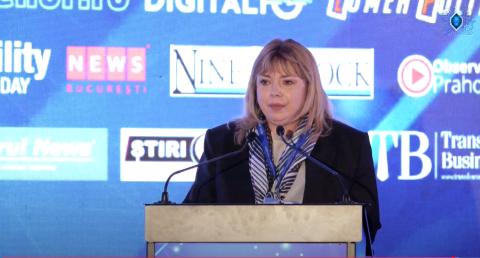
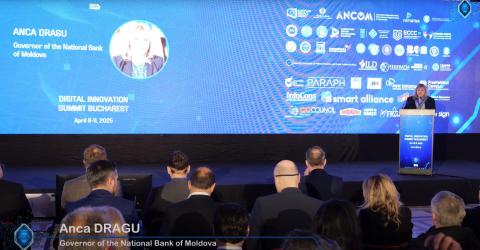
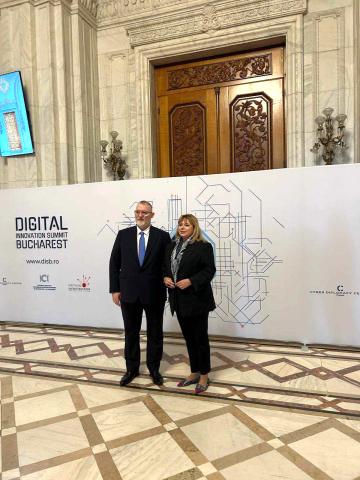
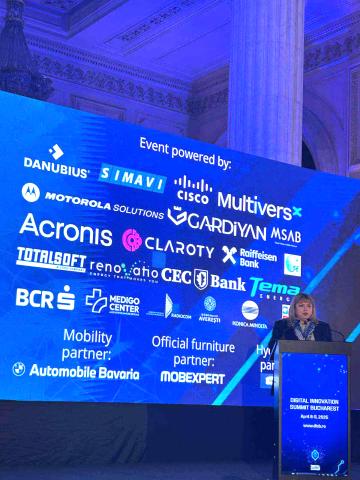
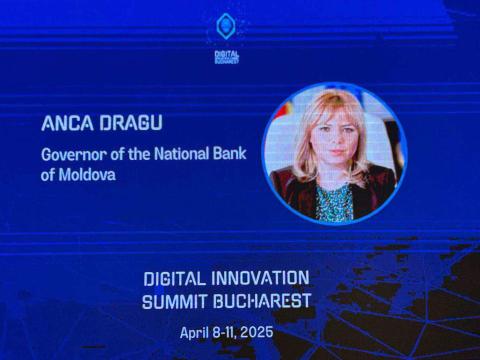
In her speech, Anca Dragu emphasized the importance of digital transformation in the financial sector and the role of central banks in implementing new technologies such as artificial intelligence, blockchain and advanced cybersecurity standards. "The presence of a central bank governor may have seemed unusual a few years ago, but today it is normal because we must adapt, implement new technologies, use artificial intelligence, blockchain, pay attention to cybersecurity," said the NBM Governor.
In the context of the European Union accession process, Ms Anca Dragu reiterated Moldova's commitment to aligning with European standards, mentioning that the country is at an advanced stage of legislative harmonization in the financial sector. The digitalization of finance is no longer just a trend, but a reality that brings concrete benefits: lower fees, increased access, faster speed and higher productivity.
"It is a priority not to wait passively for developments but to be an active part of the change. At the National Bank of Moldova, we are taking concrete action to integrate new technologies and deliver modern, secure and accessible financial services to citizens and businesses", pointed out the Governor.
In this context, the Governor referred to the initiatives of the National Bank of Moldova to modernize the payment system, strengthen cybersecurity and implement distributed ledger technology (DLT). Moldova is committed to aligning with the European Regulation on Markets in Crypto-Assets (MiCA) and other relevant EU regulations.
"Moldova has embraced digitalization as a catalyst for inclusion, innovation and sustainable growth. Moldova is a country with a high level of digitalization in public administration and all public services. Citizens and businesses benefit from fast and digitized services... Let us build together a future where finance is smarter, safer and more inclusive, a future where Moldova is at the centre of transformation," concluded the Governor.
The event brought together high-level officials from European and national institutions, as well as representatives from the academic and private sectors, to discuss the future of financial digitalization and the impact of new technologies on the global economy.