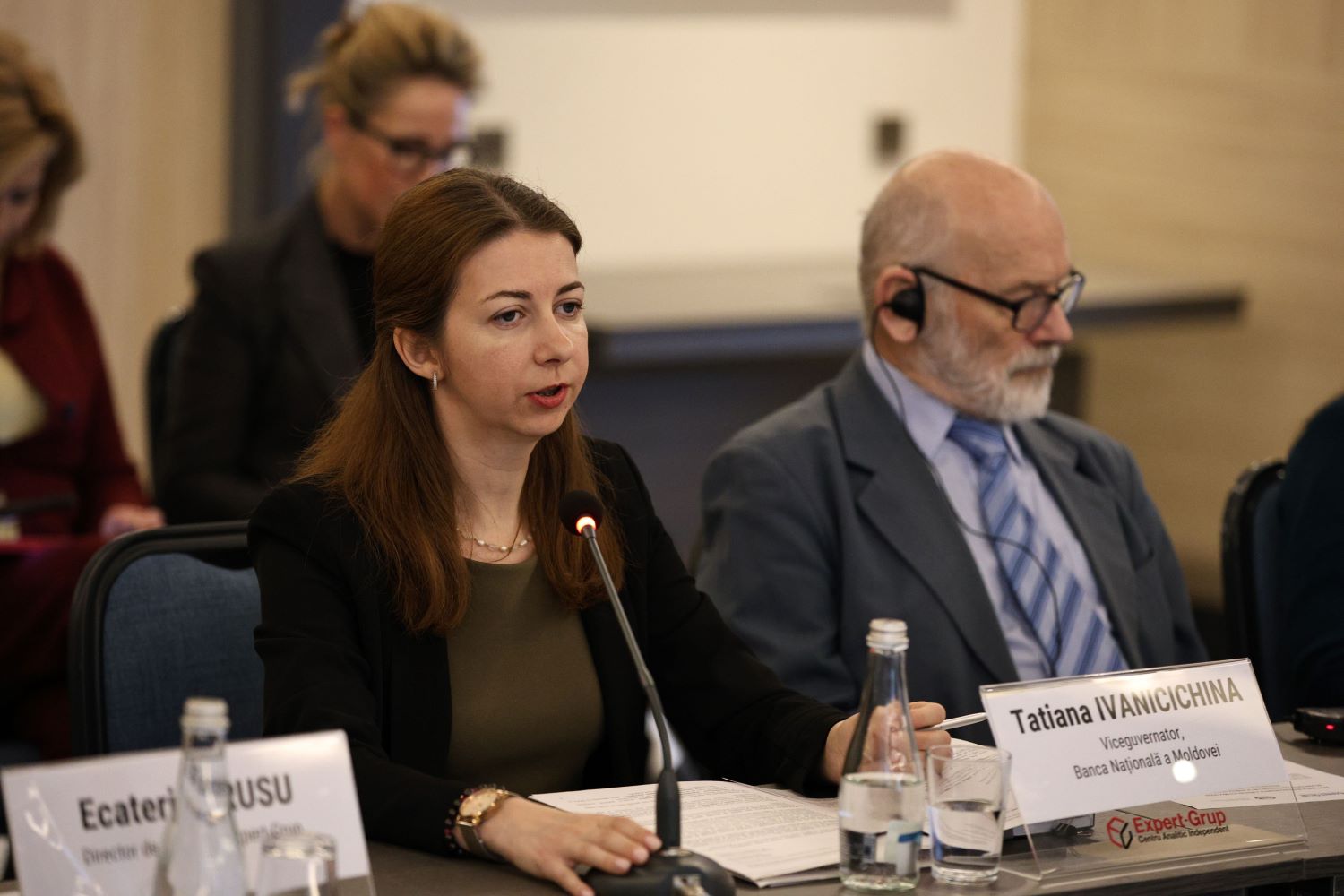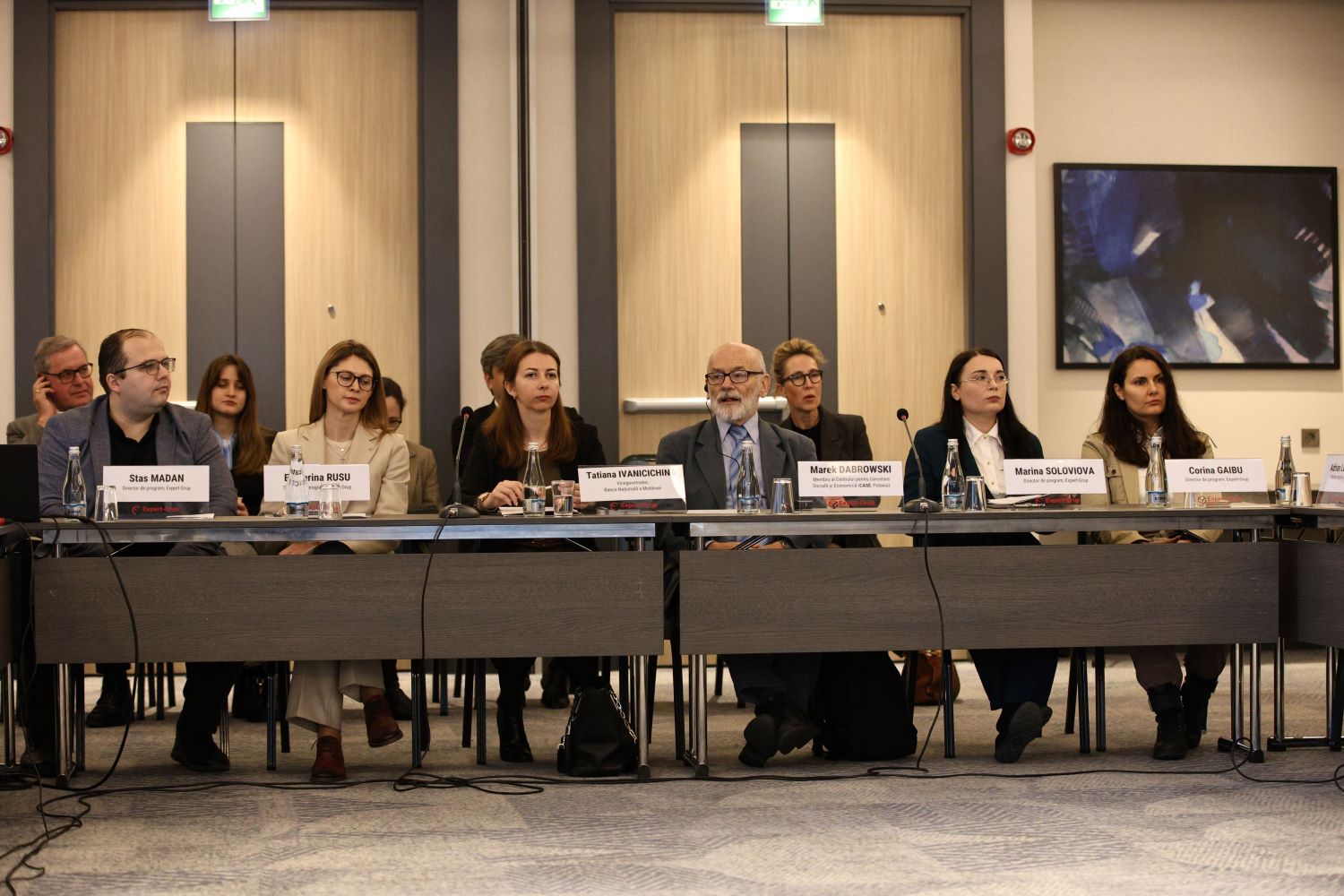
The Deputy Governor of the National Bank of Moldova, Tatiana Ivanicichina, participated in the round table discussion "Macroeconomic resilience of the Republic of Moldova in the context of regional and global security threats", organized by the Independent Think-Tank "Expert-Grup" and the Center for Social and Economic Research (CASE, Poland).
The NBM implements a prudent monetary policy adapted to market realities. The goal is to protect the economy from external shocks and maintain financial stability," emphasized Tatiana Ivanicichina.
The Deputy Governor mentioned that the central bank aims to ensure a safe banking system and create a predictable economic environment capable of supporting long-term development.
Tatiana Ivanicichina also addressed the importance of accelerating European financial integration. Joining SEPA is a crucial step in modernizing the financial infrastructure. It will facilitate cross-border transactions, increase efficiency, and reduce costs for citizens and businesses.
"The technological development of the financial system and digitization of payments are key priorities. They will increase financial inclusion and economic competitiveness. The NBM is actively collaborating with European and international institutions to implement best practices and adapt regulations to EU standards", stated the Deputy Governor of the central bank.
Tatiana Ivanicichina also highlighted the need for economic diversification. Supporting SMEs and stimulating innovation are essential for a competitive economic environment. These measures will contribute to economic growth and attract foreign investments.
"Economic stability and predictability are essential factors for strengthening confidence in the banking system. The NBM will continue to implement measures to support these objectives," the NBM Deputy Governor added.
During the discussions, Adrian Lupusor, Executive Director of "Expert-Grup", stated that the experts have identified certain risks for the coming period; however, there are also mitigating factors: "The role of the central bank is very important here, because the NBM is an independent, well capitalized central bank with high foreign exchange reserves, it promotes a prudent monetary policy and the national currency is maintained at a stable level."
The round table brought together representatives of central public authorities, delegates from international donors, economic experts, members of the academic community, and the banking sector. The event provided a forum for analysis and exchange of perspectives on the solutions needed to strengthen economic resilience. Discussions focused on measures for financial stability, reducing external vulnerabilities and increasing economic competitiveness in an increasingly complex regional and global context.