Welcome to the official website of the National Bank of Moldova!
×
Do you have good eyesight and want to turn this tool off?



Welcome to the official website of the National Bank of Moldova!
You can choose one of the most popular reports from the list:

National Bank and the members of its decision-making bodies shall be independent in exercising the tasks conferred upon them by law, and shall neither seek nor take instructions from public authorities or from any other authority.
In order to ensure and maintain price stability over the medium term, the National Bank’s aim will be to keep inflation (measured by Consumer Price Index) at the level of 5.0 percent annually with a possible deviation of ± 1.5 percentage points, considered to be optimal for growth and development of Moldova's economy over the medium-term.

Financial stability is achieved by strengthening the resilience of the financial system, limiting the contagion effect and reducing the accumulation of systemic risks, thus contributing to the sustainability of the financial sector and economic growth.
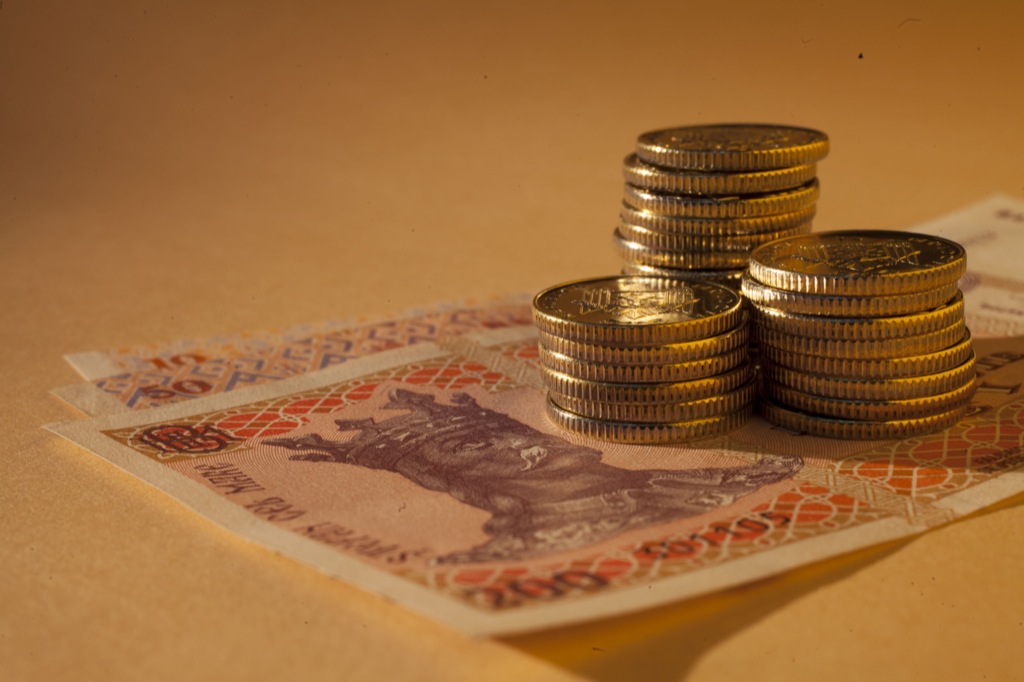
National Bank shall have the exclusive right to issue on the territory of the Republic of Moldova banknotes and coins as legal tender, as well as commemorative and jubilee banknotes and coins as legal tender and for numismatic purposes.

National Bank is exclusively responsible for the licencing, supervision and regulation of financial institutions activity.
National Bank of Moldova acts as banker and fiscal agent of the State and shall receive from state bodies economic and financial information and documents, which are necessary for carrying out its tasks.
National Bank of Moldova is an autonomous public legal entity and is responsible to the Parliament.

National Bank shall inform the public on the monetary policy strategy on the results of the macroeconomic analysis, the evolution of the financial market and on statistics, including with regard to monetary supply, crediting, balance of payments and the state of the foreign exchange market.

National Bank of Moldova is responsable for the compilation of the balance of payments, international investment position and the statistics of the external debt of the Republic of Moldova.


The discussion focused on the continuity of cooperation between the Republic of Moldova and the IMF, in the context of the authorities in Chișinău requesting the initiation of a new IMF program, without a financial component, which is expected to last for three years.
Governor Anca Dragu highlighted the importance of transitioning to a partnership focused on the credibility of policies, macroeconomic stability, and the implementation of structural reforms.
"The decision to opt for a non-financial instrument reflects the improvement of the Republic of Moldova's macroeconomic situation, which no longer justifies the need for emergency financing. The new program with the IMF will support the European integration agenda, strengthen investor confidence, and mobilise investments in the Republic of Moldova’s economy," said Ms Anca Dragu.
As part of the upcoming program, cooperation between the NBM and the IMF will focus on strengthening monetary policies, implementing the recommendations of the 2025 Financial Sector Assessment Program (FSAP), as well as strengthening the independence of the NBM and improving internal governance. The NBM-IMF partnership will validate that the Republic of Moldova's monetary and financial policy meets the standards of a future European Union member state.
The meeting also addressed the alignment of the financial framework with the European Union's acquis within the negotiation process. Additionally, the NBM is involved in implementing the Reform Agenda of the Republic of Moldova's Growth Plan for 2025-2027 by strengthening financial legislation, thereby contributing to the development of the private sector and improving the country’s economic governance. In this regard, ensuring effective synergy through a coordination mechanism between the new IMF program and the Reform Agenda is timely. Such an approach will help align economic and structural policy priorities, make more efficient use of available resources, and avoid overlaps or inconsistencies in the implementation of reforms.
On 27 February 2026, the IMF Executive Board acknowledged the authorities' interest in concluding a new agreement with the IMF, emphasising that maintaining relations through an IMF program will be crucial for revitalising the reform momentum and supporting Moldova's EU accession.


