Добро пожаловать на официальный сайт Национального банка Молдовы!
×
У вас хорошее зрение, и вы хотите отключить этот инструмент?



Добро пожаловать на официальный сайт Национального банка Молдовы!
Вы можете выбрать один из наиболее востребованных отчетов из списка:

Национальный банк и члены его руководящих органов независимы в осуществлении своих функций, установленных настоящим законом, и не могут обращаться за указаниями и получать таковые от органов публичной власти или какого-либо иного органа.
Стратегия денежной политики НБМ на среднесрочный период предусматривает поддержание количественного объектива инфляции на уровне 5.0% с возможным отклонением ± 1.5 процентных пункта – оптимальный уровень для устойчивого экономического роста и развития Республики Молдова на среднесрочный период.
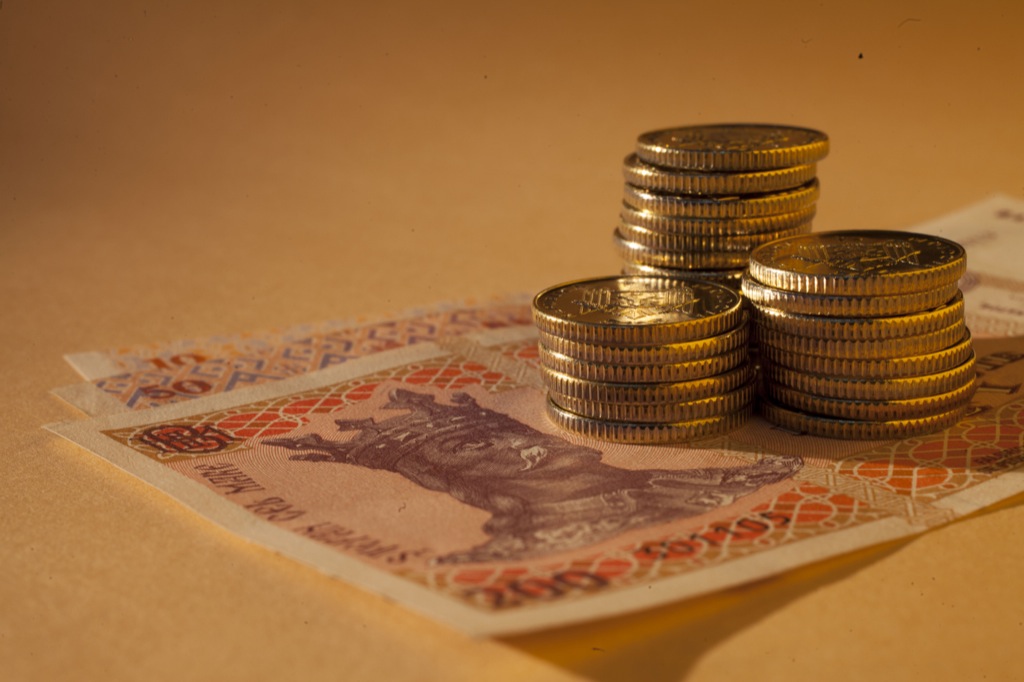
Национальный банк обладает исключительным правом эмиссии на территории Республики Молдова банкнот и монет в качестве платежного средства.

Национальный банк обладает исключительным правом лицензирования, осуществления надзора и регулирования деятельности финансовых учреждений.
Национальный банк имеет право покупать, продавать и негоциировать иностранную валюту, используя активы, покупать и продавать казначейские обязательства и другие ценные бумаги, выпущенные или гарантированные правительствами иностранных государств и международными финансовыми публичными организациями.

Национальный банк осуществляет надзор за системой платежей в республике и способствует стабильному и эффективному функционированию автоматизированной системы межбанковских платежей.

Национальный банк является самостоятельным публичным юридическим лицом и несет ответственность перед Парламентом.

Национальный банк информирует общественность о динамике годовой инфляции, о стратегии денежной политике, результаты макроэкономического анализа, анализа развития финансового рынка и статистическую информацию, в том числе относительно денежной массы, предоставления кредитов, платежного баланса и положения на валютном рынке.

Национальный банк проводит экономический и денежный анализ, составляет платежный баланс, международную инвестиционную позицию и разрабатывает статистику внешнего долга Республики Молдова.
Inflation Report, February 2026
Presentation of the report (available in Romanian)
In the fourth quarter of 2025, the annual inflation rate followed a relatively stable trajectory, rising from 6.86% in September 2025 to 6.99% in October and November 2025. In December 2025, it moderated to 6.84%. However, the average annual inflation rate was 6.94% in the fourth quarter of 2025, which was about 0.43 percentage points lower than in the previous quarter. Nevertheless, starting in December 2024 and throughout 2025, the annual inflation rate exceeded the upper limit of the range of variation of the inflation target, due to the dynamics of regulated prices in the context of adjustments to the tariffs for mains gas, thermal energy and electricity. Without the impact of these factors, the annual inflation rate was estimated to be within the range of variation of the inflation target during that period. At the same time, it was slightly higher than the value anticipated in the Inflation Report, November 2025. The annual increase in prices during 2025 was mainly driven by supply-side shocks, including adjustments to mains gas tariffs, thermal energy and electricity tariffs, as well as unfavorable agrometeorological conditions in the spring, which put pressure on food prices. According to estimates, aggregate demand continued to exert a disinflationary impact on prices in the reference quarter. The effect of a high base period associated with the adjustment of energy tariffs at the beginning of 2025 will cause the annual inflation rate to moderate and fall within the range of variation from the inflation target in the coming period. The manner in which tariffs are adjusted, as well as the tense situation in the region and the risks of its escalation, maintain the pronounced uncertainty associated with the inflation forecast.
The year 2025 ended on a note of heightened geopolitical uncertainty, with the breakdown of old traditions of economic and diplomatic cooperation and a war in the region lasting almost four years. In October 2025, Israel and Hamas reached a ceasefire agreement, brokered by the US. At the same time, in the last months of 2025, discussions on ending the war in Ukraine intensified, but did not yield any tangible results; on the contrary, armed attacks escalated. On January 3, 2026, in a combined air strike and special forces operation carried out by the US, Venezuelan President Nicolas Maduro and his wife were captured. The US president also resumed his rhetoric on the need to incorporate Greenland into the US by any means necessary. In Iran, street protests continued with harsh reprisals from the authorities, and the US threatened military action, which again triggered the risks associated with the closure of the Strait of Hormuz. On a different note, the independence of the US Federal Reserve is being called into question after the US president announced legal proceedings against Jerome Powell, the Chair of the US Federal Reserve. The most visible effect of economic and political uncertainty is the record high price of gold and other precious metals. The price of Brent crude oil had a low volatility, as the geopolitical risk premium is offset by increased oil supply from OPEC+. With inflationary pressures stabilizing and monetary equilibrium being achieved, most monetary authorities have slowed the pace of interest rate reductions. The US dollar continued to depreciate, reflecting the adverse effects of the trade war on the US. At the same time, the single European currency was influenced by fiscal problems in European countries and the risks associated with the continuation of the war in Ukraine. The Netherlands TTF natural gas price remained stable in the last months of 2025, but rose significantly in January 2026 due to low temperatures in Europe, which led to gas reserves falling below the average of the last five years and increased concerns about replenishing natural gas reserves in Europe in 2026. International food prices are stable, with no trade imbalances. The event of interest in the region is Bulgaria's transition to the single European currency on January 1, 2026, with subsequent adverse effects on consumer prices in the local market.
In the third quarter of 2025, annual GDP growth accelerated sharply, following negative values in the second half of 2024 and zero growth in the first half of 2025. In the period July-September 2025, GDP increased by 5.2% compared to the same period in 2024. This growth was marginally lower than that anticipated in the Inflation Report, November 2025. This development was mainly driven by the positive impact of domestic demand, both from the population, in the context of real income growth, and from economic agents. Net external demand supported this effect. At the same time, it is worth mentioning the positive impact on GDP dynamics from agriculture and construction. Smaller positive contributions were made by industrial production and real estate transactions. Meanwhile, the seasonally adjusted series reflects a 1.5% increase in GDP compared to the second quarter of 2025. In January-September 2025, GDP was 2.0% higher than in the same period of 2024.
In the fourth quarter of 2025, excess liquidity amounted to MDL 6.2 billion, up by MDL 861.2 million compared to the third quarter of 2025.
During this period, the M3 monetary aggregate recorded an annual growth rate of 11.1%. The main contribution came from the balance of deposits in the national currency.
During the fourth quarter of 2025, two meetings of the Executive Board of the National Bank of Moldova were held on monetary policy decisions. Following an assessment of the balance of domestic and external risks and the short- and medium-term inflation outlook, the Executive Board of the National Bank of Moldova at its meeting on November 6, 2025, decided to maintain the base rate at 6.00% (the level set on September 18, 2025), and subsequently, on December 11, 2025, decided to reduce the base rate applied to the main short-term monetary policy operations by 1.0 percentage points, to the level of 5.00% per annum. The required reserve ratio from funds attracted in MDL and non-convertible currency was reduced from 22.0% to 20.0% of the calculation base, and the required reserve ratio from funds attracted in freely convertible currency was reduced from 31.0% to 29.0% of the calculation base.
These measures were adopted with the aim of strengthening the position of supporting and stimulating aggregate demand, including by encouraging consumption and investment, balancing the national economy and the current account.
At the meeting on February 5, 2026, the Executive Board of the National Bank of Moldova unanimously voted to maintain the base rate at 5.00% annually, and the rates on standing facilities and repo operations were also maintained. At the same time, the required reserve ratio from funds attracted in MDL and non-convertible currency and from funds attracted in freely convertible currency was reduced, starting with the period of application of the required reserves from February 16, 2026 to March 15, 2026, to 18.0% and 26.0% of the calculation base, respectively.
The National Bank of Moldova, through its decision to simultaneously reduce the required reserve ratios in MDL and freely convertible currency, aims to cover the liquidity needs of the banking system, contributing to the increase in credit resources for the real and public sectors, thus strengthening its position of supporting aggregate demand, including by encouraging consumption and investment, balancing the national economy and the current account. At the same time, the effects of this measure to reduce the costs of liabilities attracted by the banking sector will unfold over time, contributing to lower interest rates on the money, deposit, and credit markets.
In the fourth quarter of 2025, in the national currency segment, the weighted average interest rates on new loans showed a downward trend, while term deposits continued their upward trend under the impact of previous monetary policy measures. Thus, the weighted average interest rate on loans was 9.12%, down by 0.24 percentage points, and that on deposits was 5.08%, up by 0.12 percentage points compared to the third quarter of 2025.
The average interest rates on the outstanding balance of loans in national currency decreased by 0.14 percentage points compared to the third quarter of 2025, to the level of 9.15%, while interest rates on term deposits increased by 0.38 percentage points, to 4.69%.
Forecasts regarding external assumptions at the beginning of the year are affected by geopolitical uncertainties. Although the global economy is expected to continue to grow gradually, reaching its potential will be overshadowed by the repercussions of geopolitical events on the international stage. With the fourth year of war in Ukraine and no progress in negotiations, tensions in the Middle East have shifted from Palestine to Iran, and trade tariffs have become the norm rather than the exception. European economies, although progressing gradually, will be affected by reciprocal trade tariffs with the US, fiscal deficit issues, and political tensions surrounding Greenland. As inflation in the euro area has reached its 2% target, a pause in ECB interest rate changes is anticipated. The evolution of US Federal Reserve interest rates is uncertain in the context of pressure exerted by the US president on the Federal Reserve. In 2026, the US dollar is expected to depreciate to a lesser extent than in 2025, as the initial effect of trade tariffs dissipates. Oil prices will continue to be affected by OPEC+'s policy of bringing previously limited production capacity back onto the market. European natural gas prices will be negatively influenced by the urgent need to replenish stocks in Europe, although weak demand from Asian countries could ease pressure on international market prices. In the absence of extraordinary circumstances, international food prices are expected to evolve in a balanced manner.
At the beginning of 2026, the annual inflation rate will decline, then remain relatively stable until the end of the year. At the beginning of next year it will record a further slight decline, subsequently stabilizing at the same level during the last three consecutive quarters of the forecast period1. In the first quarter of the forecast period2, the annual inflation rate will return to the range of variation from the inflation target and will remain close to the target until the end of the forecast period. The annual rate of core inflation will follow a downward trend starting in the second quarter of the forecast period and will increase slightly starting next year. The annual rate of food prices will continue its downward trend in the first two quarters of the forecast, and then, after rising at the end of 2026, will gradually decline towards the end of the forecast period. The annual growth rate of regulated prices will slow significantly in the first quarter of the forecast period, and after a slight increase during 2026, it will decline at the beginning of the following year, stabilizing towards the end of the forecast period. The annual rate of} fuel prices will register a negative value at the beginning of 2026, after which it will become positive and increase towards the end of the forecast period.
Aggregate demand will be negative throughout the forecast period, largely driven by restrictive real monetary conditions until the third quarter of 2027 and, to a lesser extent, by the negative fiscal impulse in the second half of 2026 and early 2027. Slightly positive external demand throughout the entire forecast period will act as an upward force on aggregate demand.
Real monetary conditions will be restrictive on aggregate demand throughout the forecast period, except for the last quarter, when they will be stimulative.
The current inflation forecast, compared to that in the previous inflation report3, has been revised upwards until the end of this year and downwards for the second and third quarters of 2027. The annual core inflation rate was increased at the beginning of this year and decreased for the rest of the comparable period4. The annual rate of food prices was revised downward in the first half of 2026 and upward for the rest of the comparable period. The annual rate of regulated prices was increased for the current year and decreased starting with the first quarter of 2027. The annual rate of fuel prices was revised upwards for the entire comparable period, except for the second quarter of 2027.
1 First quarter of 2026 – fourth quarter of 2027
2. First quarter of 2026
3. Inflation Report, November 2025
4. First quarter of 2026 – third quarter of 2027


