Welcome to the official website of the National Bank of Moldova!
×
Do you have good eyesight and want to turn this tool off?

Schedule of reception of citizens by the Executive Board of the National Bank of Moldova.
The registration of applicants for an audience is carried out based on a written request on the subject addressed.
Anca Dragu, Governor
1st Wednesday of the month: 14.00-16.00.
Petru Rotaru, First Deputy Governor
2nd Wednesday of the month: 14.00-16.00.
Tatiana Ivanicichina, Deputy Governor
3rd Wednesday of the month: 14.00-16.00.
Constantin Șchendra, Deputy Governor
4th Wednesday of the month: 14.00-16.00.
Mihnea Constantinescu, Deputy Governor
5th Wednesday of the month: 14.00-16.00.
Welcome to the official website of the National Bank of Moldova!
If you want to send a message (question or suggestion) on-line, go to section "Feedback" from the main menu at the top of the website.
You can choose one of the most popular reports from the list:

National Bank and the members of its decision-making bodies shall be independent in exercising the tasks conferred upon them by law, and shall neither seek nor take instructions from public authorities or from any other authority.

In order to ensure and maintain price stability over the medium term, the National Bank’s aim will be to keep inflation (measured by Consumer Price Index) at the level of 5.0 percent annually with a possible deviation of ± 1.5 percentage points, considered to be optimal for growth and development of Moldova's economy over the medium-term.
Financial stability is achieved by strengthening the resilience of the financial system, limiting the contagion effect and reducing the accumulation of systemic risks, thus contributing to the sustainability of the financial sector and economic growth.
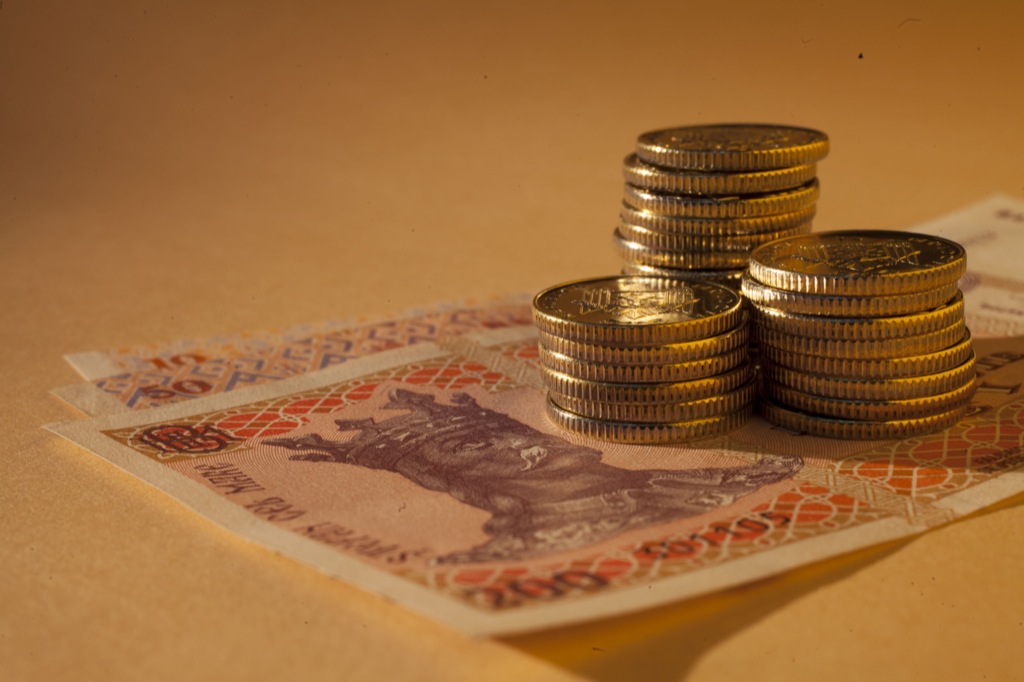
National Bank shall have the exclusive right to issue on the territory of the Republic of Moldova banknotes and coins as legal tender, as well as commemorative and jubilee banknotes and coins as legal tender and for numismatic purposes.

National Bank is exclusively responsible for the licencing, supervision and regulation of financial institutions activity.

National Bank of Moldova acts as banker and fiscal agent of the State and shall receive from state bodies economic and financial information and documents, which are necessary for carrying out its tasks.
National Bank of Moldova is an autonomous public legal entity and is responsible to the Parliament.

National Bank shall inform the public on the monetary policy strategy on the results of the macroeconomic analysis, the evolution of the financial market and on statistics, including with regard to monetary supply, crediting, balance of payments and the state of the foreign exchange market.

National Bank of Moldova is responsable for the compilation of the balance of payments, international investment position and the statistics of the external debt of the Republic of Moldova.
The website www.bnm.md prioritizes data security and uses cookies to enhance the browsing experience and user comfort. Accepting the use of cookies contributes to faster page loading and ensures the proper functioning of the information presentation modules. Refusing to use cookies may slow down the site’s loading speed and hinder smooth navigation between pages. For more details, please refer to the Cookie Usage Policy.
Configure your cookie preferences by category. Strictly necessary cookies cannot be disabled, as they are essential for the proper functioning of the website.
These cookies are fundamental to the correct operation of the website. They include session cookies used for load balancing and maintaining the application's state.
Cookies: cookiesession1, JSESSIONID
These cookies enable personalized features, such as font size preferences, interface state, and selection of desktop/mobile version.
Cookies: has_js, fontCookie, statistics_time, statistics_tooltip, bnm_coins_expansion, desktop_version
Such cookies help us understand how visitors interact with our site by collecting and reporting information anonymously.
Cookies: _ga, _gid, _gat, node_stat
These cookies store accessibility preferences, such as text size, contrast, cursor size, and animation settings.
Cookies: a11y_oversized_widget, a11y_animation, a11y_invert, a11y_contrast, a11y_dyslexic, a11y_cursor, a11y_factor
The non-cash foreign exchange market of the Republic of Moldova is determined by the turnover of purchase/sale transactions of the foreign currency that have taken place on different segments of the market, except those performed by the National Bank of Moldova.
The activity of the National Bank of Moldova on the foreign exchange market (foreign exchange interventions) is performed in strict compliance with the monetary and foreign exchange policy objectives.
Net (loss) /profit: (1,313,601) thousand MDL;
Total comprehensive result for the period: (1,303,495) thousand MDL;
(Total loss) /profit available for distribution: (262,149) thousand MDL.
Total assets: 64,464,537 thousand MDL;
Total liabilities: 55,478,996 thousand MDL;
Total capital and reserves: 8,985,541 thousand MDL.
During 2016, there were held twelve meetings of the Executive Board of the National Bank on Moldova on monetary policy decisions. Following the assessment of the balance of internal and external risks, which could be faced by the Moldovan economy and inflation forecasts on medium term, there were adopted five decisions to maintain and seven decisions to decrease the base rate applied to main monetary policy operations from the level of 19.5 percent to 9.0 percent annually.
This report elucidates the financial status of the National Bank and has no direct connection with the primary objective of ensuring and maintaining price stability.
Basel III aims to create a solid basis for regulating the prudential framework, including the capital adequacy and supervisory framework, market discipline, and to develop further the risk management principles and financial stability.
On 4 June 2017, the National Bank of Moldova organizes two concerts on the occasion of its 26th anniversary. NBM aims to enhance the domestic cultural environment by supporting both young and renown artists.
The key goal of the project was to assist the National Bank of Moldova (NBM) in strengthening its prudential supervision framework through approximation with the practices and standards applicable to the central banks of the EU countries. Also, the project aimed to improve the NBM prudential regulations, oriented to affirmation of a sound and competitive banking sector.
In April 2017, the total amount of net money transfers from abroad made in favour of individuals via licensed banks of the Republic of Moldova amounted to US$ 86.25 million (down by 7.2% as against April 2016).
This decision aims to reduce the inflation range of ± 1.5 percentage points from 5.0 percent inflation target on medium-term, overlapping with the support of saving and lending processes.
This project complies with the NBM strategic objectives, which aims to develop the supervision function of the NBM. Thus, the information solution related to the licensing, authorisation and notification process is a component part of the NBM programme on implementing the Central Risk Monitoring System and is the second component of this Central.
Weighted average interest rate on new loans in national currency granted in April 2017 was 10.63 percent, decreasing by 5.04 percentage points compared to the same period last year.
In April 2017, monetary base increased by MDL 101.3 million (0.3 percent) compared to the previous month and accounted for MDL 33706.2 million.
The Governor of the NBR, Mugur Isărescu, seemed convinced that thanks to this project, the banking sector of the Republic of Moldova is on the right way. In this context, the Head of the NBR made an appeal to banks of Romania to enhance their presence in the Republic of Moldova.

The activity of the National Bank of Moldova on the foreign exchange market (foreign exchange interventions) is performed in strict compliance with the monetary and foreign exchange policy objectives.
The non-cash foreign exchange market of the Republic of Moldova is determined by the turnover of purchase/sale transactions of the foreign currency that have taken place on different segments of the market, except those performed by the National Bank of Moldova.
The annual rate of inflationAnnual inflation rate represents the increase of consumer prices during a month this year compared with the same month last year. It is calculated as a ratio (expressed in percentage terms) between the price index during a month this year and price index during the same month last year, calculated on the same basis, minus 100. Statistical surveys on consumer prices are carried out by the National Bureau of Statistics (NBS). NBM sets its inflation target at the level of 5.0 percent annually, calculated based on the consumer price index (inflation rate for the last twelve months – each month of this year compared with the same month of last year), with a possible deviation of ±1.5 percentage points. (Source: Medium-term monetary policy strategy of the NBM. in February 2026 was 5,06 percent.
The National Bank of Moldova has improved the legal framework in the domain of monitoring transactions with the banks’ related persons. The main objective is to mitigate the risks to which the banks may be exposed as a result of engaging in such kind of transactions.
The annual average inflation rate will record the level of 6.8 percent in 2018 and 5.1 percent in 2018, respectively.
In the first quarter of 2017, the total amount of money transfers from abroad made in favour of individuals of the Republic of Moldova amounted to USD 251.77 million. It should be mentioned that a share of 85.3 percent of money transfers were carried out via money transfers systems (only in USD, EUR and RUB) without opening bank accounts, and the rest - via bank transfers (in various currencies).
The beneficiaries of the Twinning Project will be licensed banks and citizens of the Republic of Moldova, who will enjoy a reliable and stable banking system.
During the first quarter of 2017, the banking sector assets continued to increase and the banks became more resistant, being capitalised with a high level of liquidity.
The sanctions were applied for the infringement of the provisions of the Law on financial institutions and of other normative acts of the National Bank of Moldova while carrying out the function of administrator.
In March 2017, the total amount of net money transfers from abroad made in favour of individuals via licensed banks of the Republic of Moldova amounted to US$ 98.05 million (increasing by 6.6% as against March 2016).
The decision aims to maintain the inflation rate close to the target range of 5.0 percent over the medium-term, with a possible deviation of ± 1.5 percentage points.
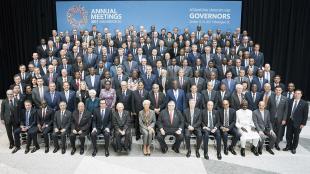
The implementation of the International Monetary Fund (IMF) program and the progress of the reforms in the banking system were the main topics discussed by the delegation of the Republic of Moldova during the Spring Meetings of the IMF and the World Bank Group. The event took place on 17-23 April 2017 in Washington, D.C..
According to Article 4 of the Law on the National Bank of Moldova, the fundamental objective is to ensure and maintain price stability.
1 Grigore Vieru Avenue,
MD-2005, Chisinau, Republic of Moldova.
© National Bank of Moldova
Terms of use
Cookie Usage Policy