Welcome to the official website of the National Bank of Moldova!
×
Do you have good eyesight and want to turn this tool off?



Welcome to the official website of the National Bank of Moldova!
You can choose one of the most popular reports from the list:

National Bank and the members of its decision-making bodies shall be independent in exercising the tasks conferred upon them by law, and shall neither seek nor take instructions from public authorities or from any other authority.

In order to ensure and maintain price stability over the medium term, the National Bank’s aim will be to keep inflation (measured by Consumer Price Index) at the level of 5.0 percent annually with a possible deviation of ± 1.5 percentage points, considered to be optimal for growth and development of Moldova's economy over the medium-term.

Financial stability is achieved by strengthening the resilience of the financial system, limiting the contagion effect and reducing the accumulation of systemic risks, thus contributing to the sustainability of the financial sector and economic growth.
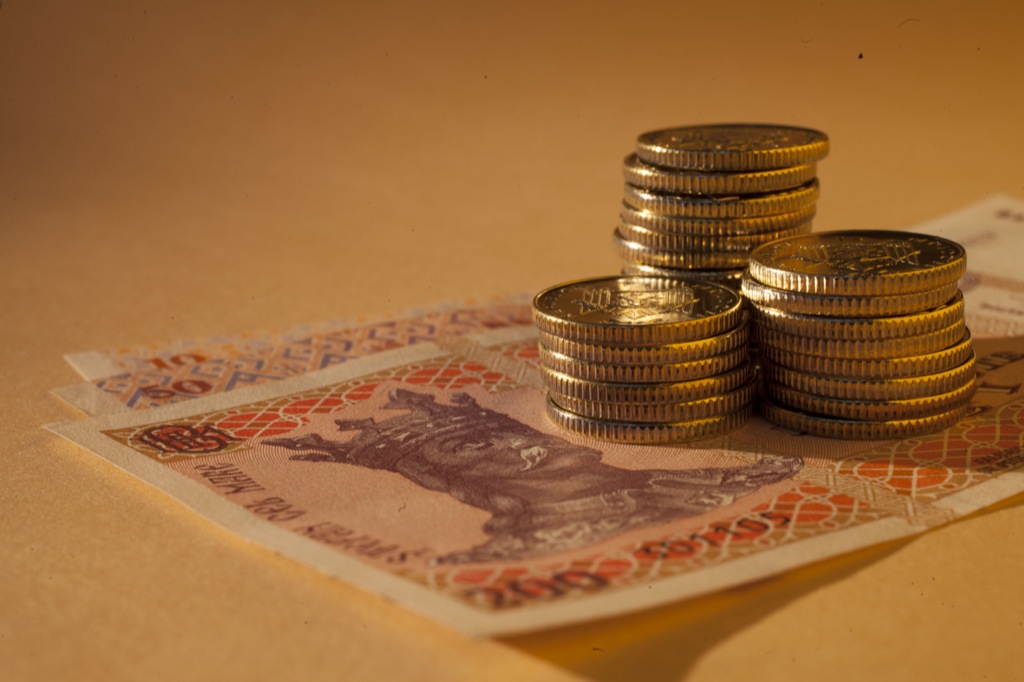
National Bank shall have the exclusive right to issue on the territory of the Republic of Moldova banknotes and coins as legal tender, as well as commemorative and jubilee banknotes and coins as legal tender and for numismatic purposes.

National Bank is exclusively responsible for the licencing, supervision and regulation of financial institutions activity.

National Bank of Moldova acts as banker and fiscal agent of the State and shall receive from state bodies economic and financial information and documents, which are necessary for carrying out its tasks.
National Bank of Moldova is an autonomous public legal entity and is responsible to the Parliament.

National Bank shall inform the public on the monetary policy strategy on the results of the macroeconomic analysis, the evolution of the financial market and on statistics, including with regard to monetary supply, crediting, balance of payments and the state of the foreign exchange market.

National Bank of Moldova is responsable for the compilation of the balance of payments, international investment position and the statistics of the external debt of the Republic of Moldova.
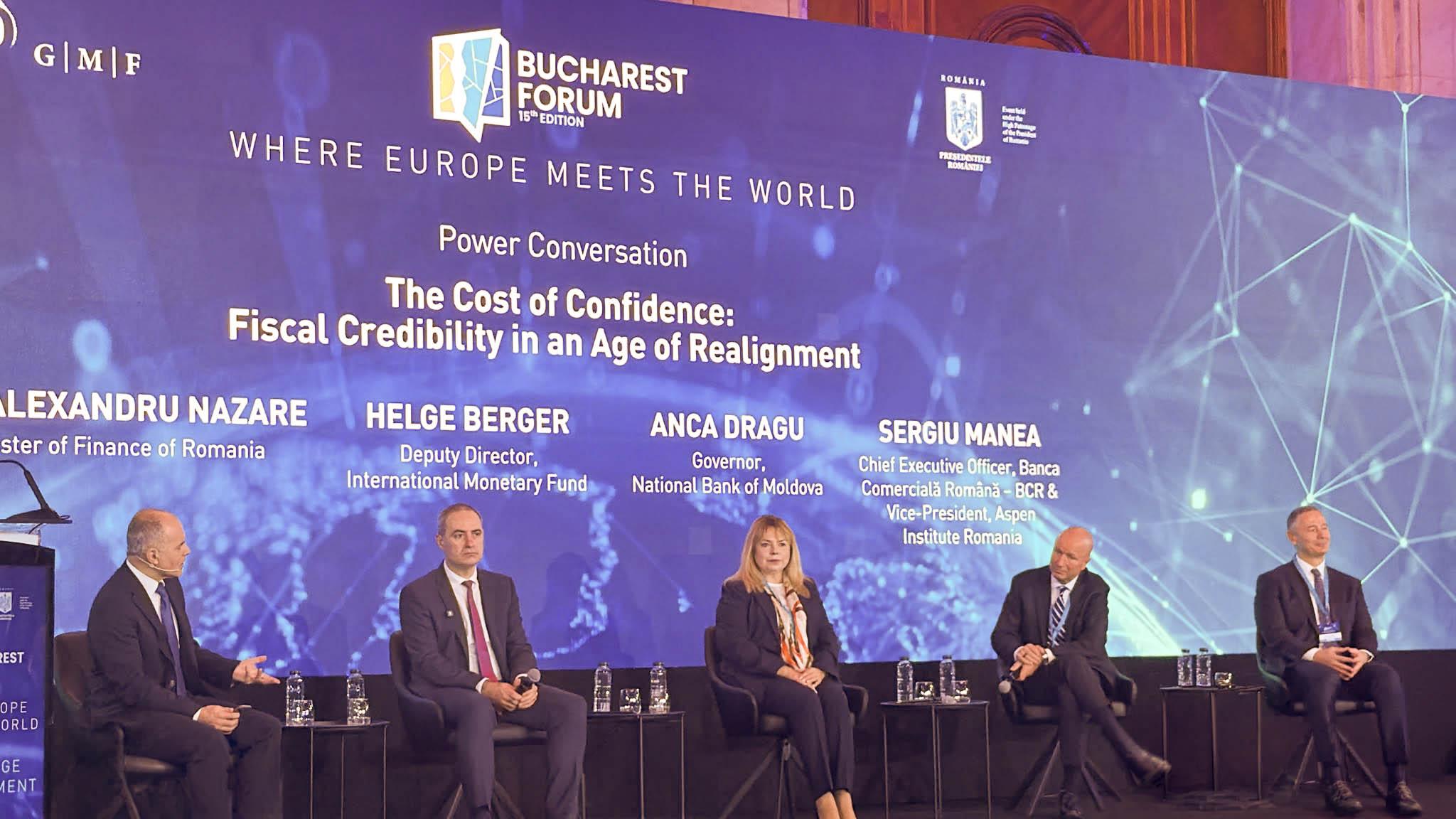

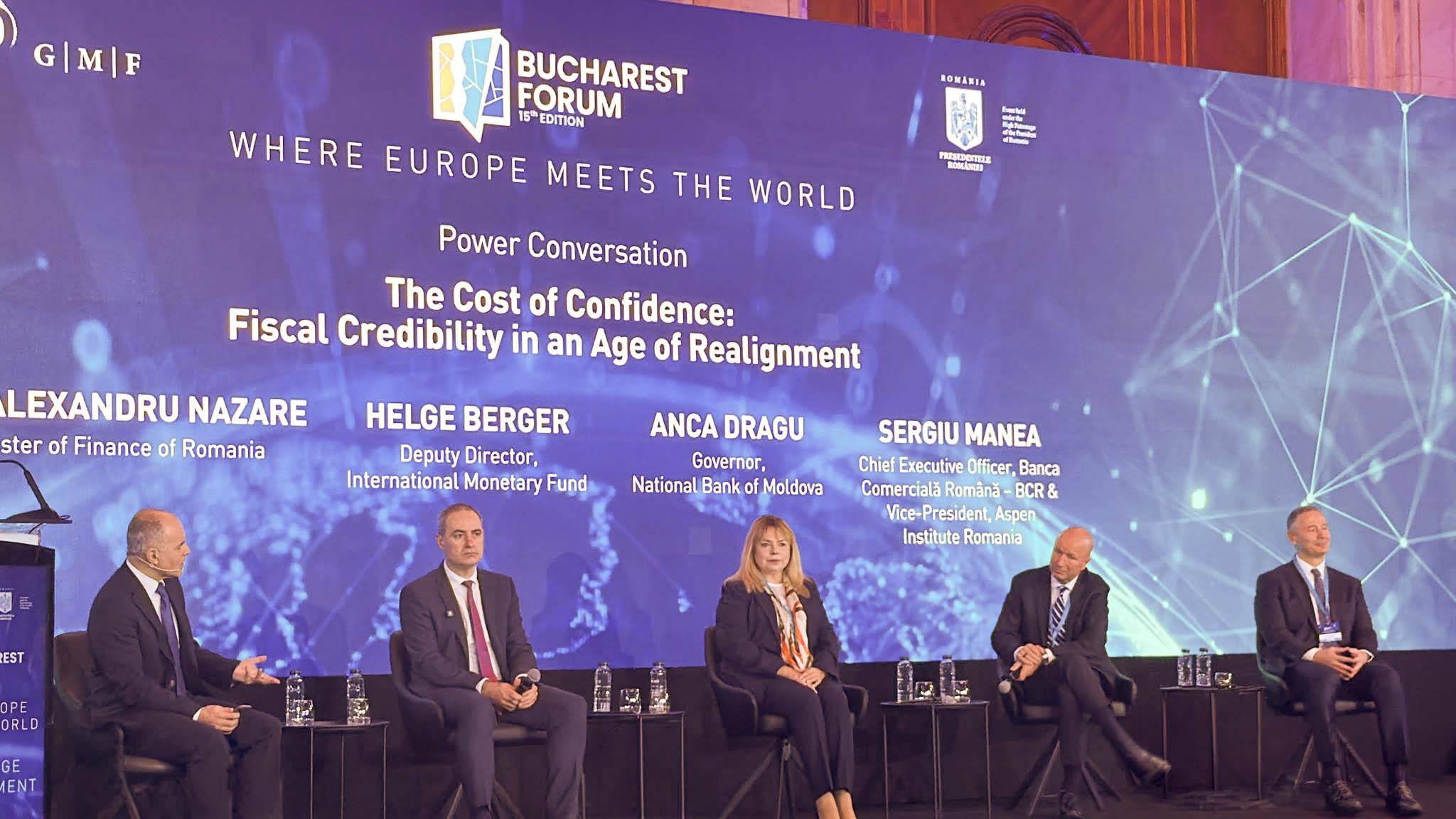
Today, 19 November 2026, the Governor of the National Bank of Moldova (NBM) Ms Anca Dragu participated in the Bucharest Forum, held at the Palace of Parliament in Bucharest. During the session entitled “The Cost of Confidence: Fiscal Credibility in an Age of Realignment”, the NBM Governor discussed the importance of maintaining financial stability through the implementation of sustainable fiscal policies, designed to facilitate states’ access to long-term financing on favourable terms, to ensure the sustainability of public debt and to maintain monetary stability.
Against the backdrop of the major geopolitical turbulence currently facing the European continent, the debate examined the implications for public budgets. At the same time, the panellists discussed the imperative of maintaining investor confidence and access to external financing, against a backdrop of high deficits and slower economic growth in Europe. Alongside the NBM Governor, the discussion featured Alexandru Nazare, Romania’s Minister of Finance; Helge Berger, Deputy Director of the European Department at the International Monetary Fund; and Sergiu Manea, Chief Executive Officer of Banca Comercială Română.
“Credibility goes beyond simply meeting budget deficit and public debt targets. It also reflects the predictability of policies, the transparency of public commitments and the state’s ability to achieve its medium-term fiscal and budgetary objectives. The National Bank of Moldova helps to maintain this predictability through a monetary policy aimed at stabilising prices and through supervision that assesses banks’ ability to withstand shocks. We are aligning banks’ capital and liquidity requirements with European Union standards. This allows investors to assess the soundness of banks in the Republic of Moldova using criteria comparable to those used in EU Member States,” stated Governor Anca Dragu.
The European Commission’s 2026 report on the Republic of Moldova recognises progress in strengthening the independence of the central bank and in aligning financial regulations with EU legislation. The Commission notes that the banking sector in the Republic of Moldova remains stable and well-capitalised. At the same time, the European Banking Authority is assessing the equivalence of the Republic of Moldova’s regulatory and prudential supervisory framework with that of the European Union.
Furthermore, the International Monetary Fund (IMF) study “Bridging Borders: Making the Most of EU Accession”, published in September 2026, highlights the fact that the Republic of Moldova has significant potential for economic growth and for income convergence towards the European Union average, provided that it replicates the reforms and level of integration achieved by the countries that joined the EU during previous waves of enlargement.
The Bucharest Forum is a public diplomacy event organised by the Aspen Institute Romania and the German Marshall Fund of the United States, under the High Patronage of the President of Romania. The 15th edition will take place on 19-20 November 2026, under the theme ‘On the Edge of Realignment’, and will bring together government officials, representatives of the business community and international experts.
The agenda of this edition examines how shifting alliances, competition for access to resources and technological progress influence the decisions of states and businesses. The debates focus on how businesses are adapting to geopolitical risks, the role of middle powers in forging new partnerships, and investments that can support competitiveness in sectors such as trade, energy, defence and healthcare. The forum also examines the contribution of regional and local authorities to preparing economies for shocks and helping them adapt to technological change.


