Welcome to the official website of the National Bank of Moldova!
×
Do you have good eyesight and want to turn this tool off?



Welcome to the official website of the National Bank of Moldova!
You can choose one of the most popular reports from the list:

National Bank and the members of its decision-making bodies shall be independent in exercising the tasks conferred upon them by law, and shall neither seek nor take instructions from public authorities or from any other authority.

In order to ensure and maintain price stability over the medium term, the National Bank’s aim will be to keep inflation (measured by Consumer Price Index) at the level of 5.0 percent annually with a possible deviation of ± 1.5 percentage points, considered to be optimal for growth and development of Moldova's economy over the medium-term.

Financial stability is achieved by strengthening the resilience of the financial system, limiting the contagion effect and reducing the accumulation of systemic risks, thus contributing to the sustainability of the financial sector and economic growth.

National Bank shall have the exclusive right to issue on the territory of the Republic of Moldova banknotes and coins as legal tender, as well as commemorative and jubilee banknotes and coins as legal tender and for numismatic purposes.

National Bank is exclusively responsible for the licencing, supervision and regulation of financial institutions activity.

National Bank of Moldova acts as banker and fiscal agent of the State and shall receive from state bodies economic and financial information and documents, which are necessary for carrying out its tasks.
National Bank of Moldova is an autonomous public legal entity and is responsible to the Parliament.

National Bank shall inform the public on the monetary policy strategy on the results of the macroeconomic analysis, the evolution of the financial market and on statistics, including with regard to monetary supply, crediting, balance of payments and the state of the foreign exchange market.

National Bank of Moldova is responsable for the compilation of the balance of payments, international investment position and the statistics of the external debt of the Republic of Moldova.
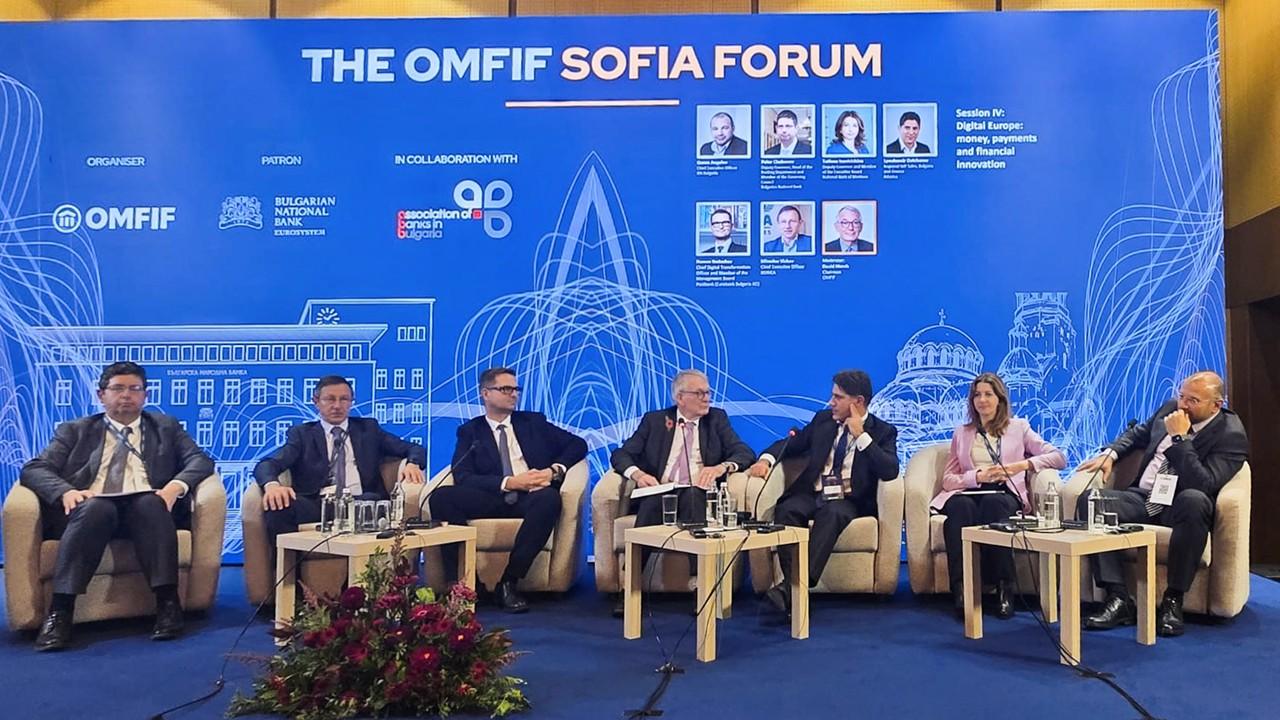
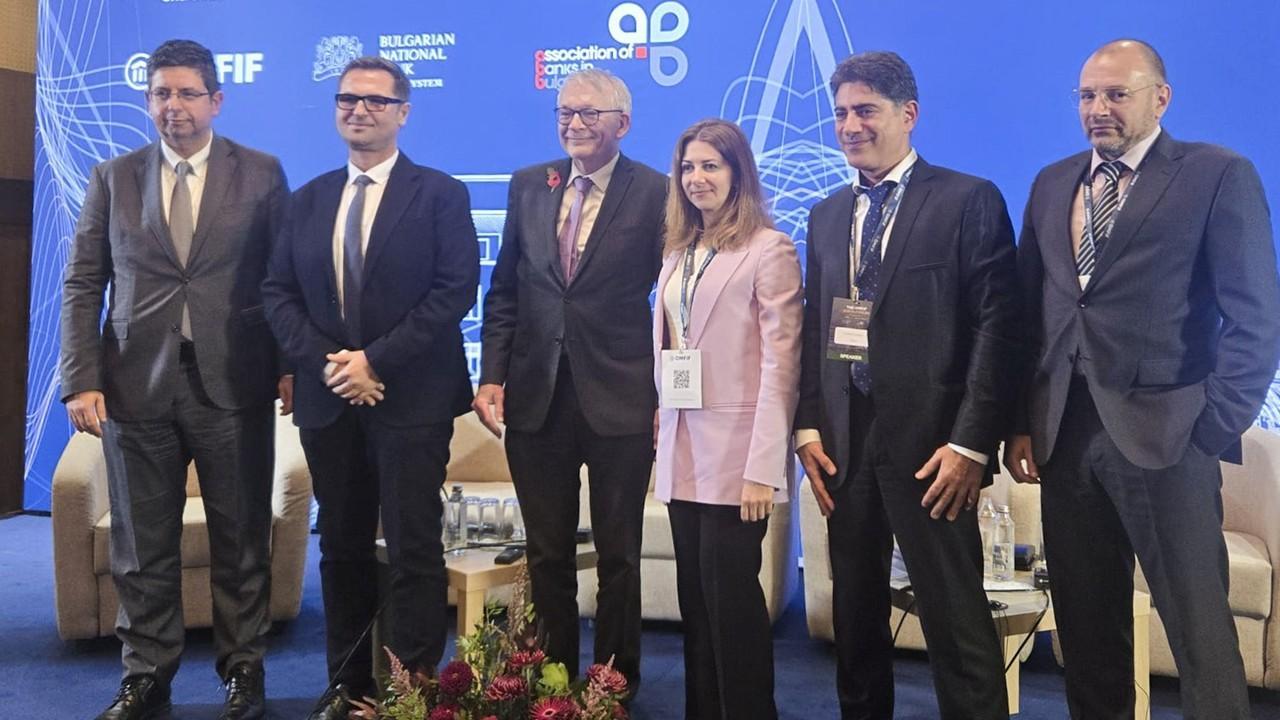
The Deputy Governor of the National Bank of Moldova (NBM), Ms Tatiana Ivanicichina, participated in the panel discussion “Digital Europe: money, payments, and financial innovation,” organised as part of the OMFIF Forum in Sofia, Bulgaria. The discussions focused on the modernisation of financial services, the interconnection of payment infrastructures, and the strengthening of security and trust in the use of digital solutions.
In her remarks, the NBM Deputy Governor presented the Republic of Moldova’s experience in developing instant payments and integrating into the European payments infrastructure, highlighting the results of participation in the Single Euro Payments Area (SEPA) and the implementation of the national MIA Instant Payments system.
Ms Tatiana Ivanicichina emphasised that participation in SEPA reflects the Republic of Moldova’s progress in aligning with European standards and contributes to strengthening economic ties with the European Union. In the first year of participation in SEPA, citizens and businesses saved approximately EUR 16.4 million (by transferring money via SEPA instead of using the traditional SWIFT system), and the average cost of a transfer in euros was reduced to approximately EUR 1 (previous fees for a transaction ranged from EUR 20 to EUR 150). Nationwide, MIA has reached over 1 million users, offering the ability to make payments in a matter of seconds, available 24/7. Both SEPA and MIA contribute to reducing costs, simplifying payments, and bringing the country closer to the European financial market.
The NBM Deputy Governor stressed the importance of these solutions for small businesses, including those in rural areas, as they enable them to accept digital payments at a low cost. At the same time, the use of European standards in the development of national infrastructure paves the way for interconnection with other instant payment systems and for closer integration with the European Union’s financial market.
During the discussions, Tatiana Ivanicichina pointed out that the modernisation of payment systems must go hand in hand with financial education, consumer protection, and support for people who are less familiar with digital technologies. Strengthening cybersecurity and operational resilience remains a priority to ensure that services are available at all times and that users have confidence in the security of their money and transactions.
The panel was moderated by David Marsh, Chairman and Chief Executive Officer of OMFIF, and brought together representatives from the Bulgarian National Bank, the payments infrastructure, the banking sector, and technology companies. Participants discussed, among other topics, the prospects for the digital euro, the use of artificial intelligence in financial services, and the development of secure and interoperable infrastructures.
Ms Ivanicichina is taking part in the forum as a member of the NBM delegation led by Governor Anca Dragu. At the same event, the NBM Governor delivered a speech during the session titled “Europe's next chapter - enlargement, competitiveness, and resilience,” which focused on European economic and financial prospects.
The OMFIF Sofia Forum brings together representatives of central banks, European and international financial institutions, the investment community, and the banking sector for a dialogue on European integration, competitiveness, and the digital transformation of economies.


