Welcome to the official website of the National Bank of Moldova!
×
Do you have good eyesight and want to turn this tool off?



Welcome to the official website of the National Bank of Moldova!
You can choose one of the most popular reports from the list:

National Bank and the members of its decision-making bodies shall be independent in exercising the tasks conferred upon them by law, and shall neither seek nor take instructions from public authorities or from any other authority.

In order to ensure and maintain price stability over the medium term, the National Bank’s aim will be to keep inflation (measured by Consumer Price Index) at the level of 5.0 percent annually with a possible deviation of ± 1.5 percentage points, considered to be optimal for growth and development of Moldova's economy over the medium-term.

Financial stability is achieved by strengthening the resilience of the financial system, limiting the contagion effect and reducing the accumulation of systemic risks, thus contributing to the sustainability of the financial sector and economic growth.

National Bank shall have the exclusive right to issue on the territory of the Republic of Moldova banknotes and coins as legal tender, as well as commemorative and jubilee banknotes and coins as legal tender and for numismatic purposes.

National Bank is exclusively responsible for the licencing, supervision and regulation of financial institutions activity.

National Bank of Moldova acts as banker and fiscal agent of the State and shall receive from state bodies economic and financial information and documents, which are necessary for carrying out its tasks.
National Bank of Moldova is an autonomous public legal entity and is responsible to the Parliament.

National Bank shall inform the public on the monetary policy strategy on the results of the macroeconomic analysis, the evolution of the financial market and on statistics, including with regard to monetary supply, crediting, balance of payments and the state of the foreign exchange market.

National Bank of Moldova is responsable for the compilation of the balance of payments, international investment position and the statistics of the external debt of the Republic of Moldova.
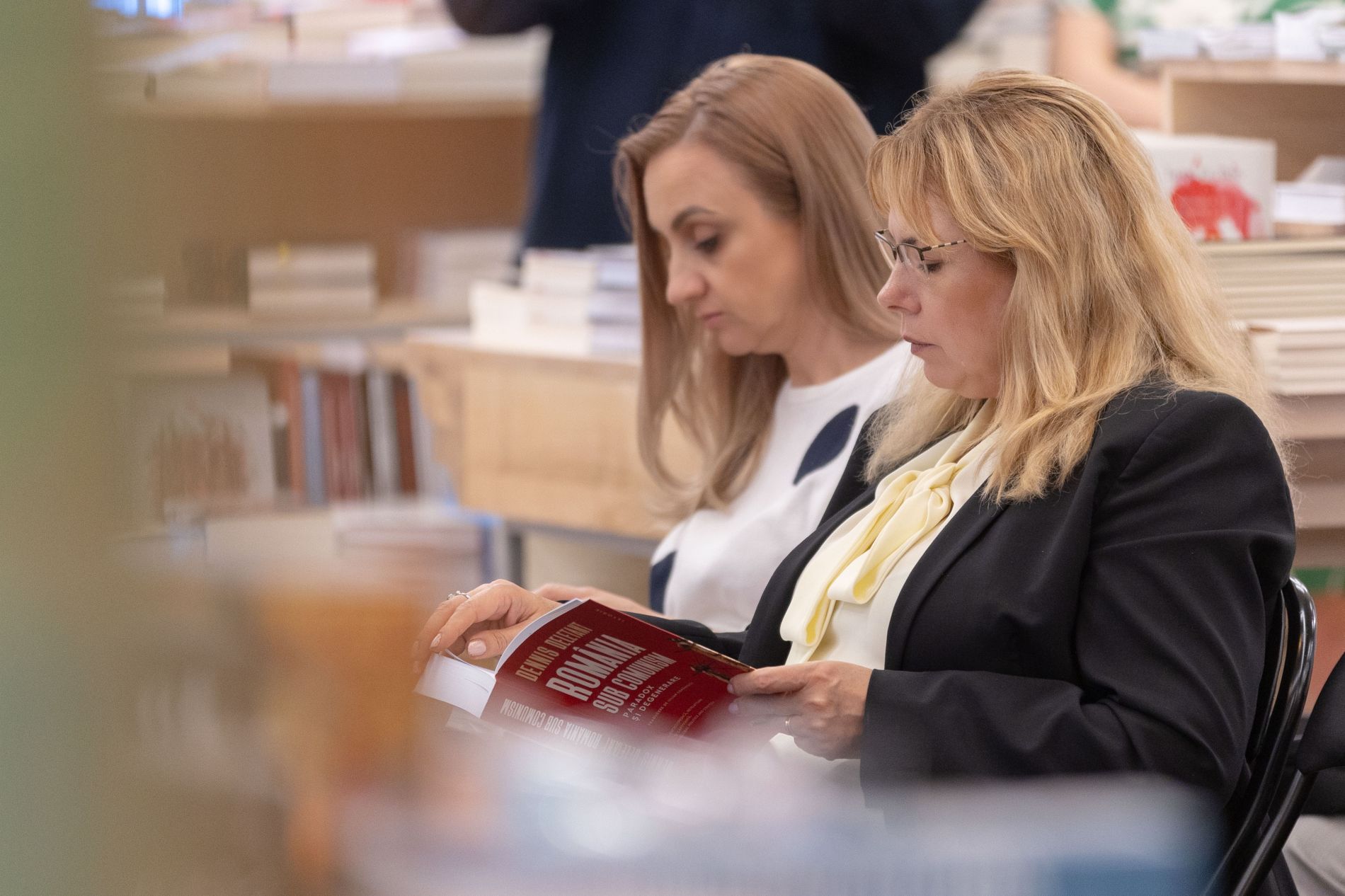
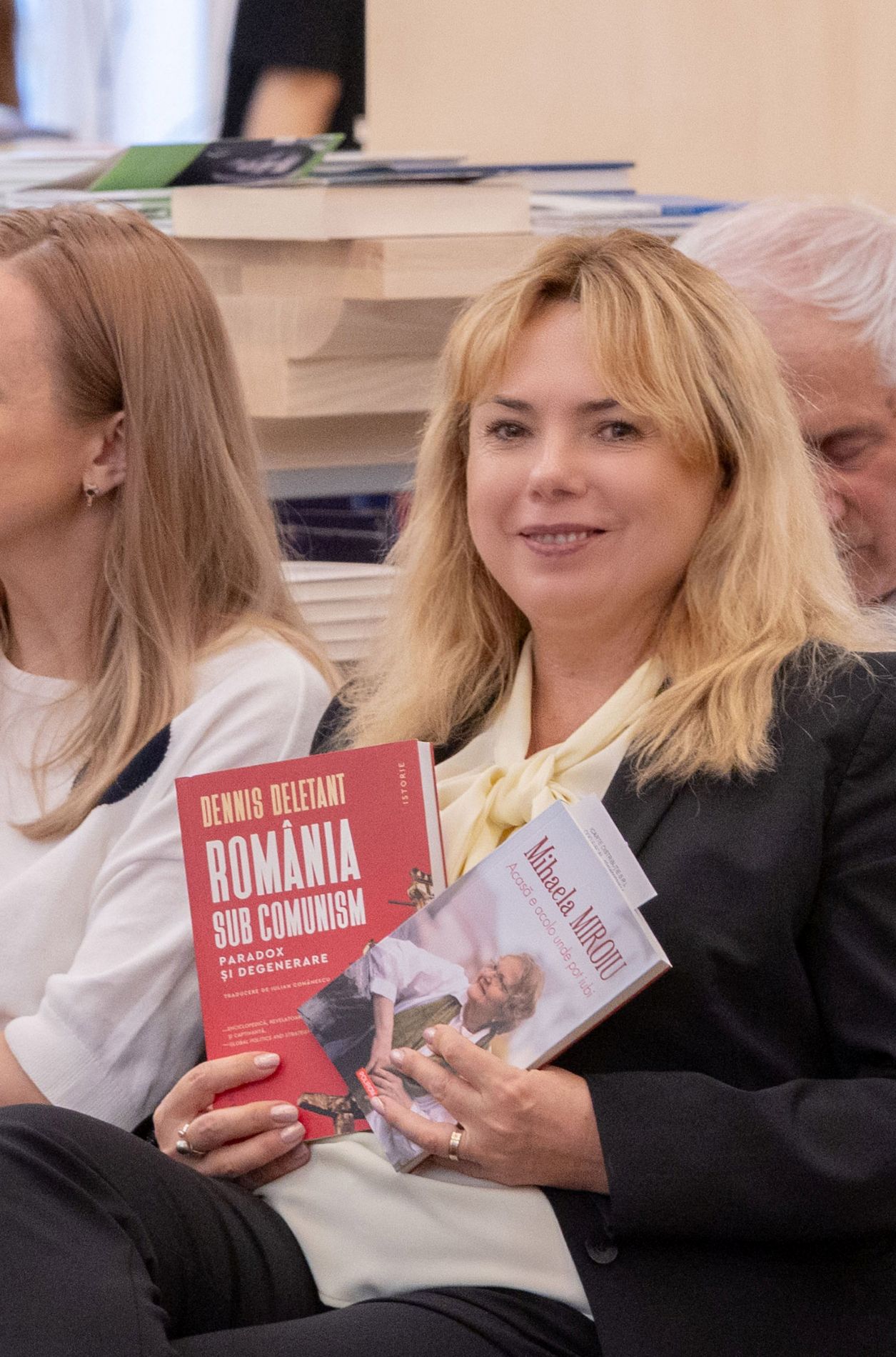

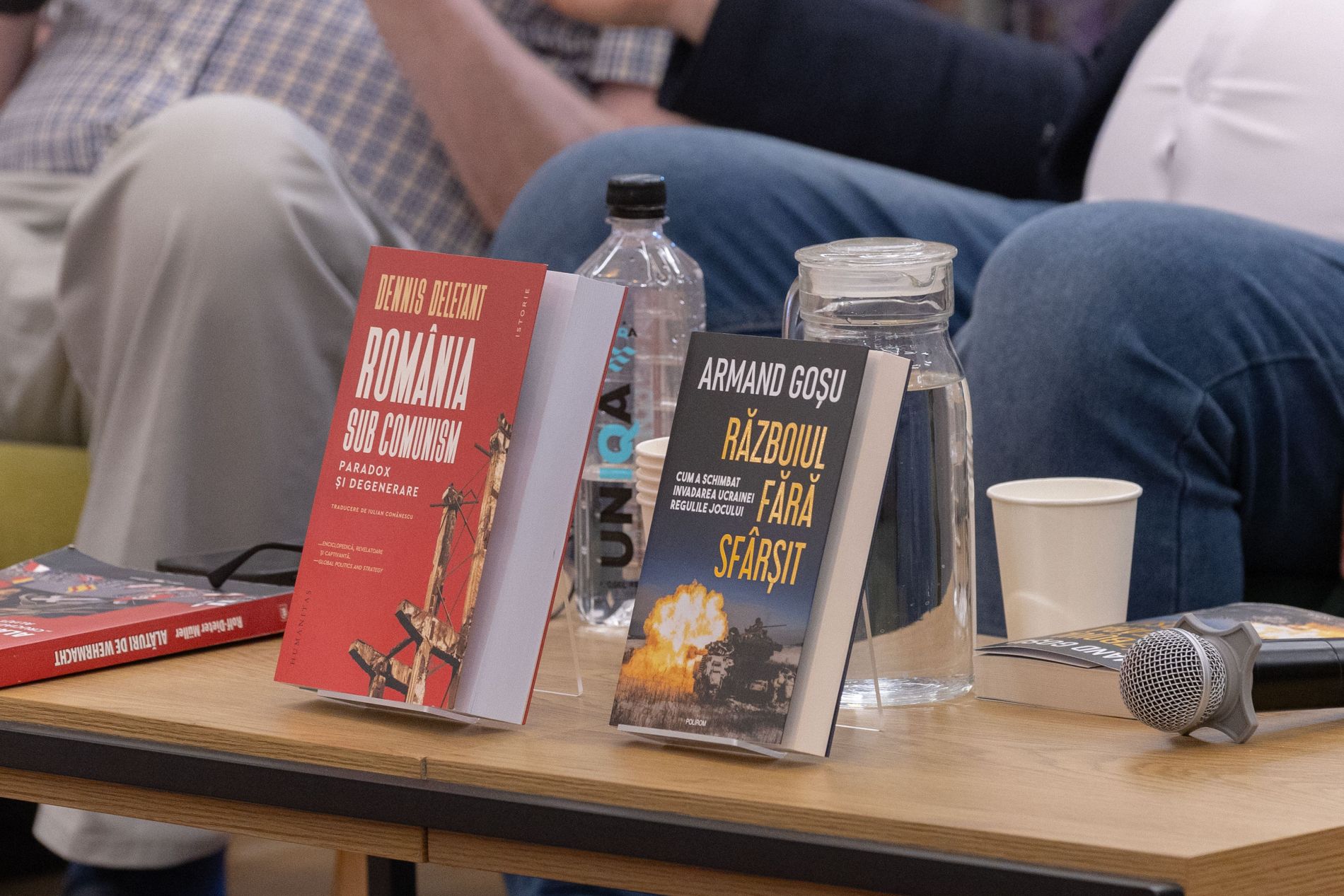
The Governor of the National Bank of Moldova, Ms Anca Dragu, took part in the launch of two recent volumes: “The Endless War. How the invasion of Ukraine changed the rules of the game” by Armand Goșu, and “Romania under Communism. Paradox and Degeneration” by Dennis Deletant.
The event provided an opportunity for a dialogue on history, communism, war, the resilience of societies, and the challenges of the contemporary world, drawing on two major themes: the analysis of the communist regime in Romania and reflection on the war in Ukraine, as well as its geopolitical, social, and economic consequences.
In the context of the event, the NBM Governor emphasised the importance of understanding recent history and current realities in order to strengthen democratic culture, critical thinking, and institutional responsibility.
“A society that understands its past and remains attentive to today’s realities has greater discernment, defends its freedom more effectively, and builds its institutions on responsibility and trust,” Ms Anca Dragu highlighted.
Referring to the regional context marked by the war in Ukraine, Ms Anca Dragu expressed compassion for those affected by the war and stressed the importance of peace, stability, and human solidarity.
“Our thoughts are with Ukraine and the people going through profound suffering. We hope that peace will come as soon as possible — a peace that restores people’s security and hope. In such times, we understand even more clearly how important solidarity, responsibility, and strong institutions are,” Ms Anca Dragu stated.
The NBM Governor noted that cultural and academic dialogues contribute to a better understanding of the regional and international context, in a period marked by geopolitical uncertainty, economic transformation, and security challenges.
“Public institutions have a responsibility to remain anchored in the values of transparency, professionalism, and integrity. Trust is built through knowledge, dialogue, and the ability to understand the lessons of history,” Ms Anca Dragu emphasised.
The event brought together representatives of the academic, cultural, and institutional spheres, as well as members of the public interested in recent history, geopolitics, and developments in the contemporary world.
The two works offer a complementary perspective on realities that have profoundly shaped our region.
The volume “Romania under Communism. Paradox and Degeneration” by Dennis Deletant provides an extensive analysis of more than four decades of communist dictatorship in Romania, based on archival research, testimonies, and the author’s direct experience in studying Romanian society. The book brings back into focus the repressive mechanisms of the regime, their consequences for people and institutions, as well as the traces left in collective memory. Through the rigour of its documentation and the balanced approach of a historian deeply connected to the Romanian space, the volume contributes to a clearer understanding of the recent past and the lessons it conveys to the present.
The volume “The Endless War. How the invasion of Ukraine changed the rules of the game” by Armand Goșu compiles interviews and articles in the context of the war in Ukraine and the geopolitical changes brought about by the Russian invasion. The author analyses Moscow’s strategies, developments in peace negotiations, the role of the West, the impact of new military technologies, including the use of drones, as well as the difficulty of building a lasting peace. Through the in-depth knowledge of the post-Soviet space, historian Armand Goșu offers an applied interpretation of recent events and their consequences for European security, Ukraine, and the international order.


