Welcome to the official website of the National Bank of Moldova!
×
Do you have good eyesight and want to turn this tool off?



Welcome to the official website of the National Bank of Moldova!
You can choose one of the most popular reports from the list:

National Bank and the members of its decision-making bodies shall be independent in exercising the tasks conferred upon them by law, and shall neither seek nor take instructions from public authorities or from any other authority.

In order to ensure and maintain price stability over the medium term, the National Bank’s aim will be to keep inflation (measured by Consumer Price Index) at the level of 5.0 percent annually with a possible deviation of ± 1.5 percentage points, considered to be optimal for growth and development of Moldova's economy over the medium-term.

Financial stability is achieved by strengthening the resilience of the financial system, limiting the contagion effect and reducing the accumulation of systemic risks, thus contributing to the sustainability of the financial sector and economic growth.
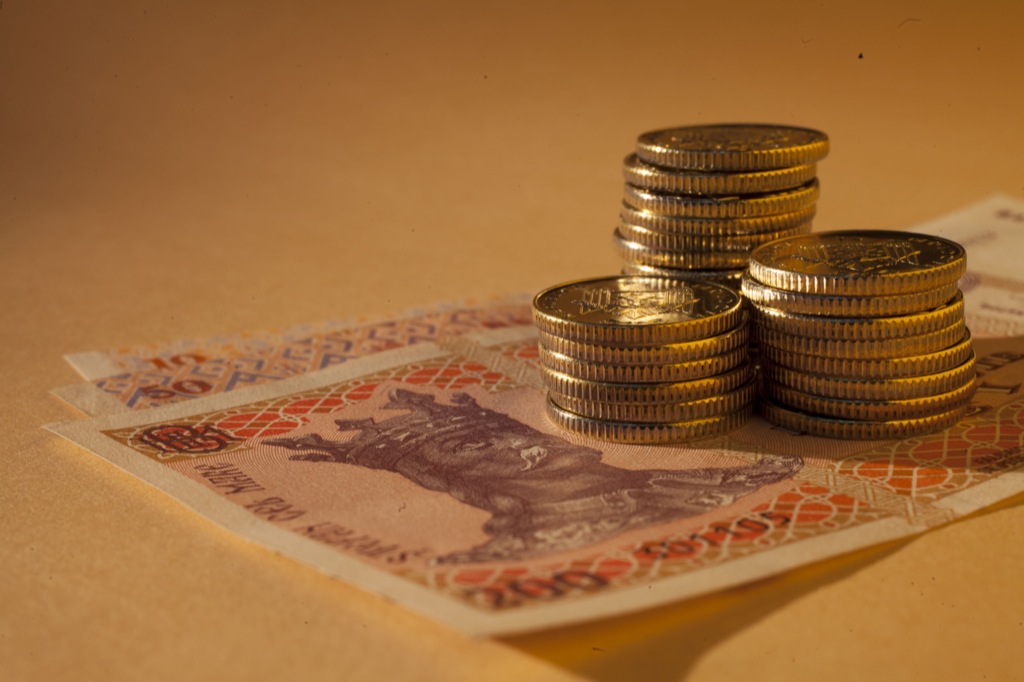
National Bank shall have the exclusive right to issue on the territory of the Republic of Moldova banknotes and coins as legal tender, as well as commemorative and jubilee banknotes and coins as legal tender and for numismatic purposes.

National Bank is exclusively responsible for the licencing, supervision and regulation of financial institutions activity.
National Bank of Moldova acts as banker and fiscal agent of the State and shall receive from state bodies economic and financial information and documents, which are necessary for carrying out its tasks.
National Bank of Moldova is an autonomous public legal entity and is responsible to the Parliament.

National Bank shall inform the public on the monetary policy strategy on the results of the macroeconomic analysis, the evolution of the financial market and on statistics, including with regard to monetary supply, crediting, balance of payments and the state of the foreign exchange market.

National Bank of Moldova is responsable for the compilation of the balance of payments, international investment position and the statistics of the external debt of the Republic of Moldova.
The National Bank of Moldova in collaboration with the International Finance Corporation (IFC, member of the World Bank Group) and Ceres (a nonprofit organisation), recently organised an online session titled "The impact of climate risk on the insurance sector in the Republic of Moldova", aimed at NBM representatives and insurance companies.
Climate change is increasingly affecting insurance markets worldwide, with losses from natural disasters surpassing USD 280 billion in 2023. Similar risks are already apparent in the Republic of Moldova, where flooding, droughts, and extreme weather events have caused significant losses in recent decades. This context highlights the importance of adopting international best practices and early preparation to strengthen the resilience, accessibility, and sustainability of Moldova’s insurance sector, as well as align with international standards.
The session brought together experts from the United States (Ceres, the National Association of Insurance Commissioners), the European Union (the European Insurance and Occupational Pensions Authority, EIOPA), and the region. They discussed how climate risks are increasingly influencing insurance markets, regulatory expectations, and global financial stability.
The key takeaways showed that climate risks impact the availability, accessibility, and solvency of insurance products, with direct implications for financial stability. Participants examined case studies from the US and EU on the disclosure of climate risk-related information, stress testing, market responses, and approaches for integrating climate data into underwriting processes, pricing, and the development of insurance products. Additionally, the initial steps insurers and regulators can take to strengthen their resilience and align with emerging international standards were presented.
The training is part of an ongoing capacity-building initiative and is implemented in cooperation with the IFC Sustainable Finance Project in Moldova, supported by the Facility for Investment Climate Advisory Services (FIAS).


