Welcome to the official website of the National Bank of Moldova!
×
Do you have good eyesight and want to turn this tool off?



Welcome to the official website of the National Bank of Moldova!
You can choose one of the most popular reports from the list:
National Bank and the members of its decision-making bodies shall be independent in exercising the tasks conferred upon them by law, and shall neither seek nor take instructions from public authorities or from any other authority.

In order to ensure and maintain price stability over the medium term, the National Bank’s aim will be to keep inflation (measured by Consumer Price Index) at the level of 5.0 percent annually with a possible deviation of ± 1.5 percentage points, considered to be optimal for growth and development of Moldova's economy over the medium-term.

Financial stability is achieved by strengthening the resilience of the financial system, limiting the contagion effect and reducing the accumulation of systemic risks, thus contributing to the sustainability of the financial sector and economic growth.
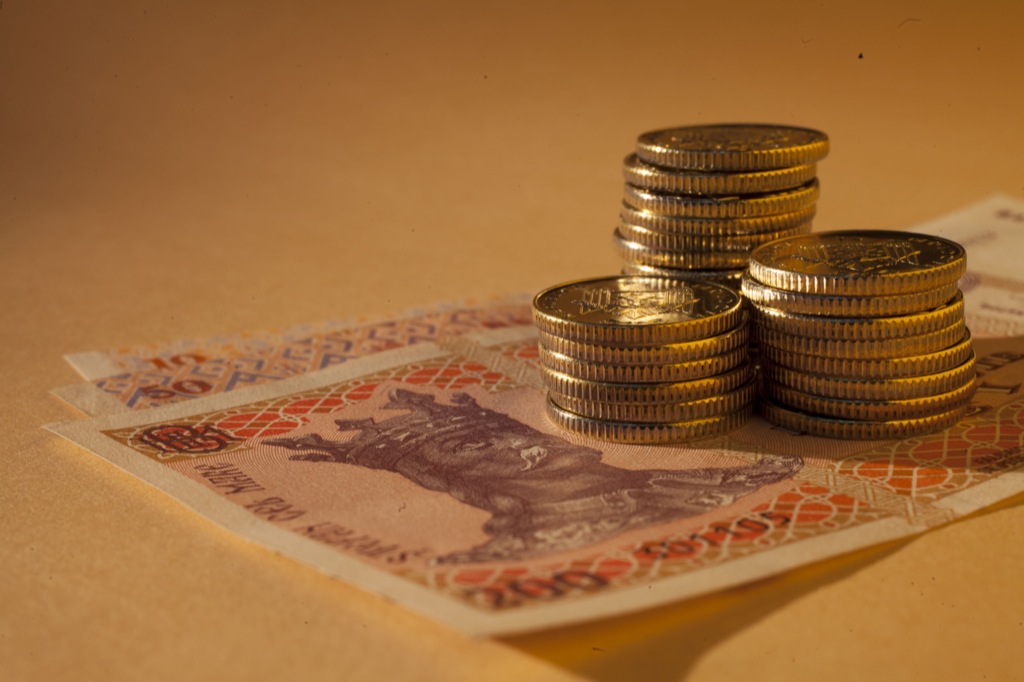
National Bank shall have the exclusive right to issue on the territory of the Republic of Moldova banknotes and coins as legal tender, as well as commemorative and jubilee banknotes and coins as legal tender and for numismatic purposes.

National Bank is exclusively responsible for the licencing, supervision and regulation of financial institutions activity.
National Bank of Moldova acts as banker and fiscal agent of the State and shall receive from state bodies economic and financial information and documents, which are necessary for carrying out its tasks.
National Bank of Moldova is an autonomous public legal entity and is responsible to the Parliament.

National Bank shall inform the public on the monetary policy strategy on the results of the macroeconomic analysis, the evolution of the financial market and on statistics, including with regard to monetary supply, crediting, balance of payments and the state of the foreign exchange market.

National Bank of Moldova is responsable for the compilation of the balance of payments, international investment position and the statistics of the external debt of the Republic of Moldova.
Dezvoltarea sectorului financiar non-bancar, combaterea şi prevenirea spălării banilor, dar şi modernizarea sistemelor de plăţi - sunt doar câteva dintre obiectivele ce urmează a fi atinse de Banca Naţională în 2021. Vă invităm să citiţi, în exclusivitate, un interviu oferit de Guvernatorul Băncii Centrale, Octavian Armaşu, postului naţional de televiziune.
Domnule Armaşu, care sunt principalele realizări ale Băncii Naţionale în anul 2020?
Pentru toată lumea a fost un an mai dificil, mai provocator. A fost şi pentru Banca Naţională la fel. Cu toate acestea, eu cred că noi am reuşit multe lucruri. În primul rând, noi trebuie să ne aducem aminte că în acest an am finalizat un program cu Fondul Monetar Internaţional, pe care chiar Fondul Monetar Internaţional l-a caracterizat ca unul de success. Sigur că Banca Naţională a fost în centrul acestui program, pentru că programul era axat pe reforma sectorului bancar şi această reformă a fost una de anvergură şi una de success. Pe lângă asta sigur că au fost şi mai multe lucruri realizate. Noi am semnat un acord cu Banca Centrală Europeană care ne ajută să supraveghem mai bine băncile din Republica Moldova.
Anul 2020 a fost unul dificil, ţinând cont de situaţia pandemică generată de Coronavirus. Cum a fost afectat sectorul bancar?
Republica Moldova în general ca ţară a intrat destul de pregătită în această criză. Datorită reformelor care au fost făcute în anii precedenţi, noi am intrat în criză cu un sector bancar rezilient, bine capitalizat, cu acţionari buni, cu o guvernaţă bună, ceea ce ne permite să asigurăm o stabilitate financiară.
Potrivit experţilor, anul 2021 va aduce schimbări majore pe plan economic, întrucât pandemia de Coronavirus a afectat mediul de afaceri. În ultimele nouă luni ale anului 2020, ocuparea forţei de muncă a scăzut cu aproape 8%, adică aproximativ 70 de mii de locuri de muncă pierdute. Experţii preconizează că tinerii muncitori şi microîntreprinderile vor fi afectate cel mai mult. Cum vă propuneţi să redresaţi situaţia?
Într-adevăr, economia a fost puternic afectată. PIB-ul a scăzut semnificativ, cererea agregată, activismul economic, iar ceea ce a întreprins Banca Naţională au fost nişte măsuri de relaxare a politicii monetare şi chiar de asigurare a unor lichidităţi suplimentare în sector. Adică am pus mai mulţi bani liberi în sectorul bancar, ca băncile să poată să susţină şi economia, adică agenţii economici. Probabil pentru a susţine economia în aceste condiţii nu sunt sufieciente doar măsurile de politică monetară. Aici sunt necesare şi măsuri de ordin fiscal, adică de o susţinere din partea statului a agenţilor economice, a păturilor social-vulnerabile.
Cum Banca Naţională îşi propune să asigurare în 2021 stabilitatea preţurilor şi menţinerea ratei inflaţiei? Care a fost dinamica activităţii economice în 2020?
Noi ţintim o rată a inflaţiei de 5%. Ea acum este mult mai joasă, sub 1%, poate chiar mai aproape de zero. Este o inflaţie mică, care este o consecinţă a faptului că a scăzut consumul, a scăzut cererea agregată la noi, în Republica Moldova, pe plan naţional, dar şi pe plan global. Economiile sunt acum foarte puternic intercalate şi economia noastră este acum una deschisă. Noi prin măsurile de politică monetară încercăm să susţinem cererea agregată, dar probabil politica monetară are limitările sale în ceea ce poate face. Pentru moment, nu am îngrijorări în ceea ce ţine de o creştere rapidă a preţurilor. Posibil că vom avea o creştere a preţurilor dacă vom reuşi să relansăm economia pe parcursul anului 2021.
Cum vedeţi dezvoltarea şi modernizarea Băncii Naţionale în 2021? Ce obiective urmează să atingeţi, ce proiecte importante planificaţi?
Un obiectiv foarte important pentru următorii doi-trei ani este preluarea supravegherii pe sectorul financiar non-bancar, adică instituţiile de creditare non-bancare şi companiile de asigurări. Este un obiectiv la care noi trebuie să muncim în următorii doi-trei ani şi cred că aici vom avea susţinerea partenerilor străini şi contez foarte mult pe cooperarea şi conlucrarea cu Comisia Naţională a Pieţei Financiare ca să asigurăm acest transfer. În final, vrem să eliminăm unele arbitraje în supravegherea sectorului de creditare, să avem nişte reguli mai unificate de supraveghere, dar totodată să asigurăm că sectoarele non-bancare să se dezvolte mai departe, pentru că rolul lor în economie continuă să fie important.


