Welcome to the official website of the National Bank of Moldova!
×
Do you have good eyesight and want to turn this tool off?



Welcome to the official website of the National Bank of Moldova!
You can choose one of the most popular reports from the list:

National Bank and the members of its decision-making bodies shall be independent in exercising the tasks conferred upon them by law, and shall neither seek nor take instructions from public authorities or from any other authority.

In order to ensure and maintain price stability over the medium term, the National Bank’s aim will be to keep inflation (measured by Consumer Price Index) at the level of 5.0 percent annually with a possible deviation of ± 1.5 percentage points, considered to be optimal for growth and development of Moldova's economy over the medium-term.

Financial stability is achieved by strengthening the resilience of the financial system, limiting the contagion effect and reducing the accumulation of systemic risks, thus contributing to the sustainability of the financial sector and economic growth.
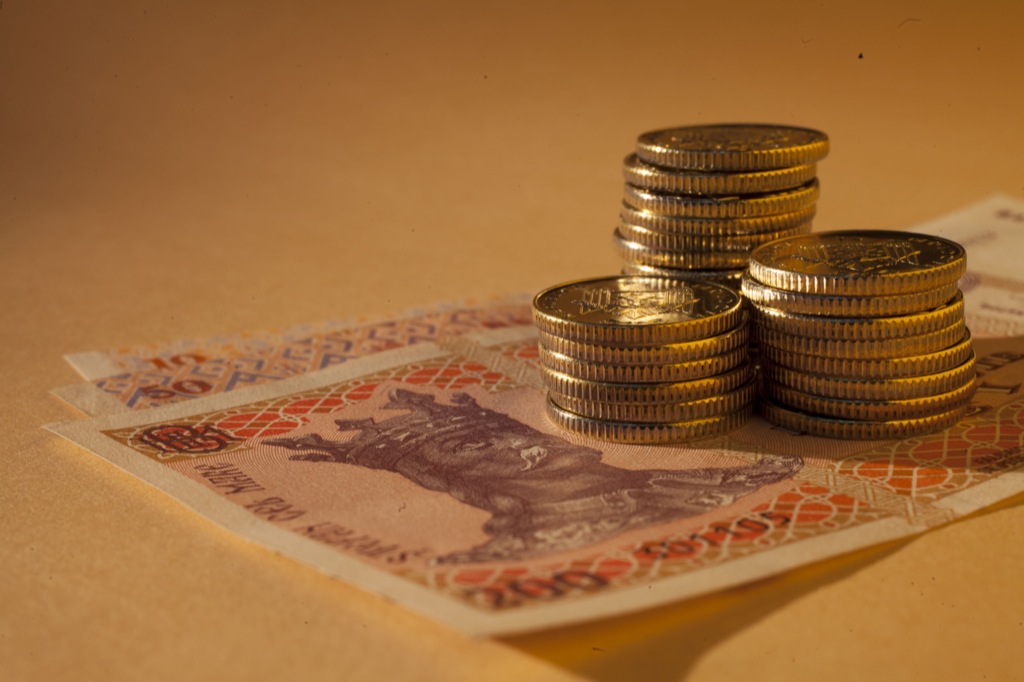
National Bank shall have the exclusive right to issue on the territory of the Republic of Moldova banknotes and coins as legal tender, as well as commemorative and jubilee banknotes and coins as legal tender and for numismatic purposes.

National Bank is exclusively responsible for the licencing, supervision and regulation of financial institutions activity.

National Bank of Moldova acts as banker and fiscal agent of the State and shall receive from state bodies economic and financial information and documents, which are necessary for carrying out its tasks.
National Bank of Moldova is an autonomous public legal entity and is responsible to the Parliament.

National Bank shall inform the public on the monetary policy strategy on the results of the macroeconomic analysis, the evolution of the financial market and on statistics, including with regard to monetary supply, crediting, balance of payments and the state of the foreign exchange market.

National Bank of Moldova is responsable for the compilation of the balance of payments, international investment position and the statistics of the external debt of the Republic of Moldova.
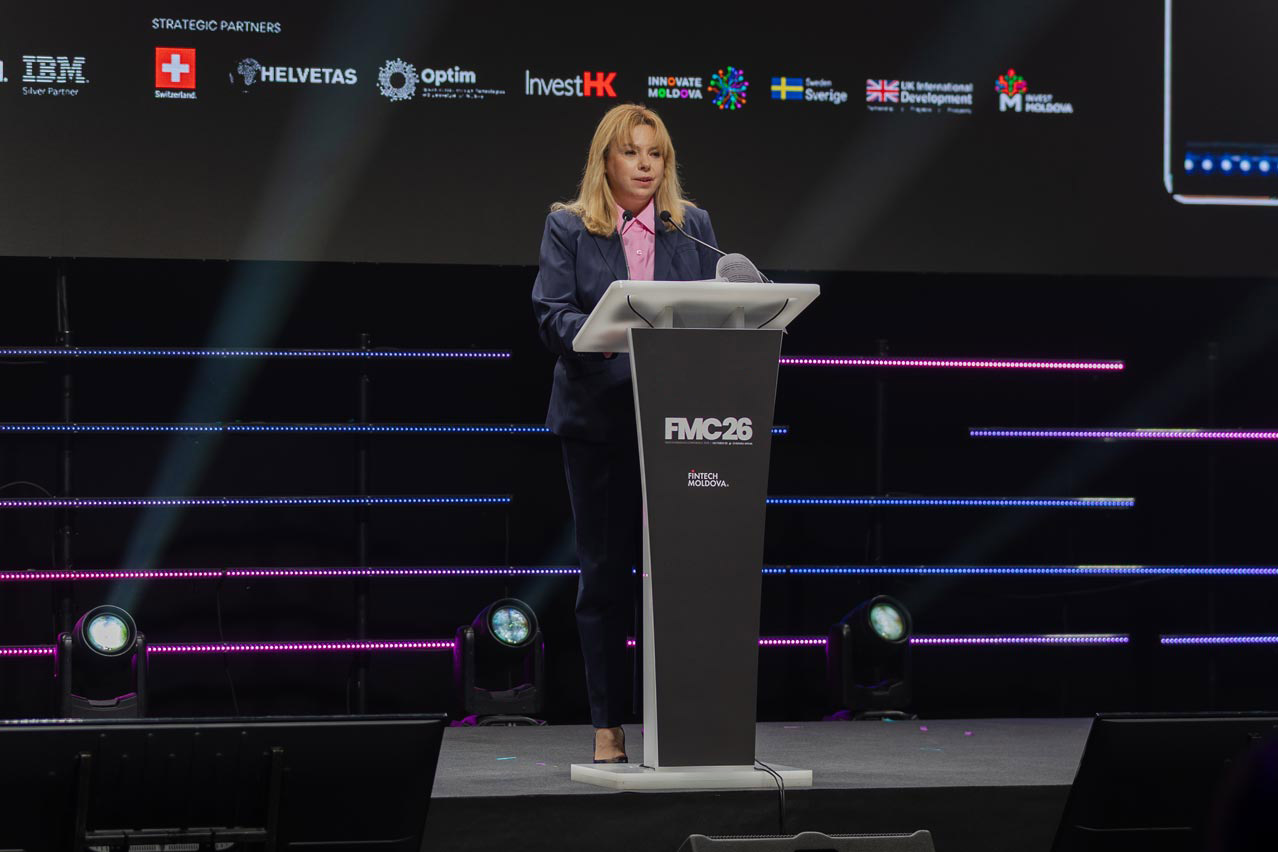



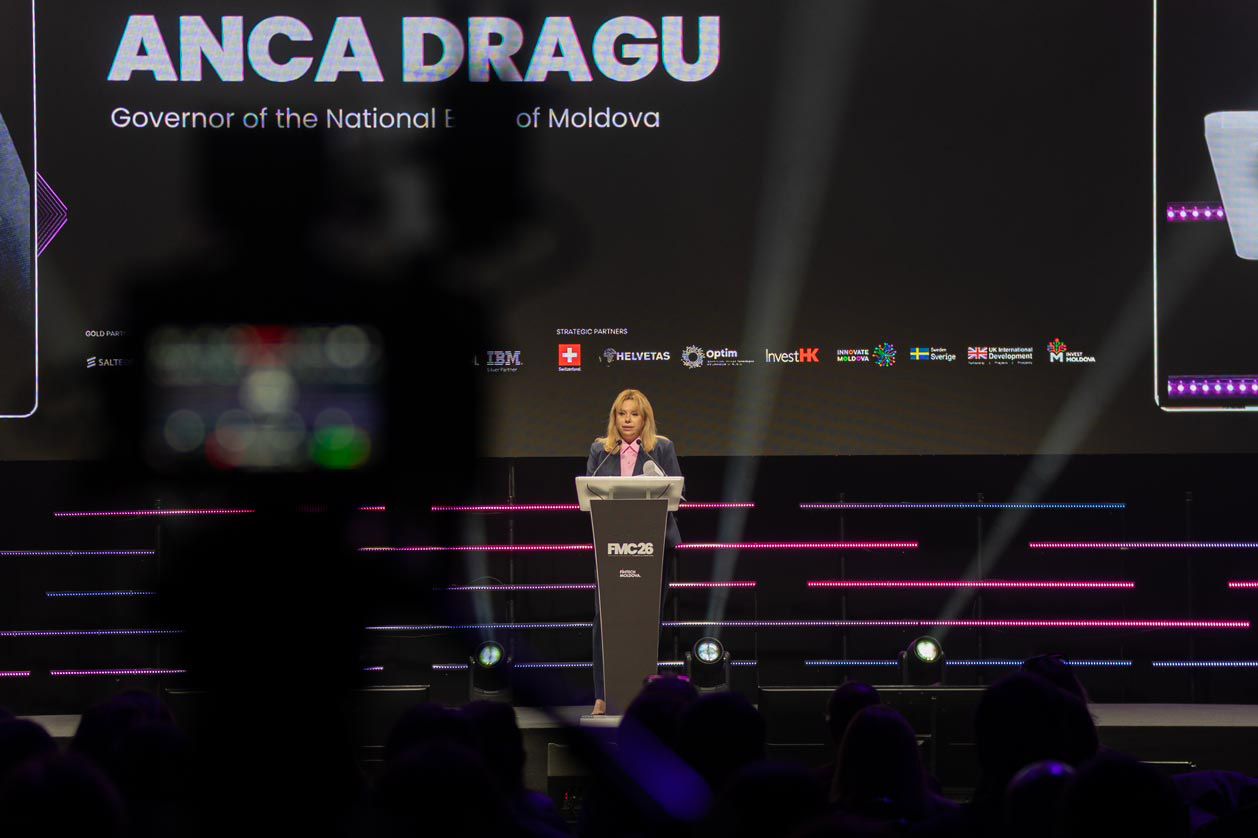

A strong banking sector, modern payment services and closer integration with the European market are creating favourable conditions for the development of financial innovation in the Republic of Moldova. This was the message delivered by Ms Anca Dragu, Governor of the National Bank of Moldova (NBM), at the opening of the eighth edition of the Fintech Moldova Conference, which brings together representatives of the financial sector, technology companies, investors and international experts.
The Governor emphasised that technological progress creates value when it responds to the needs of citizens and businesses: transferring money to family members at a lower cost, paying for a service within seconds, or managing a company’s payments more easily. The use of these services requires trust both in the technology and in the institutions providing them.
“Trust is underpinned by a strong banking sector that supports the modernisation of services and the financing of the economy. At the end of the first half of 2026, the total own funds ratio stood at 24.3%, above the minimum requirement of 10%, while banks complied with prudential liquidity requirements. This soundness enables the development of new financial services and the responsible management of the risks associated with them,” Ms Anca Dragu emphasised.
The modernisation of services is already reflected in the payments made by citizens and companies. One example is the MIA instant payment system, launched in March 2024, which has more than one million users and has processed over 31 million transactions worth MDL 28.5 billion. MIA enables transfers to be made within seconds using a telephone number and has been expanded to include payments to merchants and public institutions, as well as payments between companies.
The modernisation of domestic payments is complemented by more accessible connections with the European market. On 6 October, it will be one year since the Republic of Moldova became operationally connected to the Single Euro Payments Area (SEPA). Between October 2025 and August 2026, citizens and companies made approximately 1.1 million transfers through SEPA, saving almost EUR 15 million. The average fee fell to approximately EUR 1 per transfer, while funds are received more quickly, and nine of the ten banks in the country are able to process SEPA transfers.
“For families receiving money from abroad and businesses working with European partners, these changes mean lower costs and faster access to funds. European integration is also measured in terms of the time and money saved,” Ms Anca Dragu added.
Another area of modernisation is Open Banking, which creates opportunities for services tailored to users’ needs. Authorised providers can offer solutions that allow users to view accounts held with different institutions in a single application or to initiate payments.
The development of these services is accompanied by requirements relating to data protection, fraud prevention and business continuity. The Governor highlighted that clear rules and proportionate supervision support innovation and help maintain users’ trust.
These developments form part of the process of aligning with European Union standards. The NBM has a direct role in three chapters of the accession negotiations: free movement of capital, financial services, and economic and monetary policy. Strengthening the regulatory framework and modernising financial infrastructure increase investor confidence and create conditions for the development of fintech companies and new services for citizens and businesses.
The Fintech Moldova Conference is held annually and provides a platform for exchanging experience and developing partnerships that contribute to the digital transformation of the financial sector in the Republic of Moldova and the wider region.


