Welcome to the official website of the National Bank of Moldova!
×
Do you have good eyesight and want to turn this tool off?



Welcome to the official website of the National Bank of Moldova!
You can choose one of the most popular reports from the list:

National Bank and the members of its decision-making bodies shall be independent in exercising the tasks conferred upon them by law, and shall neither seek nor take instructions from public authorities or from any other authority.

In order to ensure and maintain price stability over the medium term, the National Bank’s aim will be to keep inflation (measured by Consumer Price Index) at the level of 5.0 percent annually with a possible deviation of ± 1.5 percentage points, considered to be optimal for growth and development of Moldova's economy over the medium-term.

Financial stability is achieved by strengthening the resilience of the financial system, limiting the contagion effect and reducing the accumulation of systemic risks, thus contributing to the sustainability of the financial sector and economic growth.

National Bank shall have the exclusive right to issue on the territory of the Republic of Moldova banknotes and coins as legal tender, as well as commemorative and jubilee banknotes and coins as legal tender and for numismatic purposes.

National Bank is exclusively responsible for the licencing, supervision and regulation of financial institutions activity.

National Bank of Moldova acts as banker and fiscal agent of the State and shall receive from state bodies economic and financial information and documents, which are necessary for carrying out its tasks.
National Bank of Moldova is an autonomous public legal entity and is responsible to the Parliament.

National Bank shall inform the public on the monetary policy strategy on the results of the macroeconomic analysis, the evolution of the financial market and on statistics, including with regard to monetary supply, crediting, balance of payments and the state of the foreign exchange market.

National Bank of Moldova is responsable for the compilation of the balance of payments, international investment position and the statistics of the external debt of the Republic of Moldova.
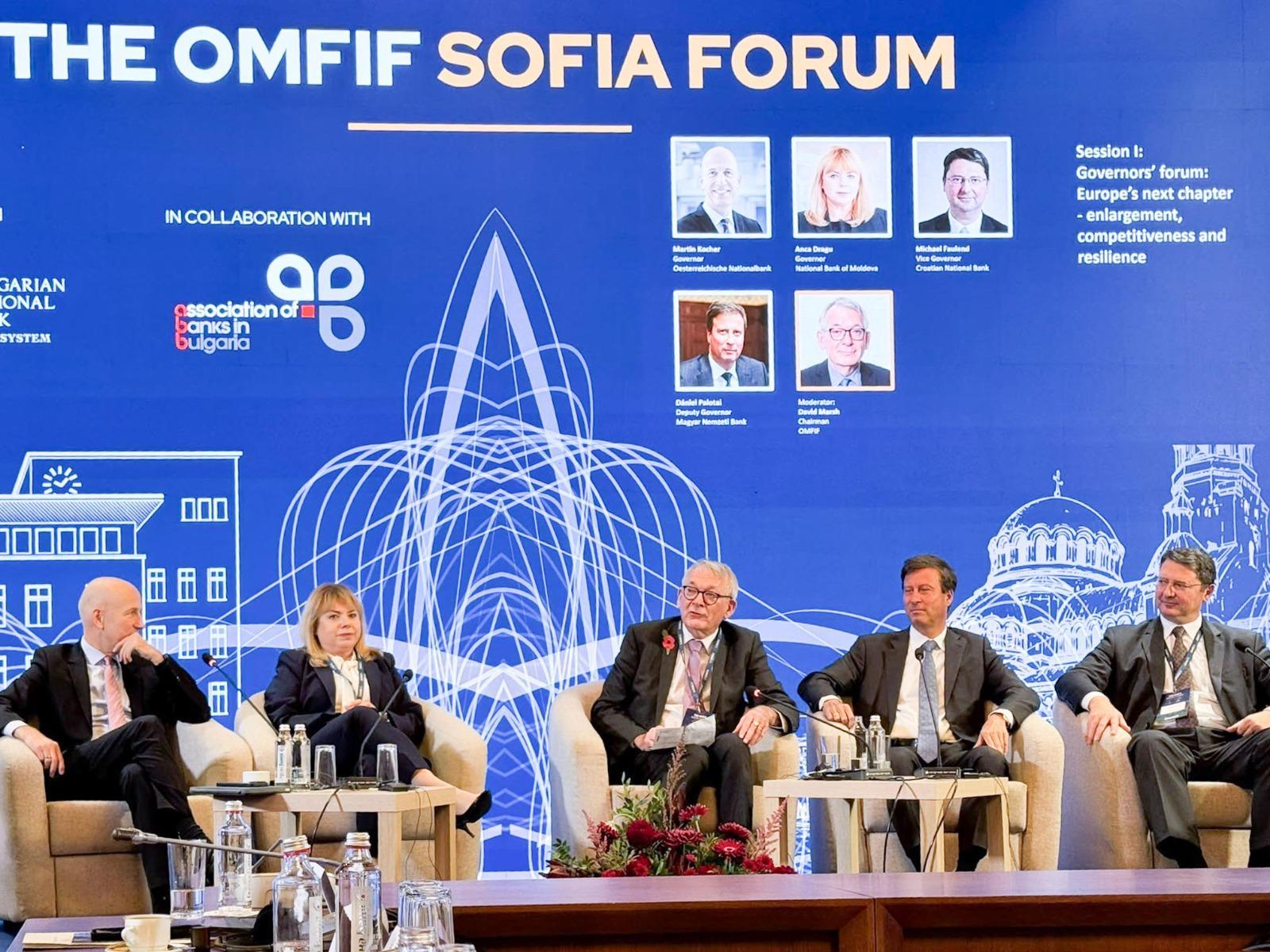
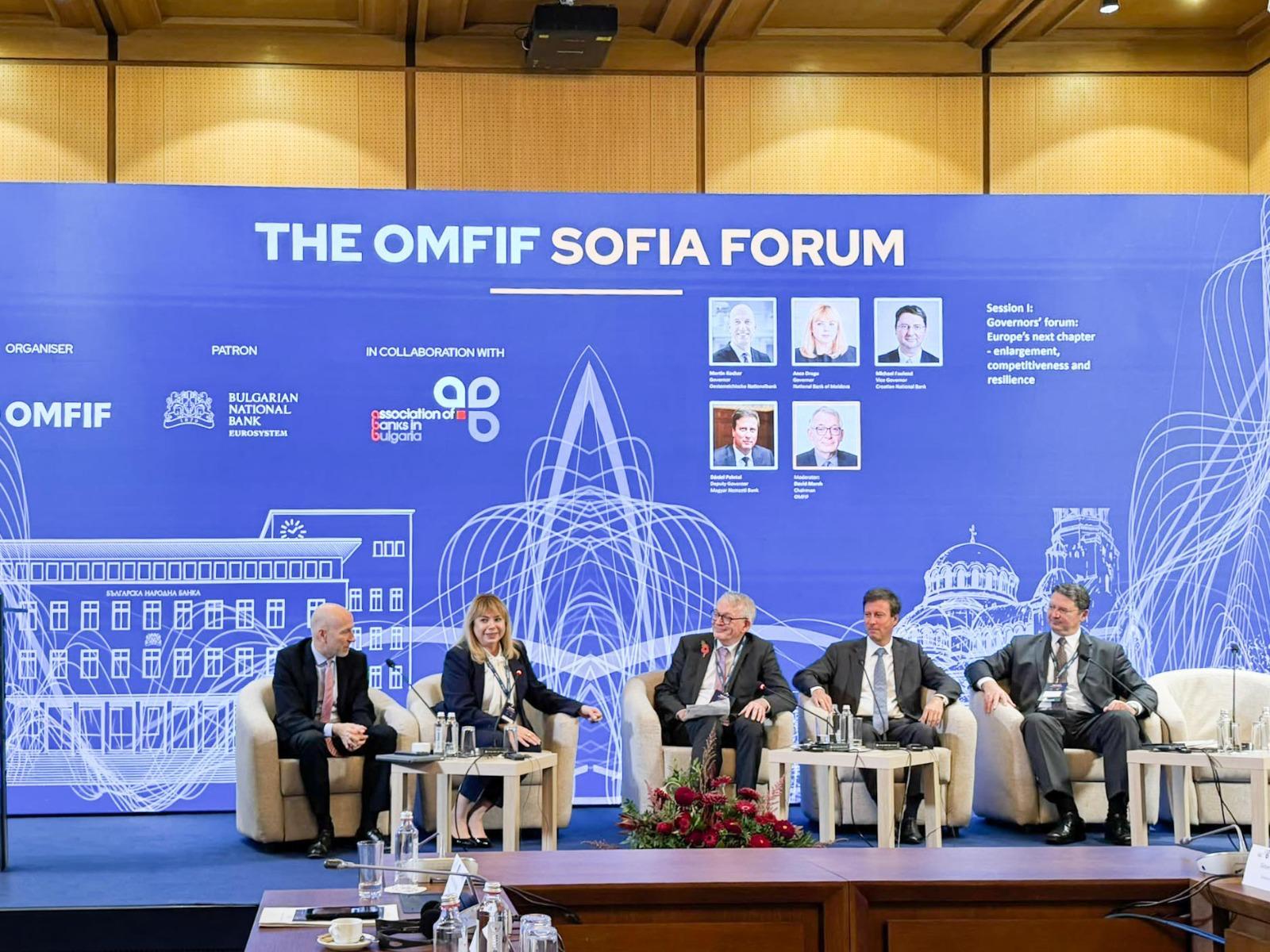
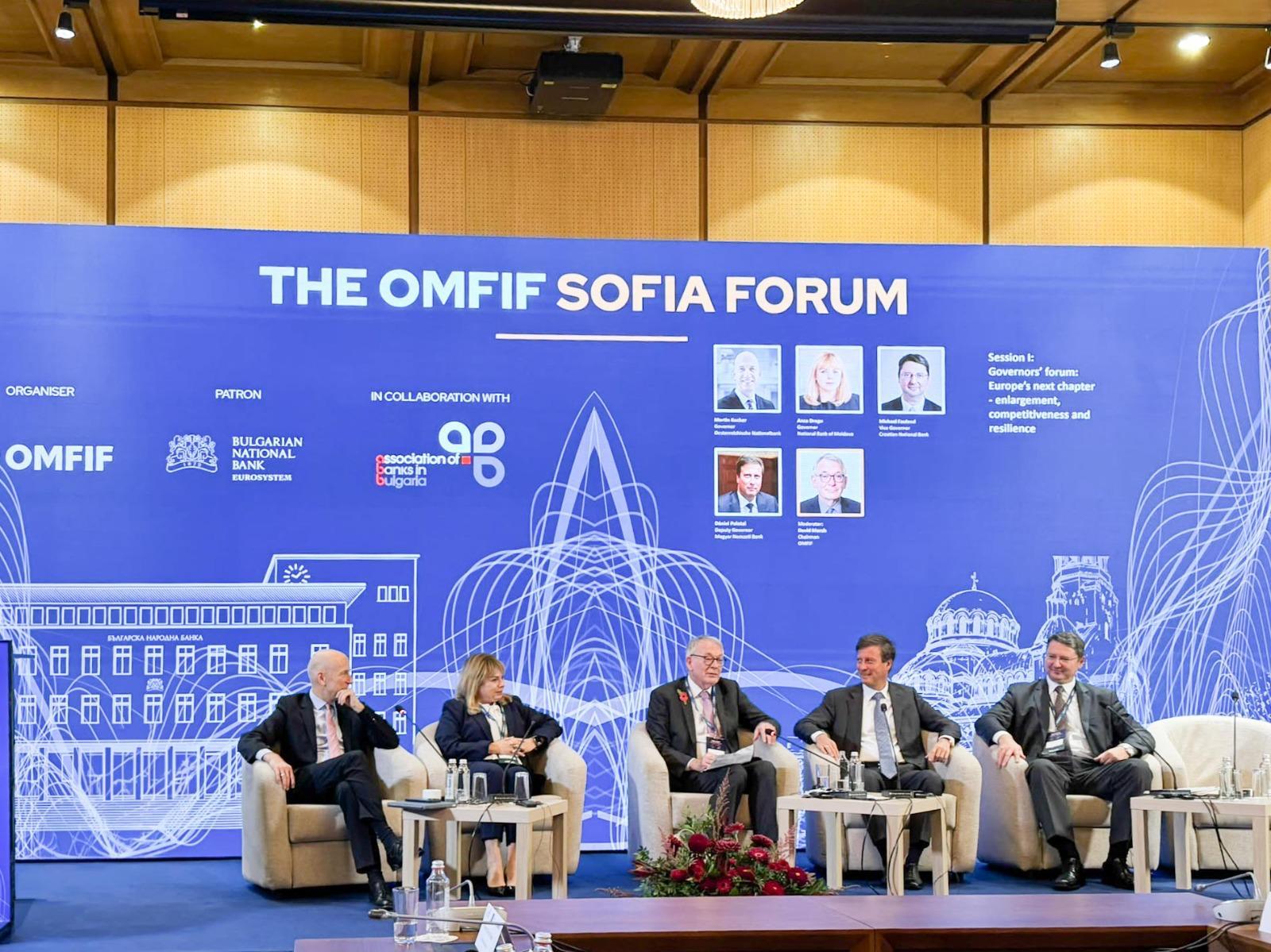
Today, 3 November 2026, the Governor of the National Bank of Moldova, Ms Anca Dragu, took part in the OMFIF Forum in Sofia, Bulgaria, where European integration, financial reforms, and the capacity of economies to respond to external shocks were the focus of discussions. The event brought together high-level representatives from central banks, European and international financial institutions, the investment community, and the banking sector.
During the forum, Ms Anca Dragu shared the National Bank’s perspective in the session titled “Europe's next chapter - enlargement, competitiveness, and resilience,” which was dedicated to a dialogue among central bank governors. The discussions focused on monetary policy, inflation trends, and economic growth prospects in Central and Southeastern Europe, as well as the role of European integration in strengthening long-term stability.
“European integration brings tangible benefits: greater economic security, more accessible financial services, and more opportunities for business development. At the National Bank, we are working to ensure that aligning with European standards translates into confidence and stability. Behind every reform are people and families making plans for the future, as well as entrepreneurs who need predictability to invest and create jobs,” emphasised Ms Anca Dragu.
The forum took place against the backdrop of a new phase in Bulgaria’s economic and financial development, following its accession to the euro area. The country’s experience provided a benchmark for discussions on the opportunities for deeper European integration during a period of major economic, technological, and geopolitical changes. Bulgaria’s location at the crossroads of Central, Eastern, and Southeastern Europe also highlighted its potential to facilitate investment, connectivity, and regional financial cooperation.
The discussions provided an opportunity to exchange views on the reforms needed to achieve economic and institutional convergence, as well as on ways in which countries in the region can strengthen their capacity to cope with external shocks.
The agenda also included mobilising public and private capital for investments in infrastructure, innovation, and economic development, as well as deepening banking and capital market integration. The discussions aimed to identify ways to support economic growth and European competitiveness.
Another important topic was the digital transformation of financial services. Participants discussed how the modernisation of payment systems, innovation, and the interconnection of financial infrastructures can support businesses and facilitate citizens’ access to modern and secure financial services.
Dialogue on these issues helps strengthen the NBM’s cooperation with European central banks and financial institutions and fosters the exchange of experience necessary for the Republic of Moldova’s European integration process. For the National Bank, aligning with European standards aims to strengthen confidence in the financial system and create better conditions for savings, investment, and economic development, for the benefit of citizens and businesses.
The event was organised by the Official Monetary and Financial Institutions Forum (OMFIF), an independent research and dialogue organisation focused on economic policy, central bank activities, and public investment, under the patronage of the Bulgarian National Bank and in collaboration with the Association of Banks in Bulgaria.


