Добро пожаловать на официальный сайт Национального банка Молдовы!
×
У вас хорошее зрение, и вы хотите отключить этот инструмент?



Добро пожаловать на официальный сайт Национального банка Молдовы!
Вы можете выбрать один из наиболее востребованных отчетов из списка:
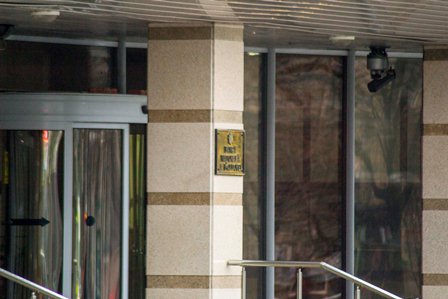
Национальный банк и члены его руководящих органов независимы в осуществлении своих функций, установленных настоящим законом, и не могут обращаться за указаниями и получать таковые от органов публичной власти или какого-либо иного органа.

Стратегия денежной политики НБМ на среднесрочный период предусматривает поддержание количественного объектива инфляции на уровне 5.0% с возможным отклонением ± 1.5 процентных пункта – оптимальный уровень для устойчивого экономического роста и развития Республики Молдова на среднесрочный период.

Национальный банк обладает исключительным правом эмиссии на территории Республики Молдова банкнот и монет в качестве платежного средства.

Национальный банк обладает исключительным правом лицензирования, осуществления надзора и регулирования деятельности финансовых учреждений.

Национальный банк имеет право покупать, продавать и негоциировать иностранную валюту, используя активы, покупать и продавать казначейские обязательства и другие ценные бумаги, выпущенные или гарантированные правительствами иностранных государств и международными финансовыми публичными организациями.
Национальный банк осуществляет надзор за системой платежей в республике и способствует стабильному и эффективному функционированию автоматизированной системы межбанковских платежей.
Национальный банк является самостоятельным публичным юридическим лицом и несет ответственность перед Парламентом.

Национальный банк информирует общественность о динамике годовой инфляции, о стратегии денежной политике, результаты макроэкономического анализа, анализа развития финансового рынка и статистическую информацию, в том числе относительно денежной массы, предоставления кредитов, платежного баланса и положения на валютном рынке.

Национальный банк проводит экономический и денежный анализ, составляет платежный баланс, международную инвестиционную позицию и разрабатывает статистику внешнего долга Республики Молдова.
The governing bodies of the National Bank are the Supervisory Board, composed of 7 members (3 executives, 4 independents), and the Executive Board, composed of 5 members.
The Supervisory Board and the Executive Board are collegial bodies, with their activity regulated by the Law on the National Bank No. 548/1995 and their internal regulations.
The Supervisory Board is responsible for organizing an efficient system of independent public oversight of the National Bank's activities.
The Executive Board exercises the executive management of the National Bank and ensures the independent fulfillment of its core functions.
The meetings of the Supervisory Board are convened by its chairman whenever necessary, but at least quarterly.
Meetings can also be convened at the written request of four members of the Supervisory Board.
Regulation on the functioning of the Executive Board (extract)
The meetings of the Executive Board shall be convened by its Chairman at least once in a month. The meetings may be also convened upon written request of at least three members of the Executive Board.
A person who is a citizen of the Republic of Moldova, has higher education, enjoys a good reputation, is not prohibited from holding a public office or public dignity, as derived from an act issued by the National Integrity Authority, and does not have any entries in the professional integrity record regarding a negative result from the professional integrity test for violating the obligations stipulated in Article 7, paragraph (2), letter a) of Law No. 325 of December 23, 2013, on the assessment of institutional integrity, in the last 5 years, may run for the position of member of the Supervisory Board or the Executive Board. Additionally, for a candidate for the position of member of the Supervisory Board, they must have at least 10 years of work experience in the financial, legal, or audit fields, or in a scientific or academic position in these areas. In the case of a candidate for the position of member of the Executive Board, they must have at least 10 years of work experience in the financial or monetary field.
The Governor of the National Bank is appointed by Parliament upon the proposal of the President of Parliament.
The Deputy Chairman and the Deputy Governors are appointed by Parliament upon the proposal of the Governor of the National Bank.
The member of the Supervisory Board who is also a Deputy Governor of the National Bank is appointed by Parliament upon the proposal of the Governor of the National Bank, while the members of the Supervisory Board who are not employees of the National Bank are appointed by Parliament upon the proposal of the Parliamentary Commission on Economy, Budget, and Finance, in accordance with the procedure established by this Commission.
Members of the Supervisory Board and those of the Executive Board are appointed for a term of 7 years, with the possibility of renewal. Upon the expiration of their term, a member of the Supervisory Board or a member of the Executive Board remains in office until a new member is appointed.
Any member of the Supervisory Board or the Executive Board may be dismissed by Parliament only if they no longer meet the conditions for exercising their duties or have committed a serious misconduct. Serious misconduct is defined as an illegal action or inaction committed while exercising professional duties that is serious enough to justify the dismissal of the responsible person.
The President of the Supervisory Board is dismissed upon the proposal of the President of Parliament, with a vote of 2/3 of the elected deputies. The dismissal of the other members of the Supervisory Board and the Executive Board is done upon the proposal of the Supervisory Board, made as a result of a request from the Governor of the National Bank, or at the proposal of the President of Parliament, with a vote of the majority of the elected deputies.
The decision to dismiss a member of the Supervisory Board or a member of the Executive Board may be challenged in the Chisinau Court of Appeal within 15 days from the date of its publication in the Official Monitor of the Republic of Moldova.
The Audit Committee consists of three members of the Supervisory Board who are not employees of the National Bank. The members of the Audit Committee are approved during their activity as members of the Supervisory Board of the National Bank of Moldova. On the expiry date of the membership of the Supervisory Board, the membership of the Audit Committee will expire at the same date.
Audit Committee meetings are convened, as a rule, quarterly.
The Audit Committee has the following legal powers:
Regulation on the activity of the Audit Committee within the National Bank of Moldova
The Investment Committee (IC) is established to assist the Executive Board of the NBM in reviewing investment policies and strategies related to the management of the foreign exchange reserves of the state. The Investment Committee is composed of 10 members, employees of the NBM, including 2 members of the Executive Board, one of whom is the Chairman of the Committee. IC meetings are convened, as a rule, on a monthly basis, and in case of subjects of major importance, extraordinary meetings are organized.
The Investment Committee has the following duties:
The Risk Committee, as part of the second line of defense, is established to assist the Executive Board in order to ensure direct and objective supervision over the management of the operational risk management system in the National Bank. The Risk Committee consists of 8 members with voting rights, including one member of the Executive Board - the Chairman of the Risk Committee.
The Risk Committee meets quarterly in ordinary meetings. If necessary, or at the request of the Governor or any other member of the Executive Board, it can be convened ad hoc.
The Risk Committee has the following duties:
The activity regulation of the Risk Committee
The Business Continuity Committee is established to assist the Executive Board in managing the efficient continuity of operations to achieve the continuity objectives of the National Bank of Moldova. The Business Continuity Committee is composed of the heads of subdivisions managing critical processes of the National Bank, all with voting rights, and the General Controller in an observer role. The Chairman of the Business Continuity Committee is the Governor of the National Bank.
The Business Continuity Committee has the following duties:
According to art. 25 of the Law on the NBM:
The National Bank, the members of its governing bodies, the liquidator designated by it, as well as its staff, are not civilly, administratively, contraventionally, or criminally liable for acts or omissions performed in the exercise of duties conferred on the National Bank by law, including for conducting internal operations related to the exercise of these duties, except in cases where the courts find that these individuals have acted in bad faith in fulfilling or omitting to fulfill any act or fact related to the exercise of the National Bank's duties, which has caused harm to third parties.
The National Bank shall cover, in the cases and under the conditions provided by Law No. 548/1995 and the regulations of the National Bank, the expenses incurred by these individuals in criminal, contraventional, administrative, or civil proceedings initiated in connection with the exercise of the duties conferred on the National Bank by law.
Compensation for damages caused by these individuals through acts or omissions performed in the exercise of the duties conferred on the National Bank by law can only be claimed from the National Bank.
In the event of the National Bank compensating for the damages, it shall exercise the right of recourse against the individuals involved.
The assets held by the National Bank are subject to the provisions of Law No. 121/2007 regarding the administration and privatization of public property, Law No. 29/2018 regarding the delimitation of public property, with the specific features provided by Law No. 548/1995 concerning the National Bank of Moldova.
The National Bank is not liable for the obligations of the state or the obligations of other authorities or public institutions. The assets that constitute the state's international reserves cannot be subject to seizure, forced execution, confiscation, requisition, or expropriation.


