Welcome to the official website of the National Bank of Moldova!
×
Do you have good eyesight and want to turn this tool off?



Welcome to the official website of the National Bank of Moldova!
You can choose one of the most popular reports from the list:

National Bank and the members of its decision-making bodies shall be independent in exercising the tasks conferred upon them by law, and shall neither seek nor take instructions from public authorities or from any other authority.

In order to ensure and maintain price stability over the medium term, the National Bank’s aim will be to keep inflation (measured by Consumer Price Index) at the level of 5.0 percent annually with a possible deviation of ± 1.5 percentage points, considered to be optimal for growth and development of Moldova's economy over the medium-term.

Financial stability is achieved by strengthening the resilience of the financial system, limiting the contagion effect and reducing the accumulation of systemic risks, thus contributing to the sustainability of the financial sector and economic growth.
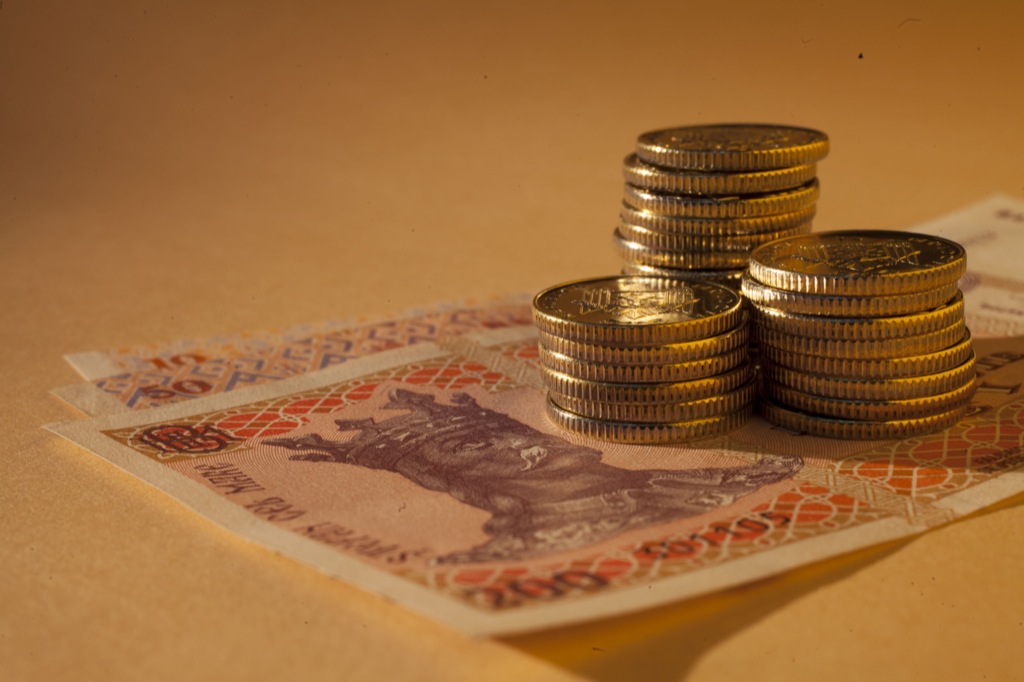
National Bank shall have the exclusive right to issue on the territory of the Republic of Moldova banknotes and coins as legal tender, as well as commemorative and jubilee banknotes and coins as legal tender and for numismatic purposes.

National Bank is exclusively responsible for the licencing, supervision and regulation of financial institutions activity.
National Bank of Moldova acts as banker and fiscal agent of the State and shall receive from state bodies economic and financial information and documents, which are necessary for carrying out its tasks.
National Bank of Moldova is an autonomous public legal entity and is responsible to the Parliament.

National Bank shall inform the public on the monetary policy strategy on the results of the macroeconomic analysis, the evolution of the financial market and on statistics, including with regard to monetary supply, crediting, balance of payments and the state of the foreign exchange market.

National Bank of Moldova is responsable for the compilation of the balance of payments, international investment position and the statistics of the external debt of the Republic of Moldova.
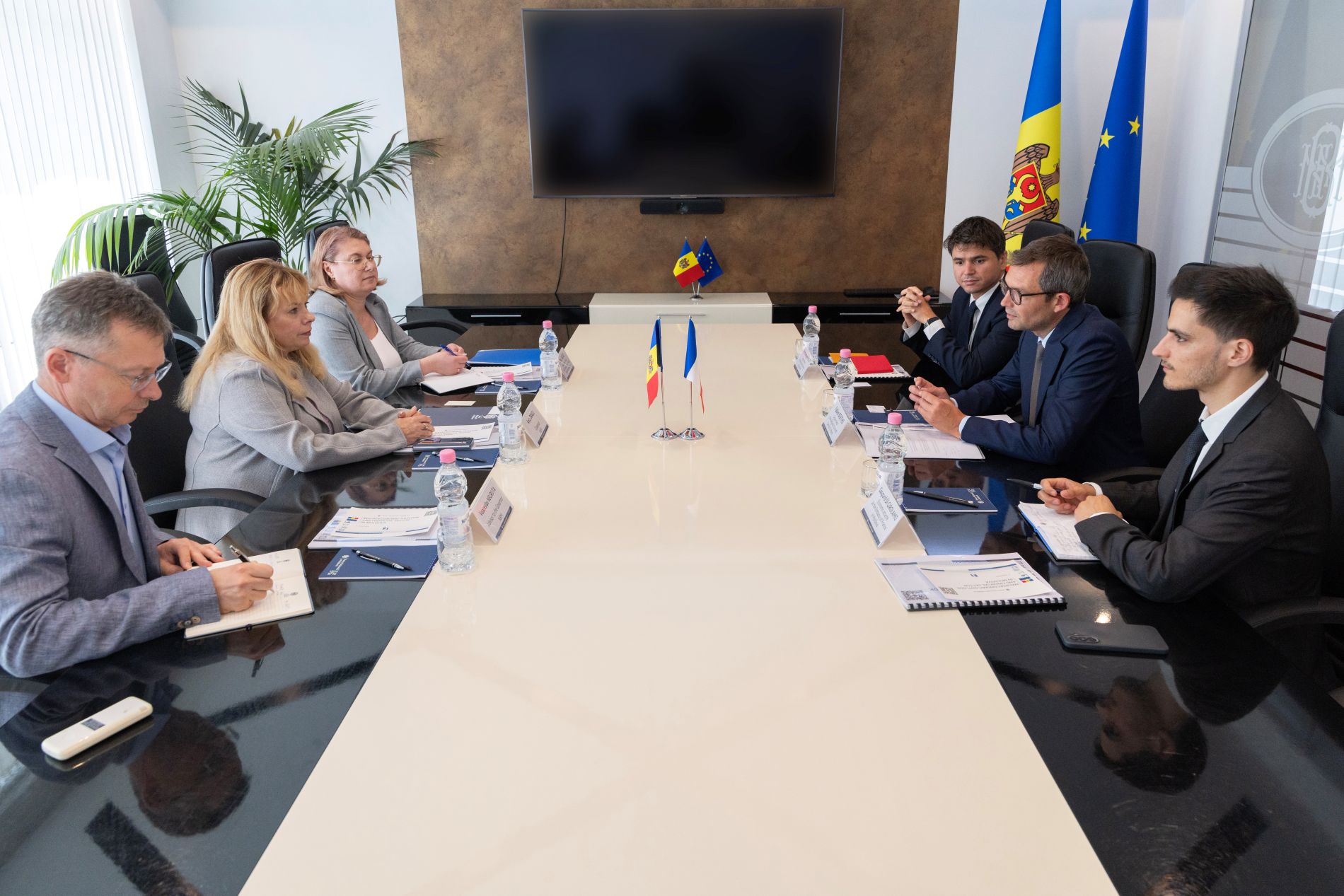
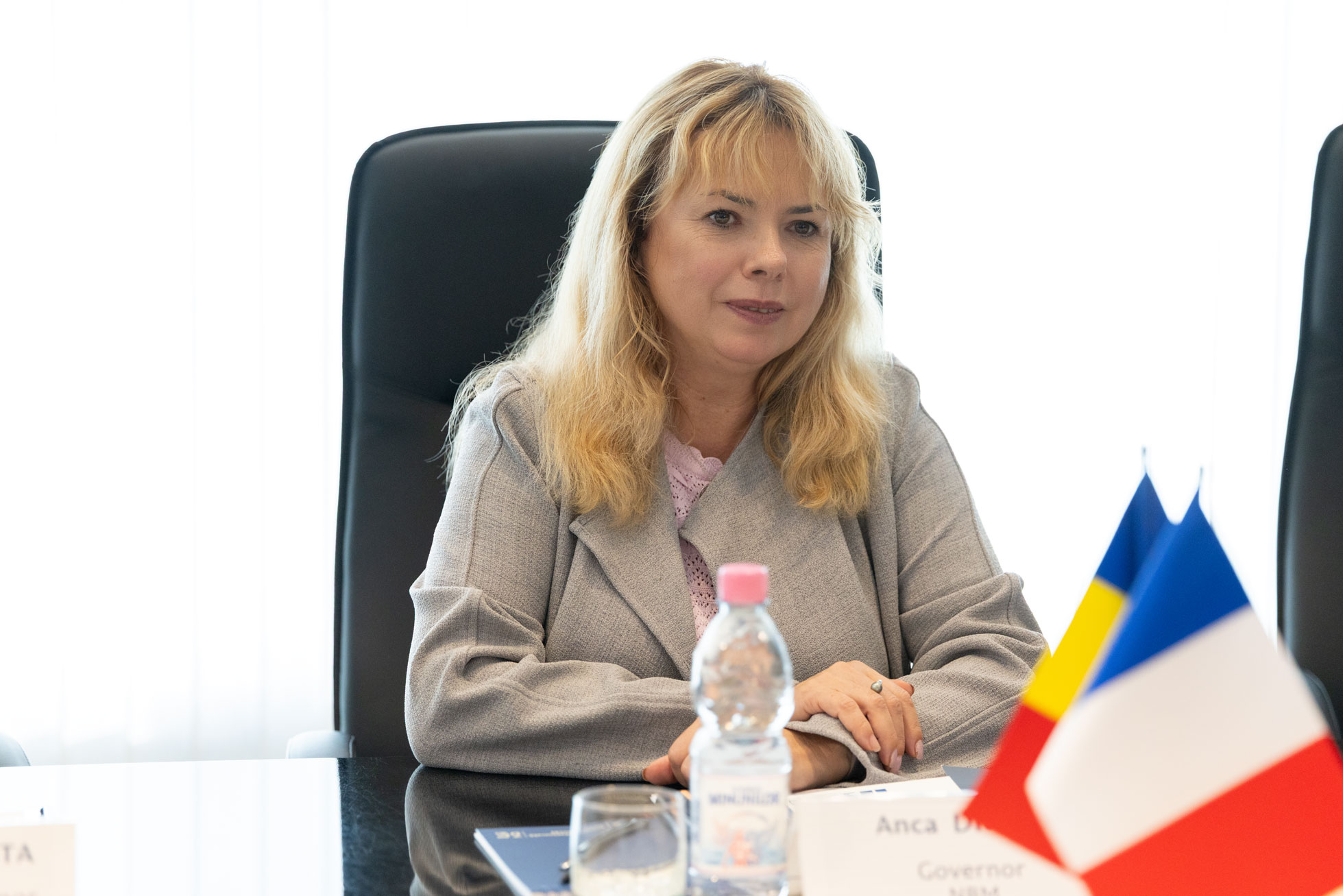
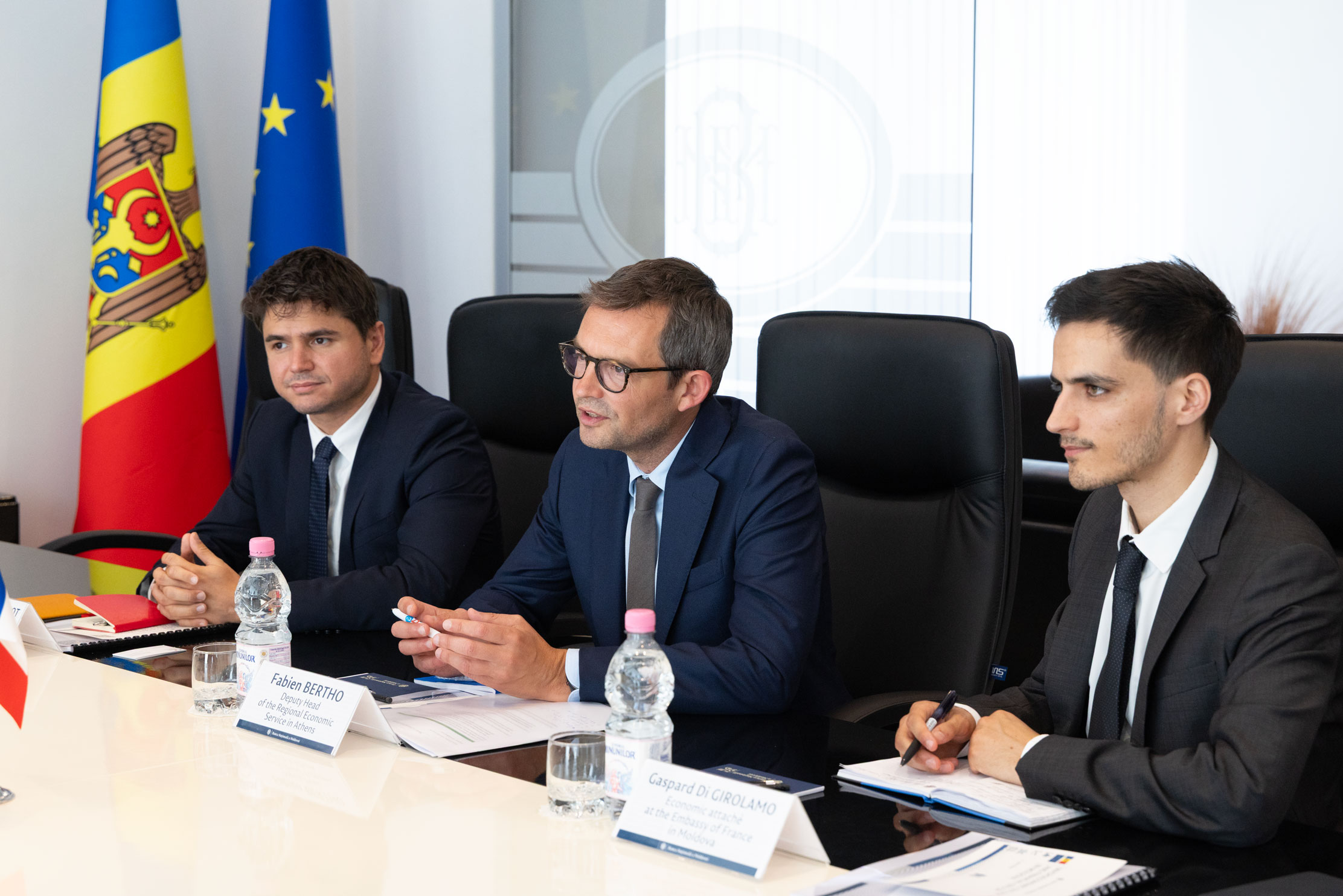
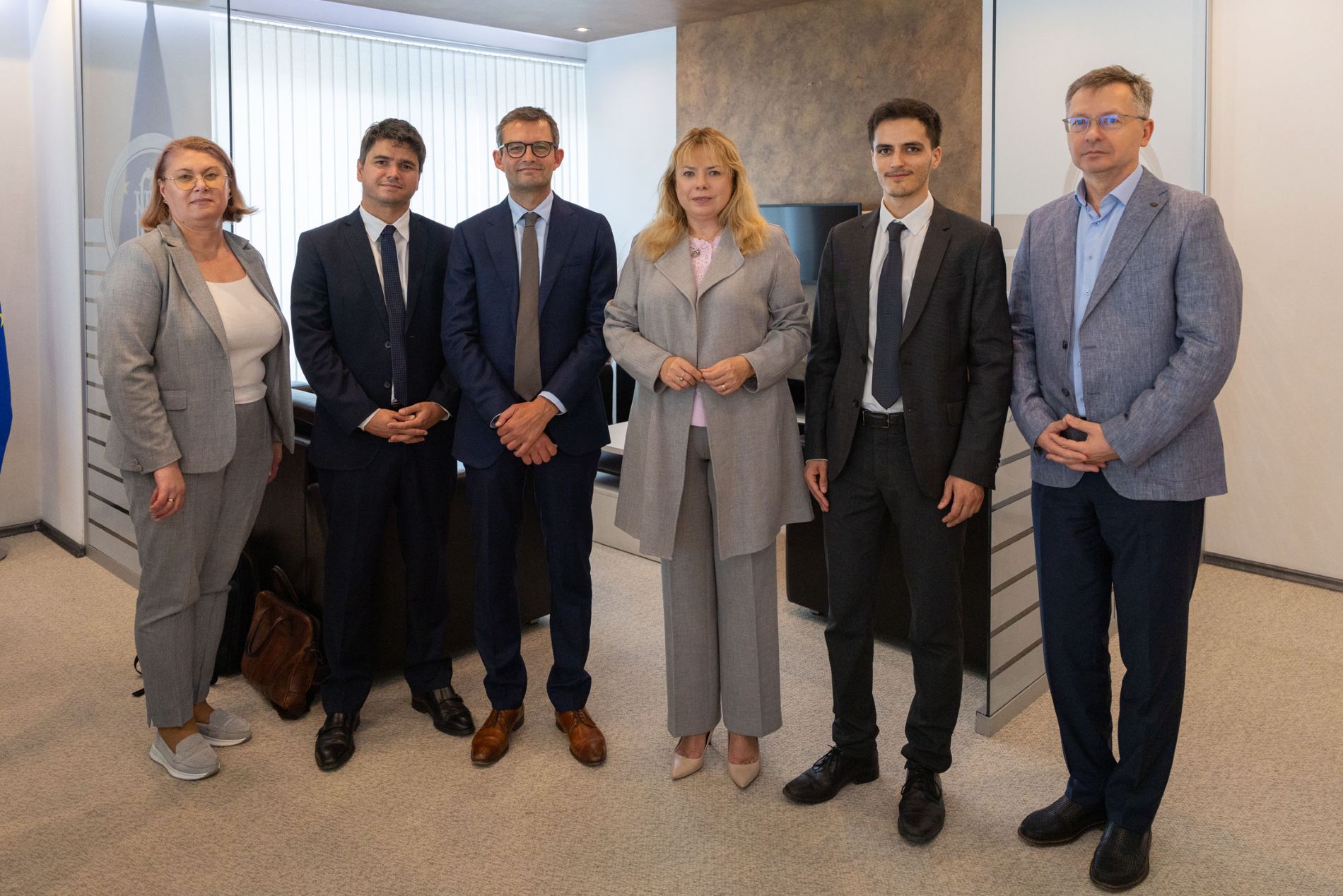
Today, 23 June 2026, the Governor of the National Bank of Moldova, Ms Anca Dragu, held a meeting with a delegation composed of representatives of the French Ministry of Economy and Finance and the French Embassy in the Republic of Moldova, in the context of the French macroeconomic mission taking place in Chișinău on 22–23 June 2026.
The dialogue focused on recent macroeconomic developments, the stability of the financial sector, the modernisation of payment infrastructure, as well as the progress made by the National Bank of Moldova (NBM) in aligning with European standards.
During the discussions, the NBM Governor emphasised that the Republic of Moldova has a stable macroeconomic framework and a resilient financial sector. At the same time, the NBM consistently pursues the objective of price stability and the strengthening of financial stability, while external developments confirm the importance of prudent policymaking, continuous risk monitoring, and maintaining confidence in the financial system.
An important topic of the dialogue was the modernisation of payment systems. The NBM Governor presented the progress achieved through the integration of the Republic of Moldova into the Single Euro Payments Area (SEPA), which enables euro payments to be made in line with European standards and helps reduce costs for citizens and businesses. In the first eight months since operational connection, payments made through SEPA have generated savings of over EUR 10 million for the national economy, confirming the direct impact of this integration on the efficiency of cross-border payments.
The development of the instant payment system MIA, created by the NBM, was also discussed. Shortly after its launch in March 2024, it has become a benchmark project at regional level. “Integration into SEPA and the development of the MIA system show that the Republic of Moldova can, in practice, operate within the logic of a modern European payments ecosystem. These projects reduce costs, increase transaction transparency, and bring financial services in the Republic of Moldova closer to European Union standards,” said Ms Anca Dragu.
The discussions also covered the role of the NBM in implementing the reform agenda in the context of the European Union Growth Plan for the Republic of Moldova. The NBM contributes to this process by strengthening financial legislation, developing the regulatory and supervisory framework, as well as through measures supporting private sector development, access to finance, and sound economic governance.
Another topic addressed was the alignment of national legislation with the European Union acquis in the financial domain. The NBM continues its process of convergence with European standards in areas such as financial services, payments, banking sector, insurance, digital operational resilience, and the central bank’s independence framework, among others.
In this context, Ms Anca Dragu highlighted the importance of obtaining recognition of the equivalence of the Republic of Moldova’s prudential banking framework with European Union standards.
The parties also discussed cooperation between the National Bank of Moldova and the Banque de France, strengthened through the Memorandum of Understanding signed in Paris on 17 January 2025. The cooperation covers the exchange of experience and the development of institutional capacities in areas such as monetary policy, financial stability, regulation and supervision of the financial sector, capital account liberalisation, macroeconomic research, digitalisation of processes, financial education, as well as other areas of common interest.


