Welcome to the official website of the National Bank of Moldova!
×
Do you have good eyesight and want to turn this tool off?



Welcome to the official website of the National Bank of Moldova!
You can choose one of the most popular reports from the list:

National Bank and the members of its decision-making bodies shall be independent in exercising the tasks conferred upon them by law, and shall neither seek nor take instructions from public authorities or from any other authority.

In order to ensure and maintain price stability over the medium term, the National Bank’s aim will be to keep inflation (measured by Consumer Price Index) at the level of 5.0 percent annually with a possible deviation of ± 1.5 percentage points, considered to be optimal for growth and development of Moldova's economy over the medium-term.

Financial stability is achieved by strengthening the resilience of the financial system, limiting the contagion effect and reducing the accumulation of systemic risks, thus contributing to the sustainability of the financial sector and economic growth.
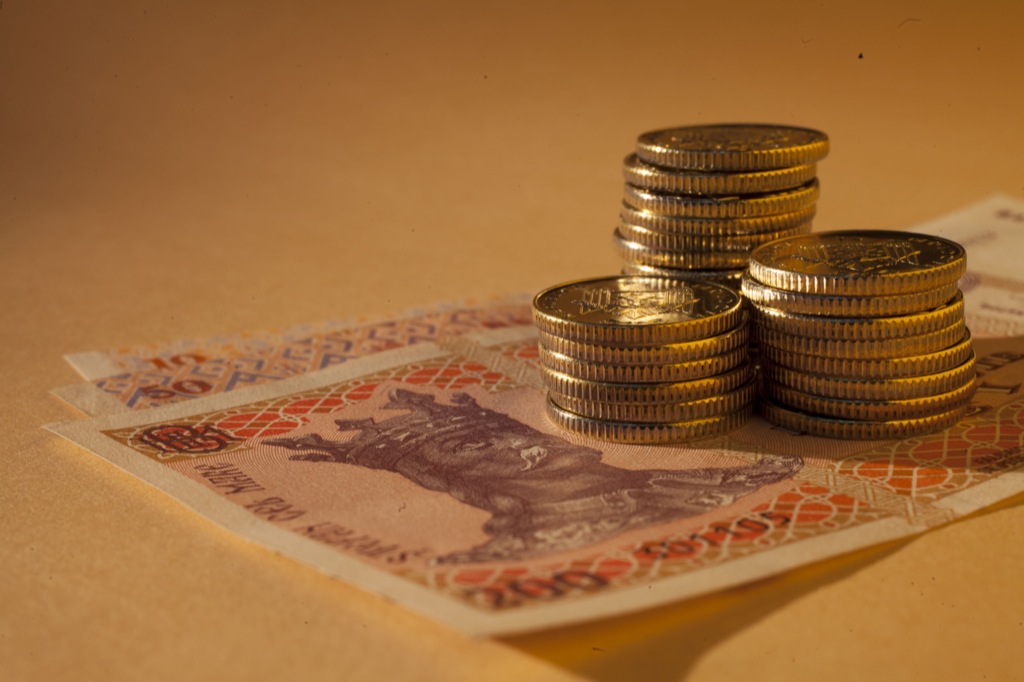
National Bank shall have the exclusive right to issue on the territory of the Republic of Moldova banknotes and coins as legal tender, as well as commemorative and jubilee banknotes and coins as legal tender and for numismatic purposes.

National Bank is exclusively responsible for the licencing, supervision and regulation of financial institutions activity.

National Bank of Moldova acts as banker and fiscal agent of the State and shall receive from state bodies economic and financial information and documents, which are necessary for carrying out its tasks.
National Bank of Moldova is an autonomous public legal entity and is responsible to the Parliament.

National Bank shall inform the public on the monetary policy strategy on the results of the macroeconomic analysis, the evolution of the financial market and on statistics, including with regard to monetary supply, crediting, balance of payments and the state of the foreign exchange market.

National Bank of Moldova is responsable for the compilation of the balance of payments, international investment position and the statistics of the external debt of the Republic of Moldova.
Отчет о финансовой стабильности 2018 год
В течение 2018 года финансовая система Республики Молдова характеризовалась высоким уровнем устойчивости и, в то же время, неравномерной эволюцией рисков, с которыми она сталкивается.
На фоне экономического роста, отмеченного внутренними уязвимостями (увеличение дефицита платежного баланса, волатильная инфляция) и внешними (напряженность в международной торговле, Brexit), финансовая система вносит довольно скромный вклад в восстановление экономической ситуации. В то же время мы наблюдаем возвращение кредитного процесса банками на положительную динамику. Кредитование населения (физических лиц) имело восходящую динамику, финансирование предоставлялось как банковским, так и небанковским секторам. Также в течение года выросло явление ипотечного кредитования.
Банковский сектор достиг удовлетворительных финансовых показателей, сохранив прочную позицию прибыльности и платежеспособности. Банки сохранили адекватную степень капитализации при переходе на требования Базель III. За этот период произошли изменения в структуре акционеров банков, три банка пришли с качественными международными акционерами.
В течение 2018 года банки зарегистрировали благоприятный уровень ликвидности, а профицит ликвидности в банковском секторе существенно не увеличился из-за активизации направления ликвидных активов для кредитования, таким образом, предыдущий год представлял собой период возврата степени банковского посредничества к положительным тенденциям. Однако высокий уровень ликвидности ведет к сохранению дополнительных рисков, поэтому поддержание средств, имеющихся в ликвидных активах, в ущерб кредитованию реальной экономики, имеет среднесрочные последствия для экономического роста и может привести к материализации будущих инфляционных рисков, связанных с увеличением кредитования с направлением соответствующих средств в экономику в короткие сроки.
Ускоренная эволюция сектора небанковского кредитования продолжалась и небанковское кредитование населения росло более высокими темпами, чем банковское кредитование и рост национальной экономики. Данная тенденция создает предпосылки для накопления рисков в секторе небанковского кредитования и увеличения общего уровня задолженности населения. Кредитный риск, связанный со ссудами в иностранной валюте, остается основным риском, который может способствовать увеличению подверженности заемщиков, ухудшению их финансового положения и, соответственно, увеличению риска невозврата ссуд в случае неблагоприятных колебаний обменного курса.
Условия, установленные на финансовом рынке, указывают на важность согласования нормативных и надзорных требований, применимых к банковскому и небанковскому секторам, с международными стандартами и практикой в этой области. В целом 2018 год отмечен многочисленными достижениями в плане укрепления финансовой стабильности. К ним относятся приравнивание нормативно-правовой базы и банковского надзора к Базель III, утверждение Закона о Национальном комитете по финансовой стабильности, улучшение схемы гарантирования банковских депозитов и увеличение верхнего предела гарантии до 20 тысяч леев в настоящее время и до 50 тысяч с 2020 года, и принятие Закона о небанковских кредитных организациях.


