Welcome to the official website of the National Bank of Moldova!
×
Do you have good eyesight and want to turn this tool off?



Welcome to the official website of the National Bank of Moldova!
You can choose one of the most popular reports from the list:

National Bank and the members of its decision-making bodies shall be independent in exercising the tasks conferred upon them by law, and shall neither seek nor take instructions from public authorities or from any other authority.
In order to ensure and maintain price stability over the medium term, the National Bank’s aim will be to keep inflation (measured by Consumer Price Index) at the level of 5.0 percent annually with a possible deviation of ± 1.5 percentage points, considered to be optimal for growth and development of Moldova's economy over the medium-term.

Financial stability is achieved by strengthening the resilience of the financial system, limiting the contagion effect and reducing the accumulation of systemic risks, thus contributing to the sustainability of the financial sector and economic growth.
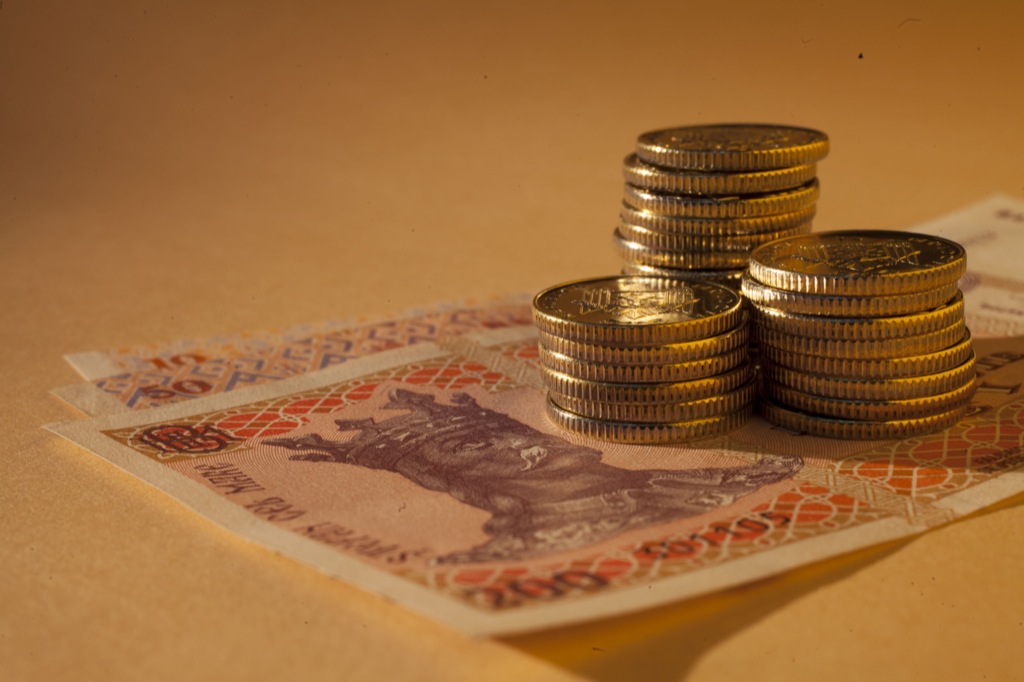
National Bank shall have the exclusive right to issue on the territory of the Republic of Moldova banknotes and coins as legal tender, as well as commemorative and jubilee banknotes and coins as legal tender and for numismatic purposes.

National Bank is exclusively responsible for the licencing, supervision and regulation of financial institutions activity.
National Bank of Moldova acts as banker and fiscal agent of the State and shall receive from state bodies economic and financial information and documents, which are necessary for carrying out its tasks.
National Bank of Moldova is an autonomous public legal entity and is responsible to the Parliament.

National Bank shall inform the public on the monetary policy strategy on the results of the macroeconomic analysis, the evolution of the financial market and on statistics, including with regard to monetary supply, crediting, balance of payments and the state of the foreign exchange market.

National Bank of Moldova is responsable for the compilation of the balance of payments, international investment position and the statistics of the external debt of the Republic of Moldova.
Отчет о Финансовой Стабильности на 2021 год
2021 год можно считать годом перезапуска национальной экономики после пандемического кризиса и возобновления деятельности после спада 2020 года. Роль финансовой системы в этом процессе экономического перезапуска была очень важной, выполняя свою функцию как механизм финансирования экономической деятельности.
Банковский сектор сохранил устойчивость, а последствия пандемического кризиса были незначительными, что еще раз подтверждает эффективность и своевременность реформ в сфере банковского регулирования и надзора. Высокая капитализация и достаточный уровень ликвидности позволили банкам стать важным фактором восстановления экономики в 2021 году.
Быстрое восстановление экономики характеризовалось увеличением потребления, располагаемых доходов населения, а также кредитования по различным категориям кредитов. Банковское кредитование испытало настоящий подъем: новые кредиты выданы с самой высокой номинальной стоимостью за последние 10 лет. Немалый вклад в рост кредитования внесло кредитование населения, которое почти удвоилось за 2021 г., но и кредитование предприятий также значительно увеличилось.
На фоне опережающего роста кредитного портфеля доля неблагоприятных кредитов по секторам достигла на конец 2021 года исторического минимума в 6,1%. Влияние пандемического кризиса на качество банковских портфелей, косвенно, и на платежеспособность должников было минимальным или могло быть преодолено благодаря мерам поддержки экономики и населения, предпринятым властями еще в первом полугодии 2020 года.
Небанковское кредитование также возобновило темпы роста по всем подкомпонентам после стагнации в 2020 году, однако, зафиксировав более умеренный рост по сравнению с банковским кредитованием.
Быстрый экономический рост, помимо преимущества самого роста и восстановления экономики после 2020 г., также несет в себе ряд рисков, связанных, прежде всего, с «разогревом» экономики, снижением эффективности инвестиций и новых кредитов, а также возможное ухудшение кредитного качества.
В то же время к концу года экономика Республики Молдова столкнулась с рядом внешних потрясений, которые существенно повлияли на экономическую ситуацию. В этих условиях финансовая система адаптировалась к потрясениям и сохранила способность продолжать финансировать национальную экономику.
Внешние шоки, с которыми столкнулась Молдова в этот период, особенно шок, вызванный резким ростом цен на газ, топливо и электроэнергию, могут повлиять на финансовую стабильность в нескольких секторах. Также стоит отметить рост себестоимости производства для экономических агентов и снижение способности населения погашать свои кредиты, а также множественные эффекты второго порядка.
Хотя на данный момент компенсационные меры и помощь властей позволили избежать серьезных последствий, сохранение этих условий в долгосрочной перспективе приведет к частичному подрыву финансовой стабильности.
В любом случае, можно сказать, что на конец 2021 года ситуация в финансовом секторе была стабильной и устойчивой, без непосредственных системных рисков. Банковский сектор по-прежнему готов обеспечить бесперебойное функционирование национальной экономики и устойчивый уровень экономического роста.


