Welcome to the official website of the National Bank of Moldova!
×
Do you have good eyesight and want to turn this tool off?



Welcome to the official website of the National Bank of Moldova!
You can choose one of the most popular reports from the list:

National Bank and the members of its decision-making bodies shall be independent in exercising the tasks conferred upon them by law, and shall neither seek nor take instructions from public authorities or from any other authority.

In order to ensure and maintain price stability over the medium term, the National Bank’s aim will be to keep inflation (measured by Consumer Price Index) at the level of 5.0 percent annually with a possible deviation of ± 1.5 percentage points, considered to be optimal for growth and development of Moldova's economy over the medium-term.

Financial stability is achieved by strengthening the resilience of the financial system, limiting the contagion effect and reducing the accumulation of systemic risks, thus contributing to the sustainability of the financial sector and economic growth.
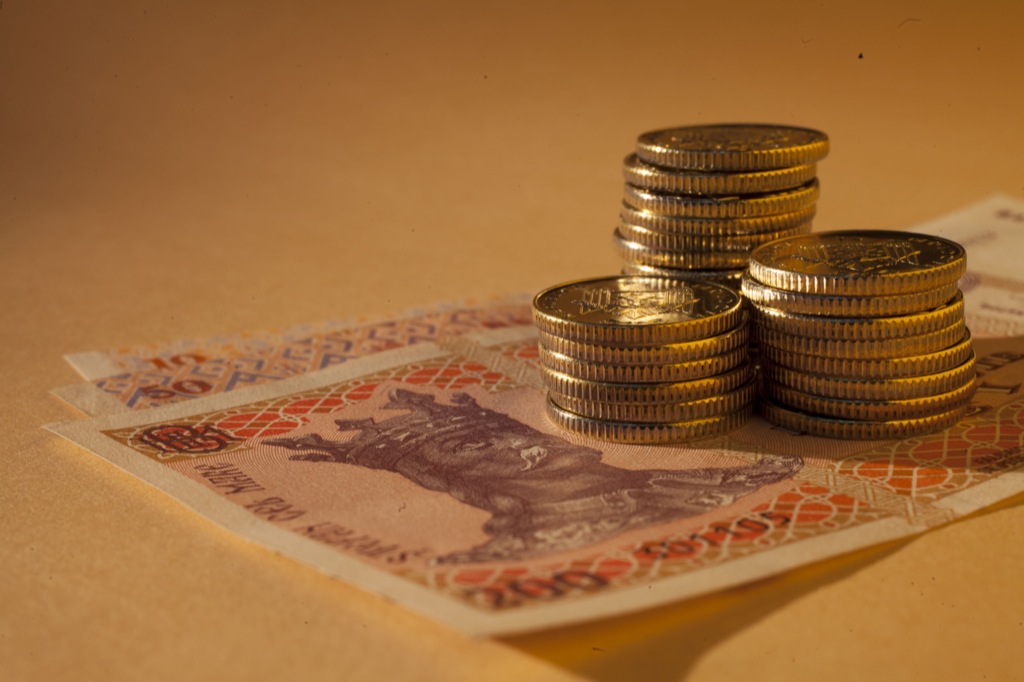
National Bank shall have the exclusive right to issue on the territory of the Republic of Moldova banknotes and coins as legal tender, as well as commemorative and jubilee banknotes and coins as legal tender and for numismatic purposes.

National Bank is exclusively responsible for the licencing, supervision and regulation of financial institutions activity.
National Bank of Moldova acts as banker and fiscal agent of the State and shall receive from state bodies economic and financial information and documents, which are necessary for carrying out its tasks.
National Bank of Moldova is an autonomous public legal entity and is responsible to the Parliament.

National Bank shall inform the public on the monetary policy strategy on the results of the macroeconomic analysis, the evolution of the financial market and on statistics, including with regard to monetary supply, crediting, balance of payments and the state of the foreign exchange market.

National Bank of Moldova is responsable for the compilation of the balance of payments, international investment position and the statistics of the external debt of the Republic of Moldova.
Fondul Monetar Internaţional (FMI) este o organizaţie internaţională care are obiectivul de a promova cooperarea monetară internaţională, de a înlesni expansiunea şi creşterea echilibrată a comerţului internaţional, precum şi de a promova stabilitatea valutară. Republica Moldova a acceptat Statutul FMI prin Hotărârea Parlamentului nr. 1107/1992, iar la 12 august 1992 a devenit membru al FMI.
BNM, în calitatea sa de agenţie fiscală a Republicii Moldova în cadrul FMI, este împuternicită să efectueze, în numele Republicii Moldova, toate operaţiunile şi tranzacţiile autorizate conform Statutului FMI.
În cadrul FMI, Republica Moldova face parte din grupa de ţări (constituenţă) care include: Andorra, Armenia, Belgia, Bosnia şi Herţegovina, Bulgaria, Cipru, Croația, Georgia, Israel, Luxemburg, Republica Macedonia de Nord, Muntenegru, România, Regatul Țărilor de jos şi Ucraina.
Poziția de guvernator al Republicii Moldova în cadrul Consiliului de Guvernatori al FMI este deținută de către Guvernatorul BNM, iar cea de guvernator supleant – de către Prim-viceguvernatorul BNM.
Cota actuală a Republicii Moldova la FMI constituie 172,5 milioane Drepturi Speciale de Tragere (DST), ceea ce reprezintă 0,04 la sută din capitalul FMI. Această cotă a intrat în vigoare la 17 februarie 2016 după ce Republica Moldova și-a majorat cota sa anterioară de 123,2 milioane DST. Majorarea respectivă s-a produs în contextul a 2 reforme importante inițiate de FMI în anul 2010 – Cea de-a Paisprezecea Revizuire Generală a Cotelor și Reforma Consiliului Executiv al FMI. În rezultatul implementării reformelor menționate, capitalul FMI a fost dublat (de la 238,5 miliarde DST la 477 miliarde DST), cotele țărilor membre au fost ajustate pentru a reflecta mai exact poziția acestora în economia globală, iar Consiliul Executiv al FMI a devenit mai reprezentativ. Țara noastră și-a exprimat susținerea pentru aceste reforme prin adoptarea Legii nr. 109/2012 cu privire la majorarea sumei de subscripție a Republicii Moldova la Fondul Monetar International și a Legii nr. 118/2012 pentru acceptarea Amendamentului la Statutul Fondului Monetar International privind reforma Consiliului Executiv.
Pe 30 iunie 1995 Moldova a acceptat prevederile Articolului VIII al Statutului FMI. Prin aceasta, Republica Moldova se angajează să nu recurgă la introducerea de restricţii cu privire la efectuarea plăţilor şi transferurilor pentru tranzacţii internaţionale curente şi să nu participe la aranjamente valutare discriminatorii sau practici valutare multiple, fără aprobarea / consultarea FMI.
Din momentul aderării la FMI, Republica Moldova a beneficiat de asistența financiară a acestei organizații pentru susținerea diverselor programe și politici economice ale autorităților naționale. Această asistență a fost oferită prin intermediul următoarelor instrumente de finanțare ale FMI: Mecanismul de finanțare compensatorie și excepțională (Compensatory and Contingency Financing Facility – CCFF), Mecanismul finanțării reformelor structurale (Systemic Transformation Facility – STF), Acordul Stand-by (Stand-By Arrangement – SBA), Mecanismul de finanțare extinsă (Extended Fund Facility – EFF), Mecanismul de reducere a sărăciei și creștere economică (Poverty Reduction and Growth Facility – PRGF, care din 2009 este numit Mecanismul de creditare lărgită (Extended Credit Facility – ECF)), Mecanismul de creditare rapidă (Rapid Credit Facility – RCF), Instrumentul de creditare rapidă (Rapid Financing Instrument – RFI).
Anual, FMI acordă Republicii Moldova consultări în domeniul politicii economice și financiare, conform prevederilor Articolului IV al Statutului FMI, care reglementează relațiile de cooperare dintre țările membre și FMI.
BNM este un participant activ în cadrul Standardului Special de Diseminare a Datelor (Special Data Dissemination Standard – SDDS), la care a aderat în luna mai 2006 și prin intermediul căruia, în mod periodic, sunt puse la dispoziția publicului date privind indicatorii economici, financiari și socio-demografici în scopul asigurării transparenței politicilor și performanțelor macroeconomice ale țării.
Urmare consecințelor crizei financiare din 2008, FMI a extins proiectul cu privire la indicatorii financiari de stabilitate (Financial Soundness Indicators – FSI), lansând invitația de participare la proiectul nominalizat mai multor țări, printre care și Republicii Moldova. Astfel, BNM a fost desemnată instituția responsabilă de compilarea informației aferente FSI și transmiterea acesteia FMI. Obiectivul de bază al FSI este de a promova analiza macroprudențială și de a evalua punctele forte și vulnerabilitățile sistemelor financiare.
În cadrul politicilor de evaluare a gradului de adoptare a standardelor internaționale în domeniile relevante pentru activitatea FMI, Republica Moldova a participat la diverse programe, inclusiv:
Comunicatele reprezentanței FMI în Republica Moldova, programele de politici agreate cu FMI, rapoartele, precum și alte informații sunt disponibile pe pagina-web a FMI:


