Welcome to the official website of the National Bank of Moldova!
×
Do you have good eyesight and want to turn this tool off?



Welcome to the official website of the National Bank of Moldova!
You can choose one of the most popular reports from the list:

National Bank and the members of its decision-making bodies shall be independent in exercising the tasks conferred upon them by law, and shall neither seek nor take instructions from public authorities or from any other authority.

In order to ensure and maintain price stability over the medium term, the National Bank’s aim will be to keep inflation (measured by Consumer Price Index) at the level of 5.0 percent annually with a possible deviation of ± 1.5 percentage points, considered to be optimal for growth and development of Moldova's economy over the medium-term.

Financial stability is achieved by strengthening the resilience of the financial system, limiting the contagion effect and reducing the accumulation of systemic risks, thus contributing to the sustainability of the financial sector and economic growth.
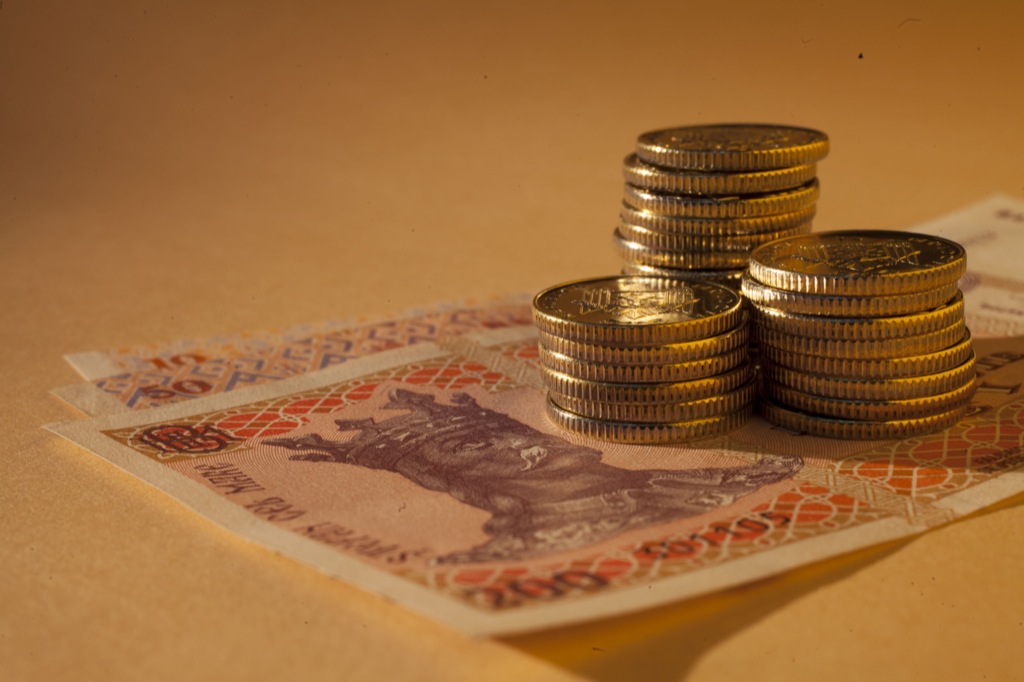
National Bank shall have the exclusive right to issue on the territory of the Republic of Moldova banknotes and coins as legal tender, as well as commemorative and jubilee banknotes and coins as legal tender and for numismatic purposes.

National Bank is exclusively responsible for the licencing, supervision and regulation of financial institutions activity.

National Bank of Moldova acts as banker and fiscal agent of the State and shall receive from state bodies economic and financial information and documents, which are necessary for carrying out its tasks.
National Bank of Moldova is an autonomous public legal entity and is responsible to the Parliament.

National Bank shall inform the public on the monetary policy strategy on the results of the macroeconomic analysis, the evolution of the financial market and on statistics, including with regard to monetary supply, crediting, balance of payments and the state of the foreign exchange market.

National Bank of Moldova is responsable for the compilation of the balance of payments, international investment position and the statistics of the external debt of the Republic of Moldova.
После нескольких запросов медийных учреждений по возможному займу государству или использовании валютных резервов, Национальный банк Молдовы уточняет:
Для преодоления экономического кризиса, поддержания экономических агентов и населения в условиях пандемии, исполнительная власть многих стран прибегает к внутренним или внешним кредитам. В Республике Молдова, привлечение внутренних ресурсов исполнительной властью предусмотрено законом, и Национальный банк, в качестве государственного фискального агента, регулярно размещает государственные ценные бумаги (ГЦБ) и государственные облигации на первичном рынке.
Закон о Национальном банке Молдовы запрещает предоставление какой-либо финансовой помощи государству и ее органам. Кредитование государства или бизнеса обеспечивается банковскими и небанковскими финансовыми учреждениями. В настоящее время в банковском секторе существует достаточная ликвидность.
НБМ обеспечил существование высокого уровня ликвидности в банках, а именно для создания условий кредитования бизнеса и Министерства финансов, и, следовательно, они доступны для нужд экономики. Таким образом, обеспечивается макромонетарный баланс, и создаются условия для кредитования экономики.
Любой кредит НБМ государству будет означать дополнительную эмиссию денег, которая приведет к неизбежному росту цен, и, следовательно, к обнищанию населения и пострадают наиболее уязвимые слои общества.
В то же время важно отметить, что средства на счетах Министерства финансов, полученные в виде внешней финансовой помощи (кредиты и гранты), включены в официальные резервные активы. Министерство финансов свободно использует эти средства, в том числе после преобразования в национальную валюту, для бюджетных расходов и инвестиционных проектов.
Мы также уточняем, что официальные резервные активы управляются центральным банком для поддержания платежного баланса и, при необходимости, регулирования его дисбалансов для поддержания доверия к национальной валюте и к национальной экономике в целом.
НБМ поддерживает валютные резервы на соответствующем уровне. Закон о Национальном банке Молдовы предусматривает, что НБМ «поддерживает международные валютные резервы на уровне, необходимом с его точки зрения для реализации денежной и валютной политики государства.». Их достаточность определяется согласно международной практике, с помощью нескольких показателей, в том числе покрытием адекватного периода импорта и степенью краткосрочного покрытия внешнего долга. На данный момент эти показатели указывают высокую степень адекватности валютных резервов. Это говорит об устойчивости нашей экономики в кризисных ситуациях.
Использование валютных резервов кроме целей, для которых они предназначены, в дополнение к негативным последствиям, связанным с денежной политикой, могут вызвать другие потрясения, которые усилят давление на валютные резервы. Эта ситуация совсем не приветствуется, особенно сейчас, когда нам нужны надежные валютные резервы, в условиях существующего глобального кризиса.
Конвертирование валютных резервов и их внутреннее использование сразу же приведет к росту цен, поскольку для той же валютной единицы были бы выпущены еще раз национальные денежные единицы по соответствующему обменному курсу. В то же время произошло бы и обесценение, вызванное снижением доверия к национальной валюте, с последовательной валютизацией сбережений населения и дальнейшим ростом цен - инфляцией.
В результате любой кредит НБМ, предоставленный государству или использование валютных резервов для других целей, подорвало бы доверие к стране, повлияет на экономику и затруднит финансовое положение граждан.


