Welcome to the official website of the National Bank of Moldova!
×
Do you have good eyesight and want to turn this tool off?



Welcome to the official website of the National Bank of Moldova!
You can choose one of the most popular reports from the list:

National Bank and the members of its decision-making bodies shall be independent in exercising the tasks conferred upon them by law, and shall neither seek nor take instructions from public authorities or from any other authority.
In order to ensure and maintain price stability over the medium term, the National Bank’s aim will be to keep inflation (measured by Consumer Price Index) at the level of 5.0 percent annually with a possible deviation of ± 1.5 percentage points, considered to be optimal for growth and development of Moldova's economy over the medium-term.

Financial stability is achieved by strengthening the resilience of the financial system, limiting the contagion effect and reducing the accumulation of systemic risks, thus contributing to the sustainability of the financial sector and economic growth.
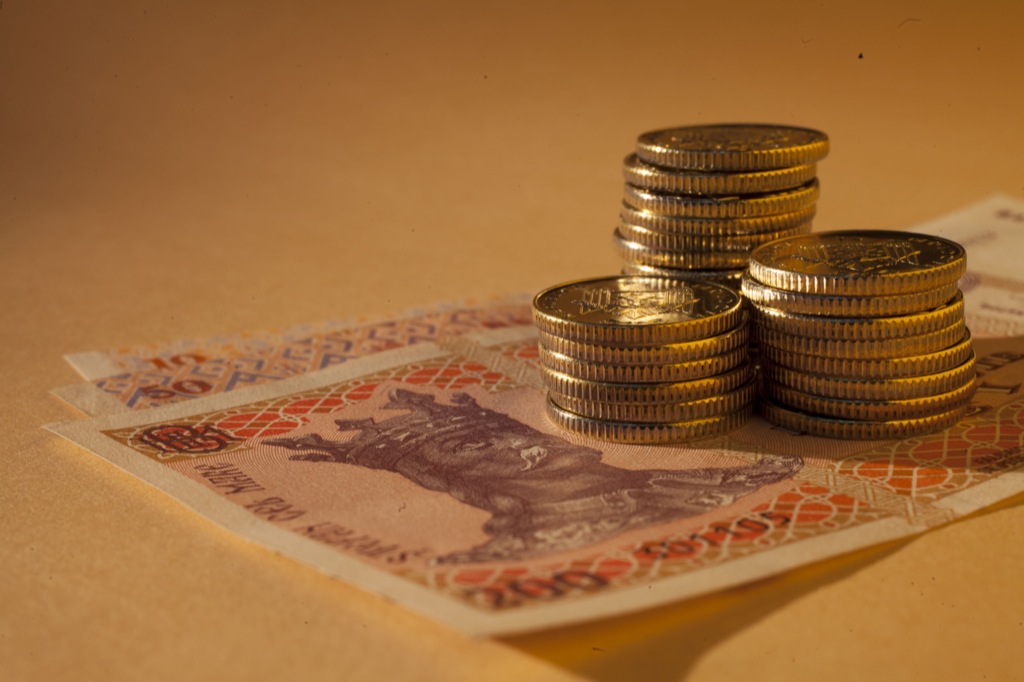
National Bank shall have the exclusive right to issue on the territory of the Republic of Moldova banknotes and coins as legal tender, as well as commemorative and jubilee banknotes and coins as legal tender and for numismatic purposes.

National Bank is exclusively responsible for the licencing, supervision and regulation of financial institutions activity.
National Bank of Moldova acts as banker and fiscal agent of the State and shall receive from state bodies economic and financial information and documents, which are necessary for carrying out its tasks.
National Bank of Moldova is an autonomous public legal entity and is responsible to the Parliament.

National Bank shall inform the public on the monetary policy strategy on the results of the macroeconomic analysis, the evolution of the financial market and on statistics, including with regard to monetary supply, crediting, balance of payments and the state of the foreign exchange market.

National Bank of Moldova is responsable for the compilation of the balance of payments, international investment position and the statistics of the external debt of the Republic of Moldova.
Raport asupra inflației nr.2, mai 2012
Conform articolului 4 al legii cu privire la BNM din 2006 obiectivul fundamental al Băncii Naţionale este asigurarea şi menţinerea stabilităţii preţurilor. Evoluţia preţurilor la bunuri şi servicii este reflectată de mai mulţi indicatori statistici cum ar fi indicele preţurilor de consum, indicele preţurilor producţiei industriale, deflatorul PIB etc.
Indicele preţurilor de consum (IPC) – este un indicator de evaluare, care caracterizează şi furnizează o estimare a evoluţiei de ansamblu a preţurilor la mărfurile cumpărate şi a tarifelor la serviciile utilizate de către populaţie pentru satisfacerea necesităţilor de trai într-o anumită perioadă faţă de o perioadă fixă.
La sfârşitul anului 2009, pentru a facilita realizarea obiectivului fundamental al Băncii Naţionale a Moldovei de asigurare şi menţinere a stabilităţii preţurilor, dar şi pentru a cunoaşte mai bine procesele inflaţioniste din economia naţională, BNM împreună cu BNS au elaborat şi aprobat Metodologia privind calculul indicelui inflaţiei de bază. Această metodologie va contribui şi la perceperea şi urmărirea acţiunilor de politică monetară ale BNM de către publicul larg în contextul tranziţiei băncii centrale către un nou regim de politică monetară.
Indicele inflaţiei de bază este măsura ce reflectă sursele persistente ale presiunilor inflaţioniste care permite de a percepe trendul inflaţiei în cazul când efectele influenţelor temporare şi tranzitorii sunt eliminate. Calculul acestui indice, conform acestei metodologii se efectuează prin eliminarea din inflaţia totală a efectelor unor şocuri tranzitorii de genul modificărilor intervenite în urma schimbării preţurilor şi tarifelor la bunuri şi servicii cu preţuri reglementate, a condiţiilor meteorologice nefavorabile care au afectat oferta de produse alimentare, modificărilor de preţ la unele produse sezoniere şi a variaţiilor preţurilor internaţionale la combustibili.
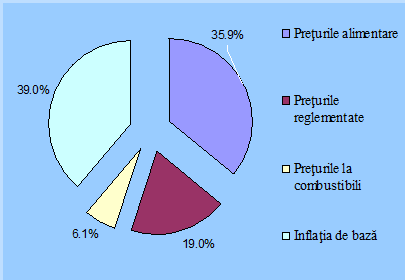
În rezultat Indicele Preţurilor de Consum este divizat în patru componente generale evoluţia cărora permite identificarea mai clară a originii şocurilor ce afectează procesul inflaţionist: inflaţia de bază, preţurile la produsele alimentare, preţurile reglementate şi preţurile la combustibil. Ponderea acestor componente în anul 2011 este reflectată în graficul nr. 1.
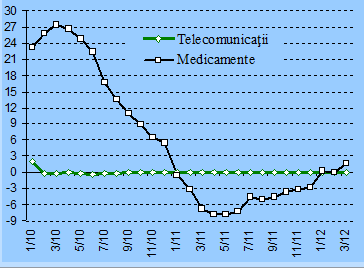
Totuşi, preţurile unor componente (telecomunicaţii, medicamente) cu ponderi semnificative (5.1 % şi 4.8 %, respectiv) atribuite iniţial inflaţiei de bază au demonstrat o evoluţie care nu oscilează în funcţie de raportul dintre cerere şi ofertă (graficul 3), dar au fost subiectul unor reglementări din partea autorităţilor centrale. Prin urmare, preţurile acestor sub-componente, de regulă, nu depind de cererea agregată şi nu pot fi influenţate prin acţiunile de politică monetară.
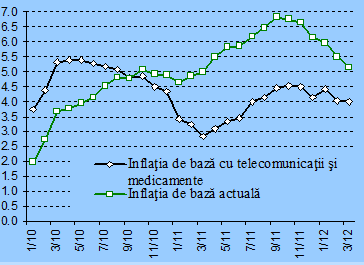
Mai mult, stabilitatea îndelungată a preţurilor la telecomunicaţii, dar şi diminuarea preţurilor la medicamente din anul precedent au avut un impact semnificativ de diminuare a inflaţiei de bază fapt ce este reflectat în graficul nr. 4 şi, în acest fel, acestea au distorsionat, într-o anumită măsură, mărimea presiunilor inflaţioniste existente în economie datorită excesului de cerere.
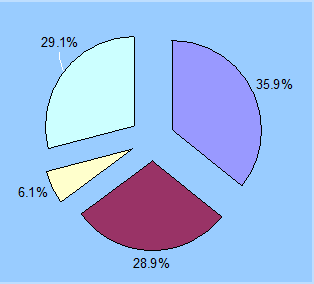
În acest sens, pentru a avea un indicator ce ar corespunde realităţii şi în baza cărora ar putea fi formulate concluzii şi recomandări obiective cu privire la măsurile de politică monetară, care ar fi necesare şi suficiente pentru a orienta cererea agregată către nivelul său de echilibru, a fost necesar de a efectua modificări în metodologia de calcul a inflaţiei de bază din anul 2009 prin includerea preţurilor la serviciile de telecomunicaţii şi medicamente în componentul servicii reglementate. În rezultatul schimbărilor efectuate în luna ianuarie 2012, ponderea preţurilor reglementate s-a majorat cu cca. 10 p.p. din contul sub-componentului inflaţia de bază, în timp ce cea a preţurilor alimentare şi a preţurilor la combustibil a rămas aceeaşi (graficul nr. 2). În acest fel, traiectoriile inflaţiei de bază şi a preţurilor reglementate din ediţia curentă a Raportului Inflaţiei reflectă schimbările sus-menţionate şi sânt diferite de cele din ediţiile anterioare ale Raportului Inflaţiei pentru perioada de până la finele anului 2011.


