Welcome to the official website of the National Bank of Moldova!
×
Do you have good eyesight and want to turn this tool off?



Welcome to the official website of the National Bank of Moldova!
You can choose one of the most popular reports from the list:

National Bank and the members of its decision-making bodies shall be independent in exercising the tasks conferred upon them by law, and shall neither seek nor take instructions from public authorities or from any other authority.

In order to ensure and maintain price stability over the medium term, the National Bank’s aim will be to keep inflation (measured by Consumer Price Index) at the level of 5.0 percent annually with a possible deviation of ± 1.5 percentage points, considered to be optimal for growth and development of Moldova's economy over the medium-term.

Financial stability is achieved by strengthening the resilience of the financial system, limiting the contagion effect and reducing the accumulation of systemic risks, thus contributing to the sustainability of the financial sector and economic growth.

National Bank shall have the exclusive right to issue on the territory of the Republic of Moldova banknotes and coins as legal tender, as well as commemorative and jubilee banknotes and coins as legal tender and for numismatic purposes.

National Bank is exclusively responsible for the licencing, supervision and regulation of financial institutions activity.

National Bank of Moldova acts as banker and fiscal agent of the State and shall receive from state bodies economic and financial information and documents, which are necessary for carrying out its tasks.

National Bank of Moldova is an autonomous public legal entity and is responsible to the Parliament.

National Bank shall inform the public on the monetary policy strategy on the results of the macroeconomic analysis, the evolution of the financial market and on statistics, including with regard to monetary supply, crediting, balance of payments and the state of the foreign exchange market.

National Bank of Moldova is responsable for the compilation of the balance of payments, international investment position and the statistics of the external debt of the Republic of Moldova.
Raport asupra inflației nr.1, februarie 2014
Analiza situației macroeconomice presupune evaluarea unui set de indicatori statistici care reflectă în cea mai mare măsură fluctuațiile pieței. Astfel, de-a lungul timpului pe lîngă statisticile social-economice, prezentate de oficiile naționale de statistică, au fost elaborate statistici adiacente, calculate de companii private, dar care și-au dovedit relevanța prin surprinderea efectivă și relativ rapidă a fenomenelor economice. Din această categorie fac parte indicii PMI (Purchasing Managers’ Indexes), utilitatea analizei acestora pentru surprinderea evoluției mediului macroeconomic extern fiind incontestabilă.
Indicii PMI au fost elaborați în mai multe țări de către diverse companii private pentru a oferi agenților de la burse, factorilor de decizie din domeniul afacerilor și analiștilor economici un set precis și în timp util al datelor ajutătoare unei mai bune perceperi a condițiilor din economie. Indicii PMI se bazează pe sondaje efectuate lunar în cadrul unor firme selectate, acestea oferind o indicație în avans a ceea ce se întîmplă cu adevărat în economia sectorului privat prin surprinderea unor variabile, precum ar fi rezultatul activității economice, comenzile noi, nivelul stocurilor, ocuparea forței de muncă și prețurile din industria prelucrătoare, construcții, comerțul cu amănuntul și sectorul serviciilor. Datele sunt colectate prin metode similare în majoritatea țărilor, astfel încît pot fi făcute comparații internaționale. Principalele particularități ale indicilor PMI: oferă indicatori bazați pe rezultate, spre deosebire de indicatorii de opinie sau de încredere; se produc mult mai rapid decît seriile de date oficiale; sunt publicați lunar; acoperă aproape toate activitățile economice din sectorul privat în multe țări (inclusiv în toate sectoarele importante de servicii); nu sunt revizuiți după publicare; sunt produse folosind metodologii similare în aproape toate țările, permițînd efectuarea comparațiilor internaționale.
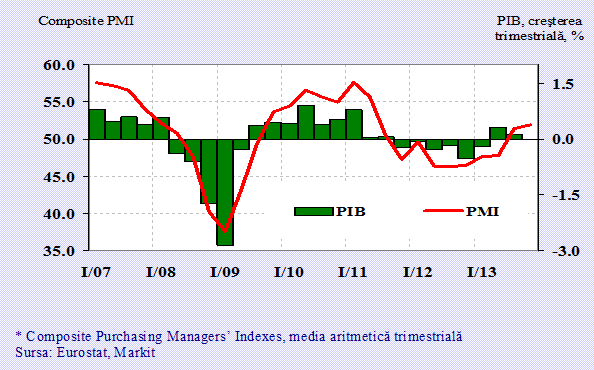
Valoarea de referință în cazul indicilor PMI este 50. Astfel, valorile de peste 50 ale indicilor reprezintă expansiune comparativ cu luna precedentă, sub 50 reprezintă o contracție, iar valoarea 50 indică invariabilitate. Printre cele mai vestite companii care calculează indicii respectivi se numără ISM (SUA), Markit, HSBC, JP Morgan etc. În cele mai dese cazuri, indicii PMI sunt calculați pentru sectorul industrial (Manufacturing PMI), sectorul serviciilor (Services PMI) și compilat (Composite PMI). Pe lîngă indicii PMI calculați pentru fiecare țară în parte, se calculează și indici PMI agregați, de exemplu pentru economiile emergente (HSBC Emerging markets PMI ) și la nivel global (JP Morgan Global PMI) etc.
În analizele macroeconomice indicii PMI pentru sectorul industrial tind a fi corelați cu evoluția indicilor producției industriale. Totodată, cel mai des în analizele macroeconomice indicii PMI compilați sunt utilizați ca o reflecție premergătoare a creșterii trimestriale a produsului intern brut, iar faptul că sunt publicați în fiecare lună reprezintă un avantaj incontestabil pentru luarea unor decizii privind politicile economice, în condițiile în care produsul intern brut se publică trimestrial și după o perioadă de timp relativ mare de la terminarea perioadei de referință (graficul nr.1).