Welcome to the official website of the National Bank of Moldova!
×
Do you have good eyesight and want to turn this tool off?



Welcome to the official website of the National Bank of Moldova!
You can choose one of the most popular reports from the list:

National Bank and the members of its decision-making bodies shall be independent in exercising the tasks conferred upon them by law, and shall neither seek nor take instructions from public authorities or from any other authority.
In order to ensure and maintain price stability over the medium term, the National Bank’s aim will be to keep inflation (measured by Consumer Price Index) at the level of 5.0 percent annually with a possible deviation of ± 1.5 percentage points, considered to be optimal for growth and development of Moldova's economy over the medium-term.

Financial stability is achieved by strengthening the resilience of the financial system, limiting the contagion effect and reducing the accumulation of systemic risks, thus contributing to the sustainability of the financial sector and economic growth.

National Bank shall have the exclusive right to issue on the territory of the Republic of Moldova banknotes and coins as legal tender, as well as commemorative and jubilee banknotes and coins as legal tender and for numismatic purposes.

National Bank is exclusively responsible for the licencing, supervision and regulation of financial institutions activity.
National Bank of Moldova acts as banker and fiscal agent of the State and shall receive from state bodies economic and financial information and documents, which are necessary for carrying out its tasks.
National Bank of Moldova is an autonomous public legal entity and is responsible to the Parliament.

National Bank shall inform the public on the monetary policy strategy on the results of the macroeconomic analysis, the evolution of the financial market and on statistics, including with regard to monetary supply, crediting, balance of payments and the state of the foreign exchange market.

National Bank of Moldova is responsable for the compilation of the balance of payments, international investment position and the statistics of the external debt of the Republic of Moldova.
Raport asupra inflației nr.4, noiembrie 2012
Banca Națională a Moldovei stabilește obiectivul inflației prin variația anuală a Indicelui Prețurilor de Consum. Prin modul de calcul (formula 1), acest indicator cumulează ratele lunare ale inflației din ultimele 12 luni și astfel traiectoria acestuia este determinată atât de evoluțiile curente, cât și de cele survenite cu un an în urmă, numit și efectul perioadei de bază.
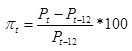 , (1) unde
 - inflația anuală,
 - nivelul prețurilor în perioada curentă,
 - nivelul prețurilor cu 12 luni în urmă.
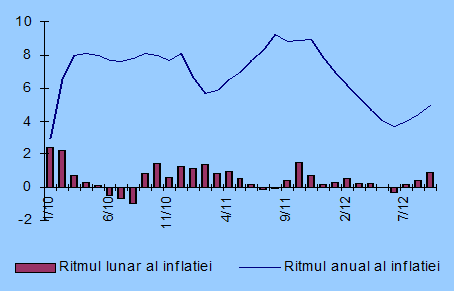
Acest fapt poate fi observat, în special, din evoluția descendentă a inflației anuale din prima jumătate a anului curent, care s-a datorat unui nivel mai ridicat al inflației în perioada de bază (începutul anului 2011) ca urmare a majorărilor de tarife la utilități și mai puțin datorită evoluției prețurilor din anul curent (graficul nr. 1). În acest fel, măsura respectivă ar putea să creeze o imagine incompletă în reflectarea în timp util a presiunilor inflaționiste relevante politicii monetare existente la moment.
Totuși, avantajul măsurii inflației anuale constă în faptul că, prin compararea indicelui din perioada curentă cu cel cu 12 luni în urmă, se exclude variația prețurilor care se repetă în perioade de timp similare pe parcursul unui an, cum ar fi spre exemplu vânzările mari în perioada sărbătorilor de iarnă sau prețurile mai reduse la fructe și legume în perioadele calde, fenomen cunoscut sub denumirea de sezonalitate. Spre deosebire de măsura inflației anuale, măsura inflației lunare a IPC și a subcomponentelor sale prezentate de BNS este afectată de efectul sezonier. Astfel, o evaluare a tendințelor pe termen scurt ale inflației necesită, în primul rând, o estimare a efectelor sezoniere asupra prețurilor. Aceasta poate fi efectuată prin ajustarea subcomponentelor coșului IPC înainte de ponderarea acestora în inflația totală sau prin ajustarea sezonieră a seriei inflației totale.
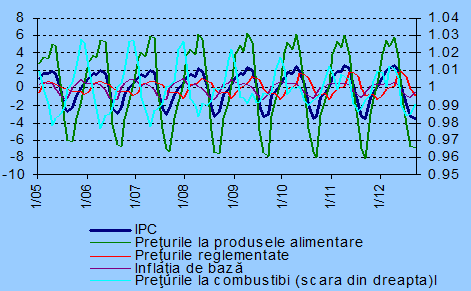
Prețurile în Republica Moldova au un comportament pronunțat sezonier, imprimat, în cea mai mare parte, de prețurile la produsele alimentare. Astfel, factorul sezonier pentru prețurile la produsele alimentare este cel mai volatil și are valoarea maximă în luna aprilie și minimă în luna septembrie. Cu alte cuvinte, prețurile la produsele alimentare, în absența altor șocuri, sunt cele mai ridicate primăvara și cele mai joase la sfârșitul verii și toamna, ca urmare a calendarului agricol din Republica Moldova (graficul nr. 2). În condițiile, în care efectul sezonier e mai puțin pronunțat în cadrul restului subcomponentelor, sezonalitatea inflației totale este determinată, în cea mai mare parte, după cum s-a menționat anterior, de cea a prețurilor la produsele alimentare.
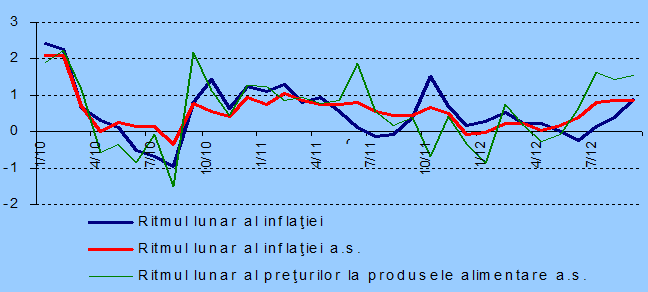
Excluderea efectului sezonier estimat din seria brută a inflației lunare relevă o creștere a prețurilor mai puțin volatilă. În același timp, este sesizabilă influența semnificativă a acestuia în lunile din vara anului curent. Astfel, creșterea prețurilor vara, fără impactul sezonier negativ, a fost în realitate mai pronunțată și a fost determinată de presiunile inflaționiste din partea prețurilor alimentare (graficul nr. 3) Prin urmare, dacă nu este tratată adecvat, măsura inflației lunare poate prezenta o imagine distorsionată a presiunilor inflaționiste în economie. Din această cauză, în procesul de analiză și prognoză a IPC și a subcomponentelor sale în cadrul BNM sunt utilizate seriile de timp lunare ajustate efectului sezonier.


