Bine ați venit pe pagină oficială a Băncii Naționale a Moldovei!



Bine ați venit pe pagină oficială a Băncii Naționale a Moldovei!
Cele mai populare rapoarte statistice:
Banca Naţională şi membrii organelor de conducere ale acesteia sunt independenţi în exercitarea atribuţiilor stabilite de lege şi nu pot solicita şi nici accepta instrucţiuni de la autorităţile publice sau de la orice altă autoritate.

Banca Naţională informează publicul despre evoluția inflației anuale, strategia de politică monetară,rezultatele analizei macroeconomice, evoluţiei pieţei financiare şi informaţia statistică, inclusiv privind masa monetară, acordarea creditelor, balanţa de plăţi şi situaţia pieţei valutare.
Pentru asigurarea şi menţinerea stabilităţii preţurilor pe termen mediu, Banca Naţională a Moldovei menţine inflaţia (măsurată prin indicele preţurilor de consum) la nivelul de 5.0 la sută anual cu o posibilă abatere de ± 1.5 puncte procentuale, fiind considerat nivelul optim pentru creşterea şi dezvoltarea economică a Republicii Moldova pe termen mediu.



Stabilitatea financiară se realizează prin consolidarea rezilienței sistemului financiar, limitarea efectului de contagiune și diminuarea acumulării de riscuri sistemice, contribuind, astfel, la sustenabilitatea sectorului financiar și creșterea economică.



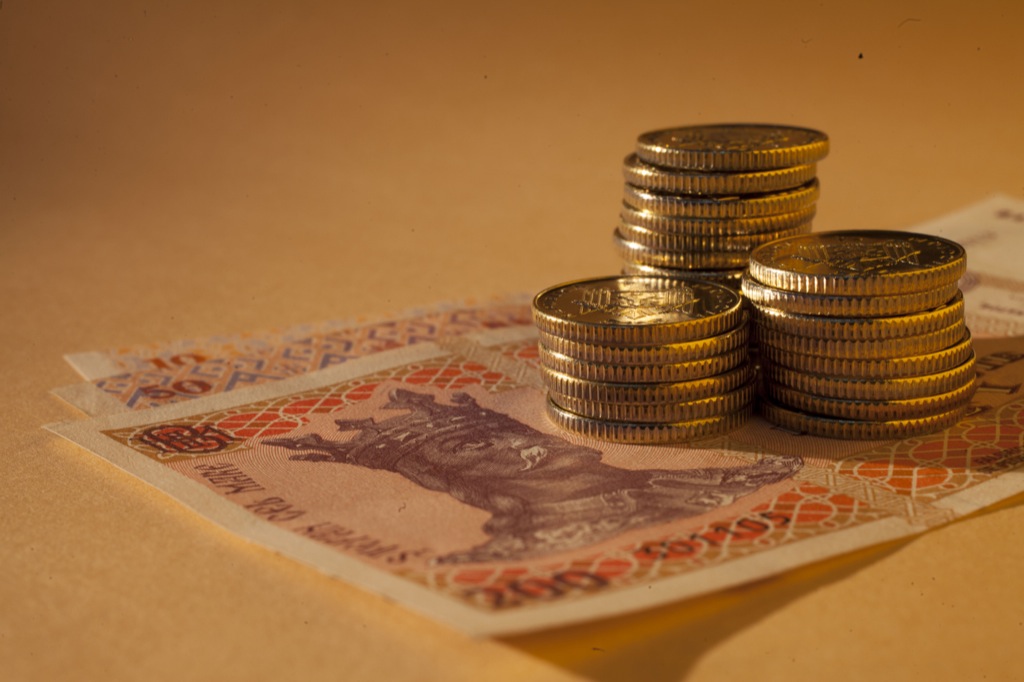
Banca Naţională a Moldovei, are dreptul exclusiv de a emite pe teritoriul Republicii Moldova bancnote şi monede metalice ca mijloc de plată. BNM pune în circulaţie bancnote şi monede metalice, prin intermediul sistemului bancar.

Banca Naţională este unica instituţie care efectuează licenţierea, supravegherea şi reglementarea activităţii instituţiilor financiare.
Banca Națională supraveghează sistemul de plăţi în Republica Moldova şi promovează funcţionarea stabilă şi eficientă a sistemului automatizat de plăţi interbancare.
Banca Naţională este o persoană juridică publică autonomă şi este responsabilă faţă de Parlament.

BNM publică statistici privind masa monetară, sectorul bancar, balanța de plăți, situația pieței valutare, etc. pentru a asigura transparența în procesul de elaborare și adoptare a deciziilor BNM, a asigura continuitatea în comunicare și predictibilitatea BNM pe piață, pentru sporirea credibilității BNM în calitate de bancă centrală dar și pe piața financiar-bancară din Republica Moldova.


The year 2024 provided valuable evidence of the adaptability of the Moldovan economy. Despite an international context marked by geopolitical challenges and energy uncertainties, our country has demonstrated a remarkable ability to withstand challenges and build solid foundations for its European future.
The monetary policy pursued by the National Bank of Moldova in 2024 decisively contributed to maintaining economic stability and creating the premises for long-term sustainable development. The favorable mix of monetary and economic policies supported economic stability and fostering private sector investment.
For the National Bank of Moldova, 2024 was the year when strategic vision harmoniously blended with concrete action. It was a period of strategic transformations aimed at laying the foundation for a robust framework of sustainable economic development. The NBM actively contributed to accelerating the European integration of the Republic of Moldova.
At the beginning of my mandate, I committed to improving the indicators in the four main areas of the institution: price stability, credit growth, contribution to the European integration process, and strengthening the independence and reputation of the National Bank of Moldova. Today, with both satisfaction and responsibility, I can state that these commitments have been fulfilled.
Inflation was brought under control at 4.7%, lending in the national currency increased by 43.6% in volume, and the share of lending in GDP rose from 24% to 27%. Admission to SEPA marked a historic step towards Europe, while at the same time strengthening the image of the NBM in the European Union and in its relations with international partners. The institutional independence of the NBM has been reinforced through professional and transparent decisions, earning the respect and trust of the European financial community.
Today, the Western world looks at Moldova with great confidence. In 2024, Chișinău became the stage for global financial dialogues, bringing together more than 100 representatives of ministries of finance and central banks from 16 countries, which are part of the Constituency of the International Monetary Fund and the World Bank.
These results represent the foundation on which we are building confidence in the economic future of the Republic of Moldova – a country that possesses all the attributes to establish itself as a strong economy within the European Union.
The conduct of monetary policy throughout 2024 was marked by a prudent approach, shaped by pronounced risks and uncertainties generated by events associated with the military conflict in Ukraine and by energy tariff challenges. The measures adopted by the Executive Board of the NBM were timely from multiple perspectives, ensuring an optimal balance between supporting economic activity and anchoring inflation expectations. The confirmed effectiveness of the accommodative stance in 2024 motivates us to continue this strategic approach in the future.
The gradual reduction of the monetary policy rate from 4.75% in December 2023 to 3.60% annually in December 2024 created the necessary monetary conditions to stimulate lending and support domestic aggregate demand.
The average annual inflation rate in 2024 amounted to 4.7%, which was 8.7 percentage points lower than in the previous year. Throughout the year, the consumer price index was placed within the variation range of ±1.5 percentage points from the target of 5.0%, with the exception of minor deviations in May and December. The recorded dynamics confirm the NBM’s capacity to ensure medium-term price stability.
In the global economic context marked by moderate growth of 3.3% and the persistence of instability factors generated by the energy crisis and geopolitical tensions in the Middle East, the economy of the Republic of Moldova managed to maintain a positive trend. Although economic activity registered an increase of 0.1% compared to 2023, this performance reflects the resilience of the national economy in the face of external challenges and the impact of drought on the agricultural sector.
The stimulative monetary policy measures produced visible results in the financial sector. The volume of new loans granted in the national currency by licensed banks increased by 43.6% compared to the previous year, demonstrating access to financing with stimulative potential for economic activity, as well as for infrastructure development and the private sector.
The Moldovan financial system continues to strengthen. Total assets in the banking sector reached MDL 170,175.0 million, increasing by 10.6% compared to the end of 2023. This sustained growth confirms confidence in the stability of the banking system and its ability to support economic development. The insurance sector continued its consolidation trend, with assets increasing by 10.7% to MDL 5,509.3 million, while the non-bank lending sector strengthened its position with a 15.3% increase in assets, reaching MDL 18,802.2 million.
The year 2024 marked historic progress in European integration and modernization of financial infrastructure. Through the sustained efforts of the NBM, in collaboration with national and international institutions, the Republic of Moldova was accepted into the Single Euro Payments Area (SEPA) in March 2025, based on the application submitted in 2024. Thus, the Republic of Moldova marked a significant step forward in the economic and financial sphere. This achievement strengthens our country’s position on the European financial market and facilitates access to modern and affordable banking services for both citizens and companies.
Digitalization brings successful projects to the financial and banking system. Thus, the implementation of the MIA Instant Payments system has revolutionized the national financial infrastructure, providing both individuals and businesses with efficient and affordable payment methods. The MIA system for businesses can be integrated by all entrepreneurs in the country, offering alternative methods of electronic payment acceptance through QR codes at points of sale, payment button integration in online stores, and payments via link for remote deliveries. These technological innovations strengthen the competitiveness of the Moldovan economy and facilitate the digitalization of the financial sector.
Financial education of the population, ensuring cybersecurity, and guaranteeing a unified evolution in this digital transition represent responsibilities with medium- and long-term impact.
Adapting to new technologies and maintaining public trust in the digital financial system constitute an ambitious objective that we manage with caution. Cybersecurity challenges and the need for adequate regulation of financial innovations remain constant priorities on the NBM’s agenda. In this context, the rapid evolution of artificial intelligence technologies in the financial sector represents a reality that requires a proactive approach to ensure both innovation and system stability.
Throughout 2024, the NBM continued the implementation of reforms, including aligning the regulatory framework with European standards and strengthening the banking infrastructure for faster and more secure transactions. In the insurance sector, the necessary supervisory measures were undertaken to ensure compliance with legal requirements and to protect the rights of policyholders and beneficiaries. Thus, the outlook for the near future remains optimistic.
The independence and integrity of the Bank, the contribution to Moldova’s European path, the maintenance of price stability, and the support of financial intermediation to boost economic activity constitute our strategic objectives. The process of convergence and the sustainable growth of Moldova’s economy continue to be the fundamental priorities of the policies promoted by the NBM.
Moldova is part of the European family and must become a member of the European Union. Membership in this community is a guarantee of peace, security, democracy, and prosperity – the four fundamental pillars of a safe and stable future that we are building together with society as a whole. The results achieved in 2024 confirm the Republic of Moldova’s ability to meet European standards and to fully integrate into the European economic area.
After a year of joint efforts, transformations, and achievements, I would like to emphasize that these successes belong not only to institutions, but to society as a whole. Every citizen who placed trust in the national currency, every entrepreneur who invested, and every financial institution that responded positively to reforms – all are contributing to the creation of a safer, more prosperous, and more stable future.
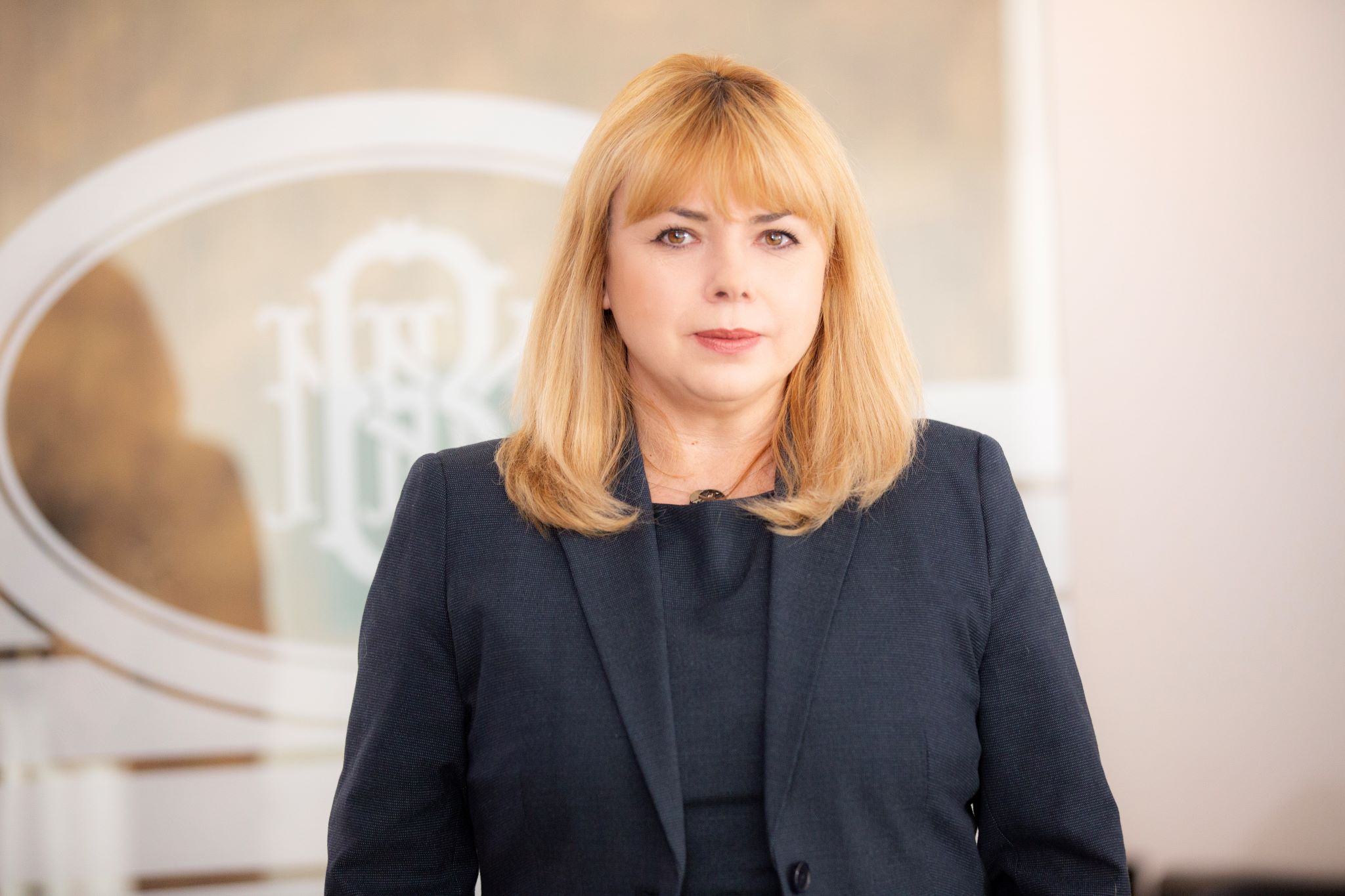
Anca-Dana Dragu
Governor


