
Bine ați venit pe pagină oficială a Băncii Naționale a Moldovei!



Bine ați venit pe pagină oficială a Băncii Naționale a Moldovei!
Cele mai populare rapoarte statistice:

Banca Naţională şi membrii organelor de conducere ale acesteia sunt independenţi în exercitarea atribuţiilor stabilite de lege şi nu pot solicita şi nici accepta instrucţiuni de la autorităţile publice sau de la orice altă autoritate.



Banca Naţională informează publicul despre evoluția inflației anuale, strategia de politică monetară,rezultatele analizei macroeconomice, evoluţiei pieţei financiare şi informaţia statistică, inclusiv privind masa monetară, acordarea creditelor, balanţa de plăţi şi situaţia pieţei valutare.


Pentru asigurarea şi menţinerea stabilităţii preţurilor pe termen mediu, Banca Naţională a Moldovei menţine inflaţia (măsurată prin indicele preţurilor de consum) la nivelul de 5.0 la sută anual cu o posibilă abatere de ± 1.5 puncte procentuale, fiind considerat nivelul optim pentru creşterea şi dezvoltarea economică a Republicii Moldova pe termen mediu.




Stabilitatea financiară se realizează prin consolidarea rezilienței sistemului financiar, limitarea efectului de contagiune și diminuarea acumulării de riscuri sistemice, contribuind, astfel, la sustenabilitatea sectorului financiar și creșterea economică.




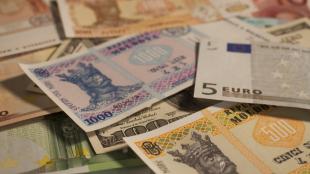
Banca Naţională a Moldovei, are dreptul exclusiv de a emite pe teritoriul Republicii Moldova bancnote şi monede metalice ca mijloc de plată. BNM pune în circulaţie bancnote şi monede metalice, prin intermediul sistemului bancar.




Banca Naţională este unica instituţie care efectuează licenţierea, supravegherea şi reglementarea activităţii instituţiilor financiare.



Banca Națională supraveghează sistemul de plăţi în Republica Moldova şi promovează funcţionarea stabilă şi eficientă a sistemului automatizat de plăţi interbancare.


Banca Naţională este o persoană juridică publică autonomă şi este responsabilă faţă de Parlament.

BNM publică statistici privind masa monetară, sectorul bancar, balanța de plăți, situația pieței valutare, etc. pentru a asigura transparența în procesul de elaborare și adoptare a deciziilor BNM, a asigura continuitatea în comunicare și predictibilitatea BNM pe piață, pentru sporirea credibilității BNM în calitate de bancă centrală dar și pe piața financiar-bancară din Republica Moldova.


The economic achievements recorded in 2010 indicate that the Republic of Moldova has gradually recovered and overcame the consequences of the global financial crisis. In this context, the National Bank of Moldova undertook the significant task of implementing the inflation targeting regime, which aims at maintaining price stability in a market-based financial system, thus supporting the general economic policy of the state.
The need for calibration of monetary policy based on inflation forecast, and not on an intermediate target, as a result of distortion of the relationship between the inflation rate and monetary aggregates development and the persistence of risks related to capital account liberalization, determined the National Bank of Moldova to end the monetary aggregates targeting regime by the end of 2009. As a result, NBM has set a medium term objective of inflation of 5.0 percent with a probable deviation of ± 1.0 percentage points, which is indicated in the Monetary Policy Strategy of the National Bank of Moldova for 2010-2012.
The regulated prices, fuel prices and food prices had an impressive contribution to the formation of inflation in 2010. Their evolution was influenced by the price volatility in world markets and by the deviation from the norm of weather conditions, factors affecting the supply and, thus, their control through monetary policy actions of the National Bank of Moldova is not justified. As a result, the annual inflation rate constituted 8.1 percent in December 2010, while the core inflation was 4.4 percent and ranked within the stated objective. However, the significant discrepancy between the CPI and core inflation confirms the high impact of non-monetary factors on inflation process in Moldova.
Moldova's economy in 2010 recorded an increase of 6.9 percent compared to the previous year, as a result of improving the situation in all sectors of the economy. Quarterly evolution of this indicator shows a sharp recovery in the third quarter of 2010, increasing by 8.0 percent compared to 4.7 and 6.4 percent in the first and second quarters of 2010, respectively. The exports have increased as compared to 2009, due to economic stabilization of the main trading partners of the Republic of Moldova. The growth of remittances, overlapping with the restoration of optimistic expectations of the population and economic agents, has stimulated the increase in consumption and imports, so that the domestic demand was the main determinant of GDP growth in 2010. It should be mentioned that the construction sector recorded an improvement after a long period of decline. Despite the economic recovery, the situation on the labor market shows deterioration, the unemployment rate constituting 7.4 percent in 2010, which reveals low labor market flexibility.
Quantifying the macroeconomic situation, the trends and forecasts of macroeconomic indicators in the medium term, the inflation outlook in the short and medium term, with probable uncertainties and in order to anchor the inflationary pressures, the NBM has promoted an adaptive monetary policy during 2010, thus contributing to the macroeconomic and financial stability.
After a series of downward key adjustments of the interest rates on monetary regulation instruments conducted during 2009, in response to the global financial crisis, the National Bank of Moldova increased consecutively in February and March 2010 the interest rates on monetary regulation instruments by 1.0 percentage points, up to the level of 7.0 percent, which contributed to the symmetrization of interest rates corridor on loans and deposits attracted in 2010, so that the balance of loans and deposits experienced a general upward trend initiated at the beginning of 2010.
It should be mentioned that, in order to anchor the inflation expectations, within the last meeting of 2010 of the Council of Administration of the National Bank of Moldova was decided to increase the base rate by 1.0 percentage point, up to the level of 8.0 percent.
A prerequisite of implementing the direct inflation targeting regime is to maintain a flexible exchange rate. Thus, NBM has limited its interventions on the foreign exchange market to the amounts necessary without resisting the long-term trend of exchange rate of MDL.
It should be mentioned that, amid the persistence of inflationary pressures and pronounced recovery of economic activity in 2010, the National Bank of Moldova has undertaken measures to support banks' liquidity and to credit the national economy. As a result, the adaptive nature of the monetary policy of the NBM, by keeping the required reserves ratio to the level of 8.0 percent during 2010, contributed to the decrease of interest rates on the market and to further widening the lending opportunities of the real sector of the economy.
In order to continuously encourage the lending process to the real sector of the economy, initiated in August - September 2009, the National Bank of Moldova has prolonged in April 2010 credit lines to banks with a term of 1 year. In 2010, the National Bank of Moldova has opened four additional credit lines for banks, which have not previously received credit from the NBM for the stated purpose.
The conjuncture of 2010, characterized by the liquidity excess in the monetary market and increased inflationary pressures, has determined the National Bank of Moldova to return to the firm management of liquidity excess in the banking system. In 2010, the weighted average rate of sterilization operations amounted to 6.74 percent annually, compared to 10.62 percent recorded in 2009. The operating mode of the standing facilities offered to the NBM a greater flexibility in achieving its monetary policy and allowed banks to manage their liquidity efficiently in conjunction with the rules stipulated by the banking legislation.
In this context, the long-term liquidity of the banking sector constituted 0.7 percent as of December 31, 2010, and the current liquidity - 34.6 percent.
At the same time, in accordance with the Regulation on Risk Weighted Capital Adequacy, starting with December 31, 2010 the amount of share capital constituted 100.0 million lei. All banks have complied with this requirement, holding the appropriate amount of share capital. The average risk-weighted capital adequacy (the ratio of total regulatory capital and the risk-weighted assets) remained at a high level - 30.1 percent (the minimum regulated level in Moldova constituting 12.0 percent), indicating a high degree of safety of banks, determined by the existence of a potential of making risky operations without affecting the capital, thus ensuring the financial stability.
Reticence of licensed banks and their increased capacity to respond to financial crisis manifested by reducing the weight of nonperforming loans (substandard, doubtful and loss) in total loans, which accounted for 13.3 percent or 3.1 percentage points less as of December 31, 2010 compared to the end of 2009.
The NBM intervened on the foreign exchange market mainly as a seller of foreign exchange in the first half of 2010 and as a buyer in the second half of 2010, the interventions being made to alleviate the excessive fluctuations of the exchange rate of national currency against the U.S. dollar and providing liquidity in the foreign exchange market.
The NBM will maintain the prudent monetary policy by continuing to vigorously monitor the internal and international economic environment developments, so that by the use of appropriate monetary policy instruments to ensure the correlation between maintaining price stability on medium term and the economic growth on long term.


