
Bine ați venit pe pagină oficială a Băncii Naționale a Moldovei!



Bine ați venit pe pagină oficială a Băncii Naționale a Moldovei!
Cele mai populare rapoarte statistice:

Banca Naţională şi membrii organelor de conducere ale acesteia sunt independenţi în exercitarea atribuţiilor stabilite de lege şi nu pot solicita şi nici accepta instrucţiuni de la autorităţile publice sau de la orice altă autoritate.



Banca Naţională informează publicul despre evoluția inflației anuale, strategia de politică monetară,rezultatele analizei macroeconomice, evoluţiei pieţei financiare şi informaţia statistică, inclusiv privind masa monetară, acordarea creditelor, balanţa de plăţi şi situaţia pieţei valutare.

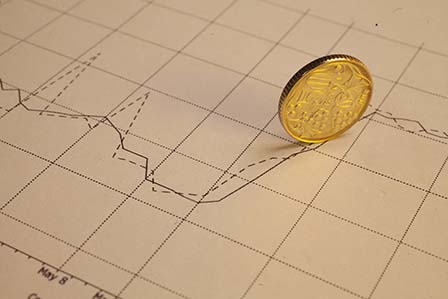
Pentru asigurarea şi menţinerea stabilităţii preţurilor pe termen mediu, Banca Naţională a Moldovei menţine inflaţia (măsurată prin indicele preţurilor de consum) la nivelul de 5.0 la sută anual cu o posibilă abatere de ± 1.5 puncte procentuale, fiind considerat nivelul optim pentru creşterea şi dezvoltarea economică a Republicii Moldova pe termen mediu.




Stabilitatea financiară se realizează prin consolidarea rezilienței sistemului financiar, limitarea efectului de contagiune și diminuarea acumulării de riscuri sistemice, contribuind, astfel, la sustenabilitatea sectorului financiar și creșterea economică.




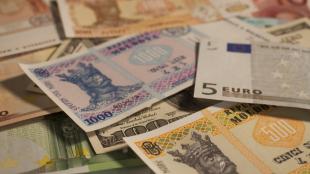
Banca Naţională a Moldovei, are dreptul exclusiv de a emite pe teritoriul Republicii Moldova bancnote şi monede metalice ca mijloc de plată. BNM pune în circulaţie bancnote şi monede metalice, prin intermediul sistemului bancar.




Banca Naţională este unica instituţie care efectuează licenţierea, supravegherea şi reglementarea activităţii instituţiilor financiare.



Banca Națională supraveghează sistemul de plăţi în Republica Moldova şi promovează funcţionarea stabilă şi eficientă a sistemului automatizat de plăţi interbancare.


Banca Naţională este o persoană juridică publică autonomă şi este responsabilă faţă de Parlament.

BNM publică statistici privind masa monetară, sectorul bancar, balanța de plăți, situația pieței valutare, etc. pentru a asigura transparența în procesul de elaborare și adoptare a deciziilor BNM, a asigura continuitatea în comunicare și predictibilitatea BNM pe piață, pentru sporirea credibilității BNM în calitate de bancă centrală dar și pe piața financiar-bancară din Republica Moldova.


Inflation Report no. 3, August 2018
The new medium-term inflation forecast (eight quarters) was prepared based on of the updated macroeconomic analysis and underlying assumptions, taking into account domestic and international economic developments, including the dynamics of population consumption, remittances, foreign exchange market indicators, stock indices of commodities and energy resources, as well as changes in the external and internal trade conditions.
Over the next three quarters, the annual inflation rate will follow a downward trajectory and fall below the lower limit of the inflation variability interval, eventually reaching a level of 1.9% in the 4Q 2018. Later, the trajectory will reverse, with inflation returning within its variability interval in the 2Q 2019 and recording 6.5% in the 3Q 2019. Core inflation will record a similar trajectory, being largely influenced by supply factors. The growth rate of food prices will decrease in 2018, reversing to the upward trend in the second half of the next year. The annual growth rate of regulated prices will fall to -4.4% in the current quarter, but will rise afterwards, exceeding a 10% level in the second half of 2019. After the recent increase, the annual growth rate of fuel prices is expected to assume a downward trajectory throughout the forecasting period.
Aggregate demand will remain moderate over the forecast horizon as a result of the restrictive monetary and fiscal conditions to be maintained throughout the next year.
The existing trade and geopolitical factors determine global economy to grow at a moderate pace. Currently, the US trade protectionist actions, which were replicated by China and other relevant economies, generate the major risk to global economy. The complexity of this risk arises from the uncertainty of the extent and viability of the phenomenon. Considerable risks are also generated by more restrictive financial conditions, promoted by advanced economies, which affect emerging economies. Until recently, the negative effect of the transfer of financial capital from emerging to advanced economies was offset mainly by higher international commodity prices. However, the stabilisation of energy prices associated with trade tensions has led to a slowdown in the growth rate of international prices, which could negatively affect economic growth in emerging economies.
The Eurozone GDP’s projection was revised downwards based on a lower growth rate recorded in the 1Q 2018 as a result of low temperatures and political tensions, which affected Italy and Germany. The economy of the Russian Federation achieved some stability, overcoming the immediate consequences of international economic sanctions and benefiting from high oil prices. The trajectory of the EUR/USD cross-rate forecast has been updated following the recent appreciation of the US dollar. The oil price will remain in the range of US $ 70-80 / barrel over the next period and will record an average level of $ 72.2 / barrel in 2018 and $ 73.0 / barrel in 2019. Trade tensions between the US, China and the European Union have provoked a recent drop in international food prices, pushing down their trajectory for approximately two quarters.
The current inflation forecast was revised downwards through the 2Q 2019 and upwards - for the rest of the forecast horizon. This revision was driven by an upward revision of core inflation through the 1Q of the next year and a downward revision for the rest of the forecasting period. The growth rate forecast for food prices was revised downwards throughout the forecasting period. For regulated prices, the forecast was revised downwards through the 2Q of the next year and upwards - for the rest of the forecast horizon. At the same time, the growth rate forecast for fuel prices was revised upwards throughout the forecasting period.
The annual CPI dropped from 4.7% in March 2018 to 3.2% in June 2018, thus falling below the lower limit of the inflation target interval. The CPI subcomponents kept recording a steady decrease in the core inflation level, driven by the modest aggregate demand and the appreciation of the Moldovan leu, which were slightly offset by occasional sectoral shocks. Following a high base period of the previous year and a good crop of fresh fruits and vegetables in the 2Q 2018, the annual food price index recorded a steady decline over the reference period. The annual rate of regulated prices continued to fall, being driven by the high base effect. The rise in international oil prices coupled with a slight depreciation of the domestic currency against the US dollar determined a rise in fuel prices in the domestic market. In the 2Q 2018, the actual value of the annual CPI growth rate recorded no deviations from the level, projected in the previous forecasting round. Over the next period, the annual inflation rate will remain below the lower limit of the inflation target interval, due to the cuts implemented in electricity tariffs as well as a negligible impact continually generated by aggregate demand on prices. At the same time, the inflation’s downward trend could be also attributed to the secondary effects of a decrease in tariffs on natural gas and electricity. During the 2Q 2018, the annual industrial production price index maintained its downward trajectory, thus determining a number of CPI subcomponents to maintain the same trajectory over the next period.
A positive evolution of the national economy in the 1Q 2018, as was projected in the previous forecasting rounds, was favoured both by the growth of aggregate demand as well as by the impact of a rich crop recorded in the previous year fuelling the rise in exports. However, the growth rate recorded lower values, with GDP increasing by 3.7% compared to the 1Q 2017. The growth in gross fixed capital formation was supported by investments in both the construction and the machinery and equipment sectors. The stock change generated a positive impact on the dynamics of economic activity. As in the previous year, in the first half of this year, the volume of exports continued to grow, mainly supported by good agricultural crop and the demand from the EU countries. The volume of imports has also increased against the background of an increasing domestic demand as well as the appreciation of the domestic currency.
Analysed by categories of resources, GDP growth, in the first quarter of 2018, was largely determined by positive contributions generated by the industrial sector, trade, the information and communications sector, as well as by net product taxes. Statistical data for April-May 2018 outline conditions for a continued economic growth in the 2Q 2018. Estimates suggest that economic growth will be maintained in the second half of the year.
In the 1Q 2018, the number of the employed population remained at the level of the beginning of the previous year, while the number of unemployed population diminished, which determined a negative growth rate of the economically active population. The unemployment rate has decreased both compared to the beginning of the previous year and to the fourth quarter of 2017.
In April-May 2018, the annual growth rate of the state budget’s revenues recorded positive evolutions, rising by 14.1%, compared to the similar period of 2017. Public expenditure, however, has also recorded an upward trend, increasing by 14.6%, year-on-year. This trajectory could generate pressures that would push upwards the domestic demand in the coming years. At the same time, the market situation favoured a further decrease of interest rates on government securities, which decreased on all types of maturities during the 2Q 2018.
In the 2Q 2018, the volume of excess liquidity amounted to 9.2 billion lei. The high volume of excess liquidity was largely generated by monetary emissions, following the NBM’s interventions in the forex market, and by public sector spending. Under these circumstances, banks preferred to place funds in low-risk instruments, such as government securities or the National Bank’s Certificates (NBC).
In the 2Q 2018, monetary aggregates recorded a positive, yet slower, growth rate, as compared to the previous quarter. This evolution was largely determined by the increase in the volume of sight deposits, which were placed both in domestic and foreign currency.
Following the trend set by the base rate applied to main monetary operations of the National Bank of Moldova and as a result of the liquidity surplus recorded in the banking system, average interest rates, applied by licensed banks on both loans and deposits, continued their downward trend.


