
Bine ați venit pe pagină oficială a Băncii Naționale a Moldovei!



Bine ați venit pe pagină oficială a Băncii Naționale a Moldovei!
Cele mai populare rapoarte statistice:

Banca Naţională şi membrii organelor de conducere ale acesteia sunt independenţi în exercitarea atribuţiilor stabilite de lege şi nu pot solicita şi nici accepta instrucţiuni de la autorităţile publice sau de la orice altă autoritate.



Banca Naţională informează publicul despre evoluția inflației anuale, strategia de politică monetară,rezultatele analizei macroeconomice, evoluţiei pieţei financiare şi informaţia statistică, inclusiv privind masa monetară, acordarea creditelor, balanţa de plăţi şi situaţia pieţei valutare.


Pentru asigurarea şi menţinerea stabilităţii preţurilor pe termen mediu, Banca Naţională a Moldovei menţine inflaţia (măsurată prin indicele preţurilor de consum) la nivelul de 5.0 la sută anual cu o posibilă abatere de ± 1.5 puncte procentuale, fiind considerat nivelul optim pentru creşterea şi dezvoltarea economică a Republicii Moldova pe termen mediu.




Stabilitatea financiară se realizează prin consolidarea rezilienței sistemului financiar, limitarea efectului de contagiune și diminuarea acumulării de riscuri sistemice, contribuind, astfel, la sustenabilitatea sectorului financiar și creșterea economică.




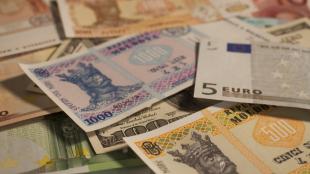
Banca Naţională a Moldovei, are dreptul exclusiv de a emite pe teritoriul Republicii Moldova bancnote şi monede metalice ca mijloc de plată. BNM pune în circulaţie bancnote şi monede metalice, prin intermediul sistemului bancar.




Banca Naţională este unica instituţie care efectuează licenţierea, supravegherea şi reglementarea activităţii instituţiilor financiare.



Banca Națională supraveghează sistemul de plăţi în Republica Moldova şi promovează funcţionarea stabilă şi eficientă a sistemului automatizat de plăţi interbancare.


Banca Naţională este o persoană juridică publică autonomă şi este responsabilă faţă de Parlament.

BNM publică statistici privind masa monetară, sectorul bancar, balanța de plăți, situația pieței valutare, etc. pentru a asigura transparența în procesul de elaborare și adoptare a deciziilor BNM, a asigura continuitatea în comunicare și predictibilitatea BNM pe piață, pentru sporirea credibilității BNM în calitate de bancă centrală dar și pe piața financiar-bancară din Republica Moldova.


Inflation Report no.4, November 2019
In the third quarter of 2019, the annual rate of inflation continued its upward trajectory from the beginning of the current year, increasing from 4.4% in June to 6.3% in September 2019, following the pressure of food and regulated prices, as well as the pressure of the aggregate demand. The upward trend of food prices was caused mainly by the increase of costs and less favourable meteorological conditions for certain crops. The annual rate of regulated prices registered positive values following the rise in the tariff of electricity in the second half of August. In addition, the appreciation trend of the domestic currency eased the aforementioned pressures, and being associated to the downward trajectory of oil prices, generated the decrease of fuel prices on the domestic market. As of 2019, the annual rate of the CPI preserved its values within the interval of the inflation target. The annual average rate of inflation in the third quarter of 2019 was marginally superior than expected, which confirms the main hypotheses and conclusions related to the forecast round from July 2019. According to the estimations, the upward trajectory of the annual rate of the CPI will continue the trend in the next period, being supported mainly by the pressures caused by the internal demand and the increase of prices. In this context, in the third quarter of 2019, the annual rate of prices in the field of industry continued its upward trajectory registered in the first months of 2019, thus outlining the growth premises of some CPI sub-components in the next periods.
The decline of the global economy continued in the third quarter of 2019, as well, the main challenges hovering over trade and geopolitical tensions, Brexit uncertainties and the change of the course of monetary policies by advanced economies. At the meetings of 31 July and 18 September 2019, the Federal Reserve diminished the interval of interest rates by 0.25 percentage points up to 1.75 – 2.0%. In addition, at the meeting held in September 2019, the European Central Bank decided to preserve the interest rate but announced the resumption of the asset purchase program starting with November 2019. The pressures caused by the reduction of the global demand and the trade tensions contributed to the continuous reduction of oil prices, even if they increased temporarily under the pressure of drone attacks on oil wells in Saudi Arabia. The European Union is facing a significant contraction of the production sector in Germany, as well as increased uncertainties regarding the UK leaving the EU.
In the second quarter of 2019, the economic growth continued its upward trend from the previous periods. Therefore, the growth rate of the GDP constituted 5.8%, which is 1.4 percentage points more than in the first quarter of 2019 and higher than the value anticipated within the previous forecast round. At the same time, the seasonally adjusted series shows a significant rise compared to the first quarter of 2019. The acceleration of the GDP growth was largely determined by the more intense investment activity. At the same time, similarly to the previous quarter, the role of private consumption remained minor. The dynamics of exports in the second quarter of 2019 had a modest impact on the economic activity, compared to that from the beginning of the current year. In the context of a larger internal demand, rise in investments, the annual dynamics of imports was more visible compared to the first quarter of 2019. In the sectors of national economy, constructions increased significantly, exercising the largest impact on the dynamics of the GDP. At the same time, the internal trade and industry continue to exercise a strong impact on the evolution of the GDP. Also, the internal trade and industry continues to exercise a similar strong impact on the evolution of economic activity. The available operating indicators outline pre-conditions for further economic growth in the third quarter of 2019. Therefore, in the period July – August 2019, on one hand, the volume of industrial production, the turnover of enterprises specialized in wholesale and retail trade, as well as of service provision enterprises, increased significantly compared to the similar period of the previous year. On the other hand, the negative evolutions related to the transportation of goods and the volume of exported goods, as well as some premises of the agricultural production outline an economic positive growth, but more modest compared to the second quarter of 2019. Regarding the evolutions on the labour market, in 2019, modifications were introduced in the research methodology “Labour Force Survey”, which make interpretation of data complicated, and namely the delimitation of information regarding the economic cycle.
In the third quarter of 2019, the annual dynamics of incomes of the national public budget registered an upward trajectory, which constituted an increase of 6.3% compared to the similar period of 2018. The expenditures of the national public budget also registered a positive dynamics with a rise of 8.6% compared to the similar period of 2018. In addition, the market position maintained the interest rates of allocated state securities, which had stable evolutions during the third quarter of 2019 for all types of maturities.
In the reference quarter, the excessive liquidity constituted MDL 5.4 billion, which represents a decline of MDL 0.09 billion compared to the previous quarter, following the rise in the balance of credits in the banking sector.
In the third quarter of 2019, the monetary aggregates recorded a positive dynamics in annual terms, mainly due to the modification of money in circulation and the sight deposits, both in national and foreign currency.
At the meeting held on 31 July 2019, the Executive Board of the National Bank of Moldova decided to increase the base rate applied to the main monetary policy operations by 0.5 percentage points up to 7.5% annually.
The average interest rates for credits that were accepted by the licensed banks continued their downward trend. The average interest rates of the balance of deposits, both in national and foreign currency, registered insignificant growth.
In the current forecast round, almost all forecasted values for the evolution of the external environment were diminished, by reflecting the synchronized and systematic tempering of the world economy. Therefore, the disinflationary pressures of the external demand are pending, while the probability of some shocks caused by a temporary increase of international quotes is lower compared to the previous forecast round.
The annual rate of inflation will reach the maximum rate of 8.0% in the fourth quarter of 2019, and then will decrease continuously until the end of 2020, and afterwards will diminish in the proximity of the inflation target by the end of the forecast horizon (minimal level of 4.3% in the first and third quarters of 2021). Starting with the first quarter of forecast, inflation will exceed the superior limit and settle outside the interval for two consecutive quarters. In the third quarter of 2020, the annual rate of inflation will return and remain in the interval until the end of the forecast horizon. The core inflation will increase by the end of the current year, and diminish continuously by the end of the forecast horizon. The annual rise in the food prices will become significantly visible at the end of the current year; then it will decrease by the end of the next year; and afterwards, by the end of the forecast horizon, will remain relatively constant. The annual rate of regulated prices will register a slight growth throughout the forecast horizon, will slightly increase in the current year and in the first half of the next year, then will decrease in the first quarter of 2021, and slightly increase towards the end of the forecast horizon. The oil prices will effectively stagnate, except for the beginning of the next year.
The aggregate demand, although in decline, will be pro-inflationary during the current year and disinflationary starting with the first quarter of the next year.
The real monetary conditions will be more restrictive on the aggregate demand over the entire forecast period.
The current forecast of inflation is similar to the previous one for the first quarter of forecast and inferior for the rest of the compared period, except for the situation at the end of the period. Core inflation was revised downward over the entire forecast horizon. The annual rate of food prices was revised upward for the entire compared period, except for the second and third quarters of 2020, where it was slightly diminished. The current forecast of regulated prices is inferior for the entire compared period. The forecast of the annual rate of oil prices was significantly revised downward for the entire compared period.


