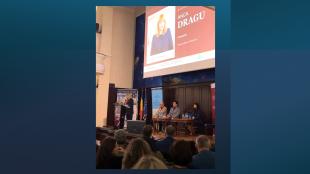
Bine ați venit pe pagină oficială a Băncii Naționale a Moldovei!



Bine ați venit pe pagină oficială a Băncii Naționale a Moldovei!
Cele mai populare rapoarte statistice:

Banca Naţională şi membrii organelor de conducere ale acesteia sunt independenţi în exercitarea atribuţiilor stabilite de lege şi nu pot solicita şi nici accepta instrucţiuni de la autorităţile publice sau de la orice altă autoritate.



Banca Naţională informează publicul despre evoluția inflației anuale, strategia de politică monetară,rezultatele analizei macroeconomice, evoluţiei pieţei financiare şi informaţia statistică, inclusiv privind masa monetară, acordarea creditelor, balanţa de plăţi şi situaţia pieţei valutare.

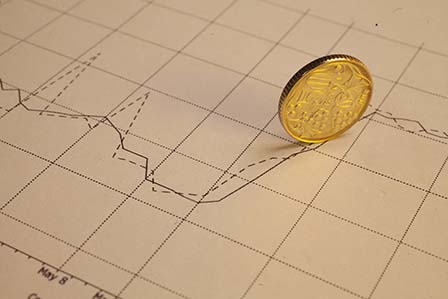
Pentru asigurarea şi menţinerea stabilităţii preţurilor pe termen mediu, Banca Naţională a Moldovei menţine inflaţia (măsurată prin indicele preţurilor de consum) la nivelul de 5.0 la sută anual cu o posibilă abatere de ± 1.5 puncte procentuale, fiind considerat nivelul optim pentru creşterea şi dezvoltarea economică a Republicii Moldova pe termen mediu.




Stabilitatea financiară se realizează prin consolidarea rezilienței sistemului financiar, limitarea efectului de contagiune și diminuarea acumulării de riscuri sistemice, contribuind, astfel, la sustenabilitatea sectorului financiar și creșterea economică.



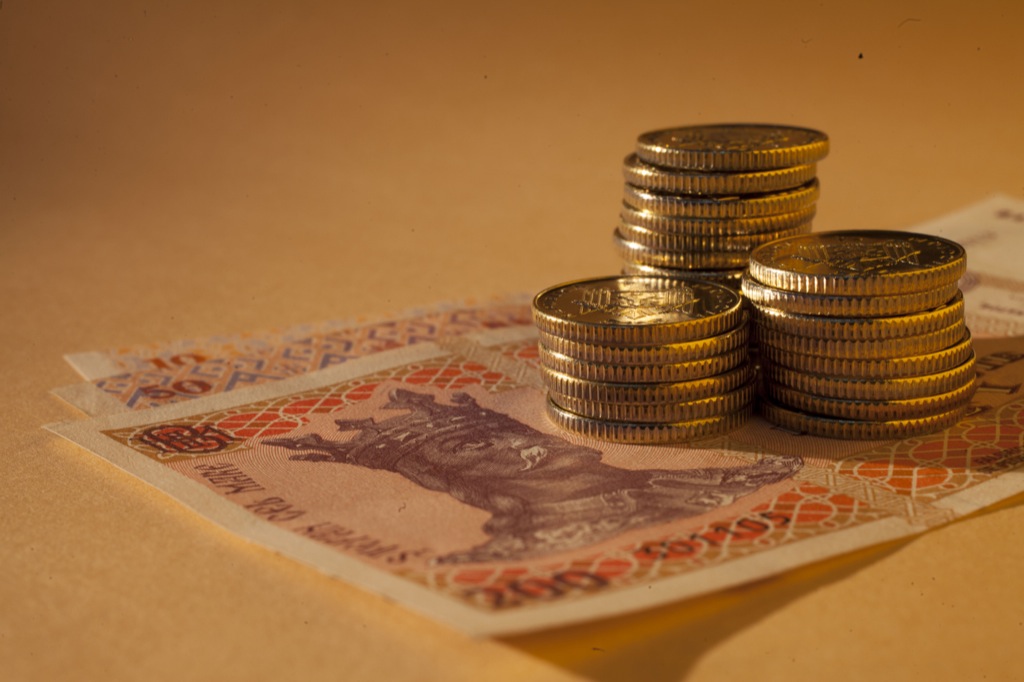
Banca Naţională a Moldovei, are dreptul exclusiv de a emite pe teritoriul Republicii Moldova bancnote şi monede metalice ca mijloc de plată. BNM pune în circulaţie bancnote şi monede metalice, prin intermediul sistemului bancar.




Banca Naţională este unica instituţie care efectuează licenţierea, supravegherea şi reglementarea activităţii instituţiilor financiare.



Banca Națională supraveghează sistemul de plăţi în Republica Moldova şi promovează funcţionarea stabilă şi eficientă a sistemului automatizat de plăţi interbancare.


Banca Naţională este o persoană juridică publică autonomă şi este responsabilă faţă de Parlament.

BNM publică statistici privind masa monetară, sectorul bancar, balanța de plăți, situația pieței valutare, etc. pentru a asigura transparența în procesul de elaborare și adoptare a deciziilor BNM, a asigura continuitatea în comunicare și predictibilitatea BNM pe piață, pentru sporirea credibilității BNM în calitate de bancă centrală dar și pe piața financiar-bancară din Republica Moldova.


Inflation Report no. 3, 3 August 2017
In the second quarter of 2017, the annual inflation rate was 7.1 percent, by 2.8 percentage points more compared to the previous quarter. In June 2017, inflation was 7.3 percent. As a result, during the second quarter of 2017, inflation was above the upper limit of the inflation target set in the Medium-Term Strategy of Monetary Policy. The increase of the annual inflation rate was mainly determined by the impact of the adjustment of certain regulated services tariffs and by the increase of food prices due to the atypical meteorological conditions. At the same time, this process was supported by the effect of a low base period of 2016 and by the consequences of excise duty adjustment for some categories of goods. The appreciation trend of the national currency has mitigated the inflationary pressures mentioned above. Core inflation recorded a more modest dynamic during the reporting period, accounting for 4.7 percent in June and fell below the lower limit of the target range mentioned above due to the weak domestic demand. The annual rate of food prices increased from 5.0 percent in March 2017 to 9.0 percent in June 2017. At the end of the second quarter of 2017, regulated prices increased by 7.5 percent than the same period of the previous year. At the same time, the annual rate of fuel prices decreased from 12.5 percent in March 2017 to 7.2 percent in June 2017. In the second quarter of 2017, the actual annual inflation rate was slightly higher to that anticipated within the forecasting round presented in the Inflation Report no.2, 2017.
Many events took place internationally in the second quarter of 2017, which contributed to the change in trajectory of the main macroeconomic indicators. As of 15 June 2017, Federal Reserve System decided to increase, for the second time this year, the interest rates range by 0.25 percentage points. At the same time, both the Bank of England and the European Central Bank revealed for the first time the possibility to decrease the degree of monetary stimulation in the next future. In these circumstances, the foreign exchange balance turned towards the appreciation of the single European currency and Pound Sterling, while U.S. dollar was disadvantaged by the loss of investors' enthusiasm for the projects announced by the USA's new president. Inflationary pressures decreased in emerging economies due to the stabilization of local currencies. The Central Bank of the Russian Federation decreased, for the third time this year, the reference rate by 0.25 percentage points, to the level of 9.0 percent, so that in May 2017 this reached the minimum level of the annual inflation of 4.1 percent. Raw materials market has been subject to the USD depreciation and oil price reduction. OPEC decided during its meeting of 25 May 2017 to extend the agreement of decreasing the oil production volume, which led to losing the confidence in the OPEC capacity to rebalance the oil market in the circumstances where the United States of America and Canada continue to enhance the exploitation degree of the shale wells.
In the first quarter of 2017, GDP recorded an increase of 3.1 percent compared to the same period of 2016. The annual dynamic of the economic activity at the beginning of 2017 was significantly lower than in the second half of the previous year. The positive evolution of GDP in the first quarter of 2017 was determined mainly by the rich harvest of the previous year, which created premises for a pronounced increase in exports. Thus, exports recorded an increase of 23.0 percent in the first quarter of 2017. At the same time, the economic growth was also supported by the domestic demand. Household consumption increased by 4.2 percent, in the context of a slight increase in household income during the reporting period. Investments contributed positively to GDP dynamics due mainly to the component change in inventories and to the increase of gross fixed capital by 3.3 percent compared to the same period of the previous year. The final consumption of public administration decreased by 0.1 percent. The economic activity dynamics was significantly offset by the increase of imports by 17.0 percent, evolution that may be attributed to the increase in domestic demand and to its orientation mainly towards the foreign market products and to a low base period effect since the beginning of 2016, generated by the imports adjustment amid the significant appreciation of the national currency during that period. By categories of resources, the GDP growth in the first quarter of 2017 was determined mainly by the positive contribution of trade and of the “transport, information and storage” subcomponent. In the first quarter of 2017, both the economically active population and the number of employed population recorded a negligible evolution compared to the same period of the previous year, increasing by 0.3 and 0.2 percent, respectively. The unemployment rate was 6.3 percent in the first quarter of 2017, recording a marginal dynamics compared to the beginning of the previous year.
In the second quarter of 2017, there were held three meetings of the Executive Board of the National Bank on Moldova on monetary policy decisions. Following the assessment of internal and external balance of risks and the inflation outlook in the short and medium term, the NBM Executive Board decided at the meetings of 27 April and 24 May 2017 to maintain the base rate applied on main monetary policy operations at the level of 9.0 percent. Thereafter, during its meeting of 28 June 2017, the Executive Board decided to reduce the base rate applied to main monetary policy operations by 1.0 percentage points, from the level of 9.0 percent annually (level established at the meeting of 27 October 2016) to the level of 8.0 percent annually.
Following the downward trend of base rate applied on main monetary policy operations of the National Bank of Moldova, the average interest rates on deposits in national currency continued its downward trend and consequently, the average rates on credits granted by banking system recorded a tempered decline.
During the reporting period, compared to the first quarter of 2017, the annual average interest rates related to the balance of credits recorded a decrease of 0.68 percentage points on credits in national currency and of 0.18 percentage points on credits in foreign currency, recording the levels of 10.64 and 5.40 percent, respectively. The average interest rate on deposits in MDL was 6.57 percent during the second quarter of 2017, decreasing by 1.02 percentage points compared to the previous quarter. The interest rate of placements in foreign currency constituted on average 1.86 percent, lower by 0.27 percentage points than in the first quarter of 2017.
According to the current round of forecasting, output gap will register a low and constant recovery for the entire forecasting period. However, it will remain negative for the first four quarters. Thereafter, il will record insignificant positive values. The placement of the economic activity below its potential level, in the first our quarters, will cause disinflationary pressures, while the positive values of output gap during the last four quarters of the forecasting horizon will generate inflationary pressures, although insignificant ones. Real monetary conditions will have a heterogeneous impact on the demand. Real effective exchange rate will manifest restrictive effects for the entire forecasting period. Real interest rate will be incentive in the first part of the forecasting horizon, after which, by the end thereof, it will fuel a weak restrictive character of the monetary conditions.
The annual inflation rate will also continue to record a higher level in the third quarter of 2017, after which it will fall rapidly to the lower limit of the target range. In the first quarter of 2018, inflation will return within the range and will remain mainly close to the lower limit until the end of the forecasting horizon. This will reach the maximum level of 7.4 percent in the third quarter of 2017, while the minimum level of 3.5 percent will be reached in the fourth quarter of 2018 and in the first quarter of 2019. Compared to the values registered in the Inflation Report no.2, 2017, the average annual values of the annual inflation are higher by 0.3 percentage points in 2017 and by 0.7 percentage points in 2018.


