
Bine ați venit pe pagină oficială a Băncii Naționale a Moldovei!



Bine ați venit pe pagină oficială a Băncii Naționale a Moldovei!
Cele mai populare rapoarte statistice:

Banca Naţională şi membrii organelor de conducere ale acesteia sunt independenţi în exercitarea atribuţiilor stabilite de lege şi nu pot solicita şi nici accepta instrucţiuni de la autorităţile publice sau de la orice altă autoritate.



Banca Naţională informează publicul despre evoluția inflației anuale, strategia de politică monetară,rezultatele analizei macroeconomice, evoluţiei pieţei financiare şi informaţia statistică, inclusiv privind masa monetară, acordarea creditelor, balanţa de plăţi şi situaţia pieţei valutare.

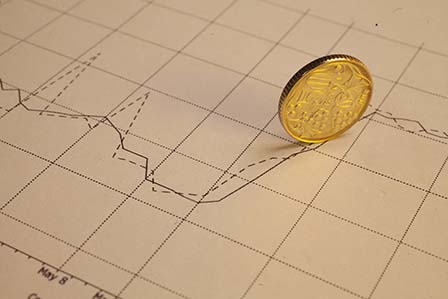
Pentru asigurarea şi menţinerea stabilităţii preţurilor pe termen mediu, Banca Naţională a Moldovei menţine inflaţia (măsurată prin indicele preţurilor de consum) la nivelul de 5.0 la sută anual cu o posibilă abatere de ± 1.5 puncte procentuale, fiind considerat nivelul optim pentru creşterea şi dezvoltarea economică a Republicii Moldova pe termen mediu.




Stabilitatea financiară se realizează prin consolidarea rezilienței sistemului financiar, limitarea efectului de contagiune și diminuarea acumulării de riscuri sistemice, contribuind, astfel, la sustenabilitatea sectorului financiar și creșterea economică.




Banca Naţională a Moldovei, are dreptul exclusiv de a emite pe teritoriul Republicii Moldova bancnote şi monede metalice ca mijloc de plată. BNM pune în circulaţie bancnote şi monede metalice, prin intermediul sistemului bancar.




Banca Naţională este unica instituţie care efectuează licenţierea, supravegherea şi reglementarea activităţii instituţiilor financiare.
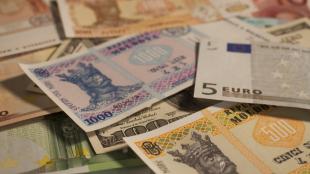



Banca Națională supraveghează sistemul de plăţi în Republica Moldova şi promovează funcţionarea stabilă şi eficientă a sistemului automatizat de plăţi interbancare.


Banca Naţională este o persoană juridică publică autonomă şi este responsabilă faţă de Parlament.

BNM publică statistici privind masa monetară, sectorul bancar, balanța de plăți, situația pieței valutare, etc. pentru a asigura transparența în procesul de elaborare și adoptare a deciziilor BNM, a asigura continuitatea în comunicare și predictibilitatea BNM pe piață, pentru sporirea credibilității BNM în calitate de bancă centrală dar și pe piața financiar-bancară din Republica Moldova.


Inflation Report no.1, February 2012
In the fourth quarter of 2011, the annual rate of inflation measured by CPI has reversed the upward trend started in February 2011, so that the average value during this period constituted 8.5 percent. At the same time, CPI was below the anticipated values in the Inflation Report no.4, 2011, due to factors that could not be foreseen at the time of short-term forecast of inflation. The annual rate of core inflation has experienced a downward dynamic during the reporting period, decreasing from 4.4 percent in September 2011 to 4.1 percent in December 2011.
Among the main factors that favored the CPI increase in the fourth quarter 2011, compared with the same period last year, can be identified the following factors: increases in utility tariffs and the side effects they cause on other components, adverse weather conditions for some crops, increasing prices of oil derived products, increased worldwide demand from the population following the increasing disposable income and increased external demand to some local products, especially in the first half of 2011.
At the same time, the aforementioned pro-inflationary pressures have been partially attenuated by the development of the national currency against the currencies of the main trading partners of the Republic of Moldova and atypical weather conditions from the end of 2011. In the fourth quarter of 2011, the annual rate of industrial production price index was higher than in the previous quarter, starting a downward trend in December 2011, decreasing by 0.7 percentage points compared to the November 2011. The annual rate of prices in construction increased by 0.6 percentage points and constituted 9.3 percent in the fourth quarter of 2011.
The gross domestic product increased by 5.3 percent in the third quarter of 2011 as compared to the third quarter of 2010. Thus, the economic growth continued in the third quarter of 2011, but was more moderate than in the first half of this year. Similar to the second quarter of 2011, the exports and household consumption were the determining factor in GDP growth in the third quarter of 2011, but their growth rates were more moderate along with the uncertainty in the euro area and with the slowdown in the consumption financing sources. The economic growth was supported by positive developments in all sectors except constructions.
In the third quarter of 2011, the unemployment rate was 5.3 percent, which shows amelioration in the labor market. At the same time, there is an increase in the number of vacancies and a reduction in redundancies. The annual growth rate of wages in the economy took a sharp downward trend in the third quarter of 2011, as compared to the previous period, being determined by the situation in all sectors. During the fourth quarter of 2011, the annual rate of wages has not been significantly changed, being slightly higher the value of zero.
The price increases slowdown and the possible widening of disinflation reflected the need for loosening of monetary policy of the NBM. Thus, the National Bank of Moldova has decreased gradually the monetary policy rate - by 0.5 percentage points in the fourth quarter of 2011, which was 9.5 percent on December 2, 2011 and by 1.0 percentage points at the end of 2011, a decision entered into force on January 6, 2012, when the base rate was 8.5 percent.
The current situation requires caution on the part of all decisionmakers in policy of macroeconomic stabilization and early identification of measures to counter the potential negative effects on economic activity and to stimulate domestic demand. In such circumstances, the national economy will grow in 2012, although slower than previously forecasted.
Within the meating of January 26, 2012 the Council of Administration of the NBM decided to decrease the monetary policy interest rate by 2.0 percentage points, from 8.5 percent to 6.5 percent.
In order to manage the inflationary process and to ensure appropriate monetary conditions for price stability, the NBM continued to manage firmly the excess liquidity through sterilization operations in the monetary market.
National Bank of Moldova has intervened insignificantly on the domestic foreign exchange market during October – December 2011 as a buyer of foreign currency. During the analyzed period, the volume of transactions of the National Bank of Moldova carried out on the domestic foreign exchange market against MDL constituted the equivalent of USD 12.9 million.
In the fourth quarter of 2011, there was recorded a decrease in the growth rate of monetary aggregates, the quarterly average in annual terms being of 14.8 percent for M2 and of 12.9 percent for M3. After the significant increase of the monetary indicators in 2010 due to the economic restoration in the aftermath of crisis, the 2011 was marked by a slowdown in the pace of growth at the end of the fourth quarter of 2011, recording a declining growth.
Relative stabilization of the economic situation and the reduction of credit risk determined the banks to reduce the interest rates on new deposits and new granted loans. It should be mentioned that the interest rates on new granted loans reached a new historic minimum in December 2011 – 13.96 percent in national currency and 7.67 percent - in foreign currency. In turn, the yields on bank placements on term recorded higher values as compared to the previous quarter.
Global economic situation deteriorated significantly in the second half of 2011, as a result of the intensification of international financial market tensions generated mainly by the worsening sovereign debt crisis in the euro area and by the amplification of fears related to fiscal sustainability in developed economies.
In the emerging economies, there is a slowdown in economic growth, due to the significant decrease of capital flows and the adoption of restrictive monetary policies. Worldwide consumption was affected by high rates of unemployment in developed countries and by the strengthening of fiscal policy in the euro area, which has affected more the international trade.
High yield in 2011 and better prospects for 2012 led to the reduction of food prices on international markets. Raw materials prices on international prices have also fell, driven by lower global demand and the appreciation of U.S. dollar. However, the adoption of restrictive monetary policies in emerging economies has created conditions for inflationary pressures.
In the last months of the year, the foreign exchange market has been marked by the single European currency depreciation, caused by difficulties in taking measures to resolve the sovereign debt crisis in the euro area. In turn, the U.S. dollar continued to appreciate, benefiting from the crisis in the euro area, the neutral monetary policy set by the Federal Reserve on long term and the positive macroeconomic statistics reported in December 2011.
The main risks that remain and could significantly change the global economy in the near future are related to the problems the public finances and banking systems in the developed economies are facing, the lack of policies to redress the economic crisis, the volatility of goods markets and the tensions occurred around Iran’s nuclear plan that could result in signifi- cant increases in world oil prices.
According to the second round effects of forecasting, the real GDP gap in early 2012 will reach its potential, so that later, during the entire forecast period, it will record only positive values, with a slight decrease towards the end of 2013.
According to the current projection, from the baseline scenario, the annual inflation rate will reach the level of 4.9% at the end of this year, and the level of 4.8% at the end of 2013. Compared with the previous projection published in the Inflation Report no.4, November 2011, the inflation rate at the end of 2012 will be by 1.6 percentage points lower. The main causes of negative gap for 2012, between the current projection and from the previous report, represents slightly lower levels of global oil prices, natural gas and foodstuff products, following a reduced activity in global economy


