Bine ați venit pe pagină oficială a Băncii Naționale a Moldovei!



Bine ați venit pe pagină oficială a Băncii Naționale a Moldovei!
Cele mai populare rapoarte statistice:

Banca Naţională şi membrii organelor de conducere ale acesteia sunt independenţi în exercitarea atribuţiilor stabilite de lege şi nu pot solicita şi nici accepta instrucţiuni de la autorităţile publice sau de la orice altă autoritate.



Banca Naţională informează publicul despre evoluția inflației anuale, strategia de politică monetară,rezultatele analizei macroeconomice, evoluţiei pieţei financiare şi informaţia statistică, inclusiv privind masa monetară, acordarea creditelor, balanţa de plăţi şi situaţia pieţei valutare.

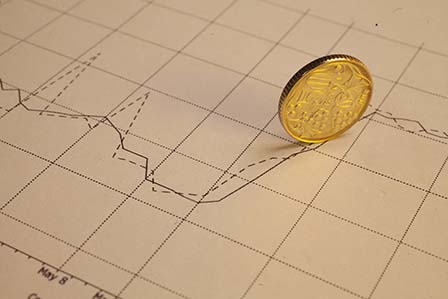
Pentru asigurarea şi menţinerea stabilităţii preţurilor pe termen mediu, Banca Naţională a Moldovei menţine inflaţia (măsurată prin indicele preţurilor de consum) la nivelul de 5.0 la sută anual cu o posibilă abatere de ± 1.5 puncte procentuale, fiind considerat nivelul optim pentru creşterea şi dezvoltarea economică a Republicii Moldova pe termen mediu.




Stabilitatea financiară se realizează prin consolidarea rezilienței sistemului financiar, limitarea efectului de contagiune și diminuarea acumulării de riscuri sistemice, contribuind, astfel, la sustenabilitatea sectorului financiar și creșterea economică.




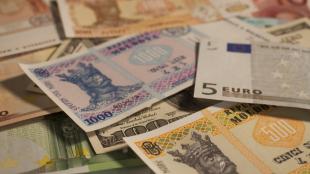
Banca Naţională a Moldovei, are dreptul exclusiv de a emite pe teritoriul Republicii Moldova bancnote şi monede metalice ca mijloc de plată. BNM pune în circulaţie bancnote şi monede metalice, prin intermediul sistemului bancar.




Banca Naţională este unica instituţie care efectuează licenţierea, supravegherea şi reglementarea activităţii instituţiilor financiare.


Banca Națională supraveghează sistemul de plăţi în Republica Moldova şi promovează funcţionarea stabilă şi eficientă a sistemului automatizat de plăţi interbancare.


Banca Naţională este o persoană juridică publică autonomă şi este responsabilă faţă de Parlament.

BNM publică statistici privind masa monetară, sectorul bancar, balanța de plăți, situația pieței valutare, etc. pentru a asigura transparența în procesul de elaborare și adoptare a deciziilor BNM, a asigura continuitatea în comunicare și predictibilitatea BNM pe piață, pentru sporirea credibilității BNM în calitate de bancă centrală dar și pe piața financiar-bancară din Republica Moldova.


Inflation Report no. 4, November 2018
The annual inflation rate will decrease by the end of the current year (up to the value of 1.9%). Inflation development will increase over the next year, after which its trajectory will reverse and it will go down to the end of the forecast horizon. For the first two consecutive quarters the inflation will be below the range, and at the end of next year it will rise above the upper range of the variation range. At the beginning of 2020 it will return within its interval. The core inflation will increase until the end of the next year, but will decrease towards the end of the forecast horizon. The growth rate of food prices will increase until the second half of next year, then will decrease starting with the last quarter of the same year. The annual growth rate of regulated prices will increase. The annual growth rate of domestic fuel prices will have a downward trajectory, showing negative values over the last two quarters of the forecast horizon.
The aggregate demand will trigger disinflation throughout the forecast horizon, being driven by the restrictive nature of real monetary conditions as well as by the next year fiscal policy and will be tempered by stimulus external demand.
It is expected that cumulative fiscal policy measures will have pro-inflationary effect until the first half of next year. The main effects will be generated by the increase in excise duties, the increase in the number of employers who will provide meal vouchers as well as recent tax reform.
Global economy reveals increasing slowdown signs. Emerging economy currencies depreciate due to capital migration from emerging economies towards advanced economies. The Federal Reserve System continued to promote a restrictive monetary policy in September 2018, raising the interest rate range by another 0.25 percentage points. At the same time, European Central Bank’s messages have become more consistent about the need to raise interest rate in the euro area after inflation remained at the ECB target for several months. At the same time, emerging markets have been affected by the precarious economic situation in Turkey and Argentina as well as by the increase of trade tensions between the US and China. The oil price fluctuates in the proximity of US 80 /barrel and the world oil market expects the entry into force of the US sanctions for Iran in November 2018 and the OPEC+ decision. The regional market expects new US sanctions for the Russian Federation and their subsequent effects. More and more analysts are talking about reaching the peak of global economic growth and about a possible economic and financial correction in the near future.
Compared to the forecast in the Inflation Report no.3, 2018, the current inflation forecast is predominantly higher by the end of the next year, being insignificantly decreased for the rest of the forecast horizon. The core inflation has been revised upwards throughout the whole forecast horizon, except the last quarter of the current year. The forecast for rising food prices has been revised upwards for the end of the current year and the first half of next year and downwards for the rest of the forecast horizon. The current forecast of regulated prices is practically diminished over the entire forecast horizon, except the second quarter of 2020. The forecast for rising fuel prices was revised upwards until the third quarter of 2019 and downwards at the end of the forecast horizon.
The balance of risks associated with the current forecast is considered to be pro-inflationary. International higher oil prices should be mentioned among risks arising from the external environment. From the internal environment, the fiscal field is another source of multiple pro-inflationary risks, which can be attributed to the anticipated salary reform in the budget sector, the supply of meal vouchers and the recent tax reform, which effects are to be diffused.
Given the modest aggregate demand for electricity tariff adjustment and the appreciation of the domestic currency against the European currency, the annual CPI rate continued its downward trend from the beginning of the year, decreasing from 3.2% in June 2018 to 2.4% in September 2018 and thus falling below the inflation target range. Within the CPI subcomponents, the downward trajectory of core inflation continued, being driven by the modest aggregate demand and the appreciation of the domestic currency against the European currency. Similarly to the previous quarter, inflationary pressures were driven by some sectoral shocks. In the third quarter of 2018, the core inflation recorded values slightly above the CPI annual rate. An upward trajectory in the annual food price inflation rate over the reference quarter was largely due to higher prices for fresh vegetables and potatoes. During this period, the annual rate of regulated prices continued the downward trend driven by electricity tariff adjustment as well as by the persistence of lower prices for drugs. Accelerating fuel price growth continued until July 2018, after which their annual rate was downwards until the end of the third quarter of 2018. The annual inflation rate in July-September 2018 was slightly above the anticipated one within the previous forecasting round. By the end of the current year, the annual inflation rate will remain below the lower limit of the above-mentioned range due to the persistence of a negligible impact of the aggregate demand on prices, the absence of possible price adjustments, and the effect of the high base period in the fourth quarter of 2017. During the third quarter of 2018, the annual rate of prices in industry continued the previously registered downward trajectory, outlining a downward trajectory of some CPI sub-components in the next period.
After the episodic slowdown at the beginning of the current year, in the second quarter of 2018 the annual dynamics of economic activity accelerated, as expected in the previous forecasting round. Thus, GDP increased by 5.2% compared to the same period of the previous year. At the same time, the seasonally adjusted series reflects a 1.7% increase in GDP compared to the first quarter of 2018. The pronounced dynamics of economic activity was mainly supported by the increase in the domestic demand as well as by the impact of a rich cereal harvest of the previous year and of fruits this year, which led to the increase of exports. The positive dynamics of households’ consumptions, supported by the increase in disposable income, continued in the second quarter of 2018 but at a less pronounced trend. During this period, investments were the subcomponent that influenced the positive dynamics of economic activity. The positive development in the formation of gross fixed capital was supported by both investments in construction and in machinery and equipment. Stock variation led to a positive impact on the dynamics of economic activity. The volume of exports in the first half of the current year continued the upward trend reported in the previous year, being mainly supported by the performance in the agricultural sector and by the UE demand. At the same time, the amount of imports continued to show a pronounced positive dynamics in the context of domestic demand growth, but also appreciation of the domestic currency. By resource category, GDP growth in the second quarter of 2018 was mainly driven by the positive contribution from trade, industry and construction developments. Up-to-date indicators for July-August 2018 period outline preconditions for continued economic growth in the third quarter of 2018. In the second quarter of 2018, the economically active and employed population experienced a significant increase as a result of developments in the agricultural sector. At the same time, the number of unemployed people was lower than in the same period of the previous year.
During July-August 2018, the annual dynamics of expenditures in the national public budget recorded a downward trajectory, increasing by 14.7% compared to the same period of 2017. The revenues of the national public budget registered positive developments as well, increasing by 10.8% compared to the same period of 2017. At the same time, the market conjuncture consented the reversal of the interest rate diminishing trend of the allocated state securities, which during the third quarter of 2018 increased insignificantly on all types of maturity.
In the second quarter of 2018, excess liquidity amounted to MDL 9.3 billion, which is MDL 83.0 million more as compared to the previous quarter. This amount of excess liquidity was largely generated by monetary emissions as a result of NBM interventions on foreign exchange market.
Monetary aggregates in the second quarter of 2018 recorded a positive but moderate dynamics as compared to the previous quarter. At the same time, the main contribution to this evolution was largely determined by the change in on-sight deposits both in domestic and in foreign currency.
Following the trend of the base rate applied to the main monetary policy operations of the National Bank of Moldova and as a result of the liquidity surplus registered in the banking system, the average interest rates accepted by the licensed banks, both on credits and on deposits continued the downward trend.


