
Bine ați venit pe pagină oficială a Băncii Naționale a Moldovei!



Bine ați venit pe pagină oficială a Băncii Naționale a Moldovei!
Cele mai populare rapoarte statistice:

Banca Naţională şi membrii organelor de conducere ale acesteia sunt independenţi în exercitarea atribuţiilor stabilite de lege şi nu pot solicita şi nici accepta instrucţiuni de la autorităţile publice sau de la orice altă autoritate.



Banca Naţională informează publicul despre evoluția inflației anuale, strategia de politică monetară,rezultatele analizei macroeconomice, evoluţiei pieţei financiare şi informaţia statistică, inclusiv privind masa monetară, acordarea creditelor, balanţa de plăţi şi situaţia pieţei valutare.

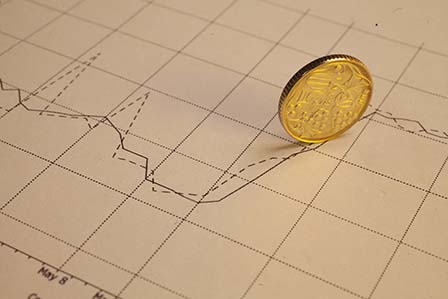
Pentru asigurarea şi menţinerea stabilităţii preţurilor pe termen mediu, Banca Naţională a Moldovei menţine inflaţia (măsurată prin indicele preţurilor de consum) la nivelul de 5.0 la sută anual cu o posibilă abatere de ± 1.5 puncte procentuale, fiind considerat nivelul optim pentru creşterea şi dezvoltarea economică a Republicii Moldova pe termen mediu.




Stabilitatea financiară se realizează prin consolidarea rezilienței sistemului financiar, limitarea efectului de contagiune și diminuarea acumulării de riscuri sistemice, contribuind, astfel, la sustenabilitatea sectorului financiar și creșterea economică.




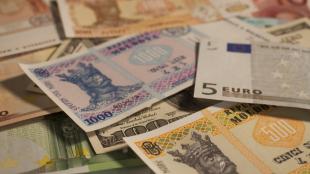
Banca Naţională a Moldovei, are dreptul exclusiv de a emite pe teritoriul Republicii Moldova bancnote şi monede metalice ca mijloc de plată. BNM pune în circulaţie bancnote şi monede metalice, prin intermediul sistemului bancar.




Banca Naţională este unica instituţie care efectuează licenţierea, supravegherea şi reglementarea activităţii instituţiilor financiare.



Banca Națională supraveghează sistemul de plăţi în Republica Moldova şi promovează funcţionarea stabilă şi eficientă a sistemului automatizat de plăţi interbancare.


Banca Naţională este o persoană juridică publică autonomă şi este responsabilă faţă de Parlament.

BNM publică statistici privind masa monetară, sectorul bancar, balanța de plăți, situația pieței valutare, etc. pentru a asigura transparența în procesul de elaborare și adoptare a deciziilor BNM, a asigura continuitatea în comunicare și predictibilitatea BNM pe piață, pentru sporirea credibilității BNM în calitate de bancă centrală dar și pe piața financiar-bancară din Republica Moldova.


Inflation Report no.2, May 2013
The annual rate of inflation was 4.4 percent in the first quarter of 2013, by 0.5 percentage points more than in the previous quarter. The upward trend was mostly determined by the increase in pressures from food prices caused by drought conditions in the previous year and, to a lesser extent, by the increase in excise duties, VAT and by the nominal effective exchange rate depreciation of the national currency against the currencies of major trading partners. At the same time, the demand slowdown and the food price developments in the world market have had a deflationary effect on prices in the reporting period. The annual rate of core inflation in the first quarter of 2013 was 4.0 percent, by 0.4 percentage points higher than in the previous quarter. Both the annual rate of inflation and the core inflation fell within the range of 5.0 percent ± 1.5 percentage points, an objective set in the Medium-term monetary policy strategy. The development of the annual rate of CPI in the first quarter of 2013 shows primarily the achievement of the inflation projection assumptions for the first quarter of 2013 from the Inflation Report no. 1, 2013. In the first quarter of 2013, the annual rate of the industrial production price index was 2.2 percent and continued the downward trend reported in early 2012. On the other hand, the annual growth rate of construction prices was 10.6 percent, increasing by 1.9 percentage points from the previous quarter.
The global economy’s dynamics in the first quarter of 2013 was contradictory to the perspectives announced at the end of 2012. Although it was anticipated an economic recovery of the euro area, the macroeconomic statistics published during the last three months show a continuous decline in the economic activity and the banking crisis in Cyprus has further amplified the complexity of the euro area crisis. The U.S. economy is progressing slowly in relation to its capacity and the gradual resolving of the issues related to fiscal policy, depending on the matter’s peak, led to reduced investor confidence in the long-term consistency of the U.S. economy. Growth prospects of emerging economies show a relatively stable development, considered to be the engine of the global economy progress in 2013.
Uncertainties on the future evolution of the global economy are generated by the reorientation of economic policies, the decline in lending to the private sector, slowdown in the growth rate of the economies under the weight of austerity measures and by the incomplete recovery of the balance between global demand and supply. The acceleration of the growth rate of international prices of raw materials is detrimental to the rapid resumption of robust growth rate in sectors significantly affected by the unfortunate global economic situation in recent years. A strong trend in the world economy in the early months of the year was the strong volatility of international currencies parity, which created major concerns regarding the evolution of exports in the economies concerned.
After significant increases in 2010 and 2011, the GDP annual growth turned negative in 2012, being minus 0.8 percent, as a result of adverse developments in the agricultural sector caused by drought, and the less favorable external environment, especially by the contracting European economy. In the fourth quarter of 2012, the economic contraction was even more pronounced, so that GDP fell by 2.5 percent compared to the fourth quarter of 2011. In 2012, household consumption growth has reached a value of only 1.0 percent in the context of tempered developments in their disposable income, especially due to contracting consumption of goods and services in kind. General government final consumption rose slightly by 0.5 percent compared with 2011. Gross fixed capital formation has also recorded a modest dynamics, increasing by only 0.4 percent, due to increased spending for capital repairs of fixed assets, while capital investments contracted. Exports and imports recorded increases of 2.3 and 2.5 percent respectively, values much more modest than in previous periods, recording negative growth rates in the fourth quarter of 2012. The value added in agriculture decreased by 23.3 percent, while in industry it increased slightly by 0.5 percent. Gross value added in services recorded an increase of 4.1 percent, mostly due to the evolution of trade. In the fourth quarter of 2012, the unemployment rate was 5.9 percent, decreasing compared to the same period of 2011. However, the number of employed people has decreased by 1.0 percent compared to the fourth quarter of 2011.
In the first three months of 2013, the NBM adopted within three consecutive meetings on monetary policy the decision to maintain the monetary policy interest rate at the level of 4.50 percent annually, a level recorded since March 2012.
During the first quarter of 2013, the NBM intervened in the domestic foreign exchange market as a buyer of foreign currency in the context of its monetary policy promoted and in order to consolidate the foreign reserves. The volume of NBM transactions carried out during the analyzed period on the interbank foreign exchange market against MDL was USD 24.21 million.
Monetary aggregates growth rates accelerated in the first quarter of 2013, the quarterly average in annual terms accounted for 25.6 percent for M2 and 22.1 percent for M3, by 2.9 and 3.5 percentage points over the increases recorded in the previous quarter.
The average interest rates charged by licensed banks during the first quarter of 2013 recorded a stable evolution, registering insignificant increases or decreases. In late March 2013, the average interest rate on new loans in national currency recorded the level of 12.77 percent and those in foreign currency - 8.20 percent. In turn, the yields of term placements, both in national currency and in foreign currency, have recorded lower values than in the previous quarter.
The baseline scenario of the current projection places the annual CPI inflation rate at the level of 4.1 percent on average for 2013, by 0.5 percentage points less than anticipated in the Inflation Report no.1, 2013. The forecast for the average annual inflation rate for 2014 remained unchanged, accounting for 3.7 percent. Over the forecast period, the inflation rate will be within the range, though being still mostly at the lower limit. The downwards revision of external sector outlook is the main cause of reducing the annual inflation forecast.
External assumptions of the current forecasting round are based on the most recent statistical data showing that global demand continues to be very low, which resulted in worsening outlook for commodity prices and energy resources. The euro area economy is in decline, the economic recovery being delayed by the consequences of the sovereign debt crisis and the repression of economic growth under the weight of austerity measures. In the context of the global economic slowdown, the Russian economy is facing a sharp economic slowdown. At the same time, the currencies of international circulation present an increased volatility, which is still a factor of fluctuation in commodity prices and energy resources.
The baseline scenario of the current projection anticipates a negative output gap dynamics for the first quarter of forecasting, after which it will take slightly positive values throughout the forecast horizon. The return of the economic trend towards its potential level will be driven mainly by the creation of real monetary conditions with a stimulating influence. This will take place both due to the contribution of the real exchange rate and due to the incentive effect of negative deviation of the real interest rate on aggregate demand. The projected trajectory of monetary policy interest rate is expected to exert a stimulating effect on economic activity throughout the projection.


