Bine ați venit pe pagină oficială a Băncii Naționale a Moldovei!



Bine ați venit pe pagină oficială a Băncii Naționale a Moldovei!
Cele mai populare rapoarte statistice:

Banca Naţională şi membrii organelor de conducere ale acesteia sunt independenţi în exercitarea atribuţiilor stabilite de lege şi nu pot solicita şi nici accepta instrucţiuni de la autorităţile publice sau de la orice altă autoritate.



Banca Naţională informează publicul despre evoluția inflației anuale, strategia de politică monetară,rezultatele analizei macroeconomice, evoluţiei pieţei financiare şi informaţia statistică, inclusiv privind masa monetară, acordarea creditelor, balanţa de plăţi şi situaţia pieţei valutare.

Pentru asigurarea şi menţinerea stabilităţii preţurilor pe termen mediu, Banca Naţională a Moldovei menţine inflaţia (măsurată prin indicele preţurilor de consum) la nivelul de 5.0 la sută anual cu o posibilă abatere de ± 1.5 puncte procentuale, fiind considerat nivelul optim pentru creşterea şi dezvoltarea economică a Republicii Moldova pe termen mediu.




Stabilitatea financiară se realizează prin consolidarea rezilienței sistemului financiar, limitarea efectului de contagiune și diminuarea acumulării de riscuri sistemice, contribuind, astfel, la sustenabilitatea sectorului financiar și creșterea economică.



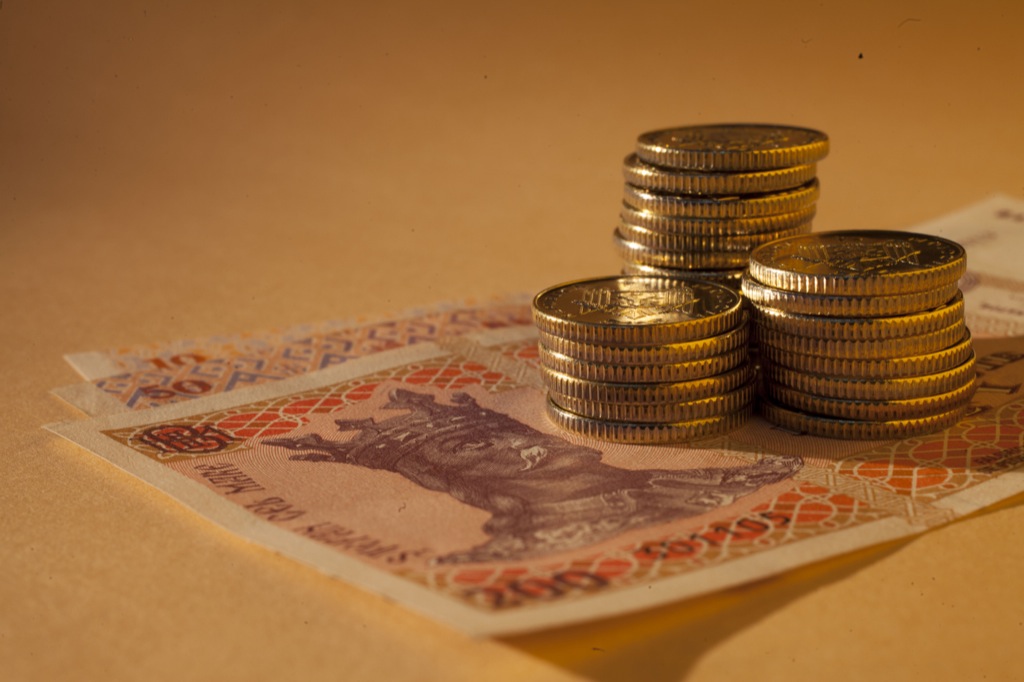
Banca Naţională a Moldovei, are dreptul exclusiv de a emite pe teritoriul Republicii Moldova bancnote şi monede metalice ca mijloc de plată. BNM pune în circulaţie bancnote şi monede metalice, prin intermediul sistemului bancar.




Banca Naţională este unica instituţie care efectuează licenţierea, supravegherea şi reglementarea activităţii instituţiilor financiare.


Banca Națională supraveghează sistemul de plăţi în Republica Moldova şi promovează funcţionarea stabilă şi eficientă a sistemului automatizat de plăţi interbancare.


Banca Naţională este o persoană juridică publică autonomă şi este responsabilă faţă de Parlament.

BNM publică statistici privind masa monetară, sectorul bancar, balanța de plăți, situația pieței valutare, etc. pentru a asigura transparența în procesul de elaborare și adoptare a deciziilor BNM, a asigura continuitatea în comunicare și predictibilitatea BNM pe piață, pentru sporirea credibilității BNM în calitate de bancă centrală dar și pe piața financiar-bancară din Republica Moldova.


Inflation Report No.1, February 2021
In the fourth quarter of 2020, the annual inflation rate continued its downward trajectory since the beginning of the year, falling from 2.3% in September to 0.4% in December, still below the lower limit of the range of 5.0% ±1.5 percentage points stipulated in the Medium-Term Monetary Policy Strategy. The negative impact of the restrictions on COVID-19 led to disinflationary pressures from domestic demand, which, together with declining import prices and atypical weather conditions, supported the decline in the annual rate of food prices and core inflation. A significant impact on the downward trend of the annual CPI rate was due to the decrease in regulated prices in the context of the adjustment of the tariff for gas in the network from the end of October 2020. The contribution from fuel prices continued to be negative amid declining oil prices in the first half of 2020. At the same time, the depreciation of the national currency, but also the increase in oil prices in the second half of the year led to inflationary pressures on some subcomponents of the CPI at the end of 2020. The disinflationary pressures associated with domestic demand will continue in the next period in the context of the impact of COVID-19. These will be partially offset by the recent rise in oil prices, the adjustment of excise duties since the beginning of this year and the evolution of the exchange rate.
The year 2020 ended with the decline of economic activity in several countries amid tightening quarantine regimes, but also with high hopes for the evolution of the world economy in 2021 following the start of the vaccination process in the United Kingdom, European Union and USA. The dollar index has reached its lowest level in two years, while the euro has risen above 1.22 EUR/USD as signs of progress on USA fiscal stimulus and vaccine optimism have led investors to riskier assets. The Russian ruble appreciated against the background of the global depreciation trend of the US dollar and the increase of oil prices. The OPEC+ group overcame differences of opinion and managed to agree on a delay in increasing oil production, which led to an increase in oil prices above 55 USD/barrel.
In the context of the internal restrictions related to COVID-19, the regional economic climate affected by the pandemic, as well as the adverse conditions for the agricultural sector in the third quarter of 2020, the dynamics of economic activity continued to be negative after the sharp decline in the previous quarter. Thus, in the third quarter of 2020, GDP was 9.7% lower than in the similar period of 2019, the dynamics being similar to that anticipated in the Inflation Report no. 4, 2020. Therefore, the effect of aggregate demand on prices continued to be pronounced negative. At the same time, the seasonally adjusted series reflects a 1.1% decrease in GDP compared to the second quarter of 2020. At the same time, along with the agricultural sector and the rest of the sectors of the national economy, there were significant decreases, except for construction and the financial sector. From the perspective of uses, domestic consumption continued to register a negative dynamic, but less pronounced compared to the second quarter of 2020, against the background of the negative dynamics of disposable income of the population, but also the uncertainty related to the subsequent evolution of the economic situation. A negative but less severe impact was caused by the decrease in investments. Exports, in the conditions of a modest external demand, but also of some restrictions related to COVID-19 in the region, continued the negative dynamics from the beginning of 2020. The decrease in domestic demand also led to a negative dynamics of imports in the third quarter of 2020. The decline in economic activity against the background of the impact of COVID-19 restrictions has led to the continuation of the negative dynamics of the economically active population and the employed population. Most of the statistical indicators on the dynamics of economic activity in the fourth quarter of 2020 continued to register a negative dynamics, but of lower intensity compared to the previous quarter.
During October-November 2020, the revenues of the national public budget decreased, being 4.1% below the level recorded in the similar period of 2019. National public budget expenditures increased, being 20.4% above the level recorded in the fourth quarter of 2019. At the same time, on the market of government securities allocated during the fourth quarter of 2020, interest rates decreased on all types of maturities.
In the fourth quarter of 2020, excessive liquidity amounted to 6.4 billion lei, increasing compared to the previous quarter by 0.62 billion lei.
The monetary aggregates in the fourth quarter of 2020 registered a positive dynamic in annual terms. At the same time, the main contribution to this development was largely determined by the change in money in circulation and the volume of deposits in the national currency.
The Executive Board of the National Bank of Moldova, at its meeting on November 6, 2020, decided to reduce the base rate applied to the main monetary policy operations by 0.10 percentage points, from 2.75% per year (level set on September 9, 2020) up to the level of 2.65% annually. Subsequently, at its meeting on December 9, 2020, it decided to maintain the base rate applied to major monetary policy operations at 2.65% per annum.
Average interest rates on the balance of loans and deposits in national currency continued their downward trend. Average interest rates on loans increased by 0.1 percentage points, while foreign currency deposits decreased.
The elaboration of the new forecast round was carried out based on the available information flow associated with the analysis and forecast cycle. Under these conditions, the forecast did not include certain events and economic information that emerged were published after the elaboration of the forecast, such as the decrease of tariffs and regulated prices for electricity by ANRE on January 26 this year.
Macroeconomic assessments, trends, assumptions and assumptions from the external and internal environment were the basis for the elaboration of the current forecast.
The gradual recovery of the world economy and the main foreign trade partners of the Republic of Moldova and the lack of major risks are the basis for improving the forecasts associated with the evolution of the external environment, with implications for the domestic situation by favoring domestic demand and influencing price developments.
Annual inflation rate will decrease insignificantly in the current quarter, but, starting with the next quarter, will increase until the end of the forecast horizon1, returning to the proximity of the inflation target. During the current year it will be below the lower limit of the variation range. Starting with the first quarter of 2022, it will return to the corridor, positioning itself in the lower level throughout the year.
Core inflation will have an upward trend over the entire forecast horizon, recording similar values over the last two quarters of the forecast. The annual rate of food prices will remain relatively constant for the first three quarters of the forecast, after which it will increase significantly until the first half of next year, after which it will record a steady pace. The annual rate of regulated prices will decrease in the first half of this year, but starting with the third quarter of 2021 will increase until the end of the forecast period. The annual rate of fuel prices will show an increased volatility, having an upward trend until the third quarter of 2021, then, starting next year, it will decrease for two consecutive quarters, after which it will register a relatively constant level.
The aggregate demand, although in recovery, will be negative throughout the forecast period. It will continue to recover from rising external demand, improving monetary conditions, returning to agriculture, improving consumer and business sentiment and, last but not least, the anticipated stimulus of public finances this year.
The real monetary conditions will show a predominantly restrictive character in decrease on the aggregate demand in the current year and slightly stimulating for the next year.
The current forecast for inflation is lower for the entire comparable period. The current forecast for core inflation has been revised upwards in the current year and downwards from next year until the end of the comparable period. The annual rate of food prices has been revised downwards by the end of this year, after which it will have a relatively similar trajectory for the rest of the comparable period. The current forecast of regulated prices has been revised downwards over the entire comparable period. The forecast of the annual rate of fuel prices has been revised upwards in the current year and downwards starting next year for the rest of the comparable period.
.
1. Quarter IV 2022.


