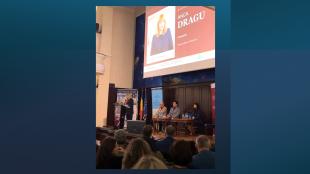
Bine ați venit pe pagină oficială a Băncii Naționale a Moldovei!



Bine ați venit pe pagină oficială a Băncii Naționale a Moldovei!
Cele mai populare rapoarte statistice:
Banca Naţională şi membrii organelor de conducere ale acesteia sunt independenţi în exercitarea atribuţiilor stabilite de lege şi nu pot solicita şi nici accepta instrucţiuni de la autorităţile publice sau de la orice altă autoritate.



Banca Naţională informează publicul despre evoluția inflației anuale, strategia de politică monetară,rezultatele analizei macroeconomice, evoluţiei pieţei financiare şi informaţia statistică, inclusiv privind masa monetară, acordarea creditelor, balanţa de plăţi şi situaţia pieţei valutare.
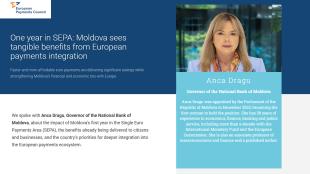


Pentru asigurarea şi menţinerea stabilităţii preţurilor pe termen mediu, Banca Naţională a Moldovei menţine inflaţia (măsurată prin indicele preţurilor de consum) la nivelul de 5.0 la sută anual cu o posibilă abatere de ± 1.5 puncte procentuale, fiind considerat nivelul optim pentru creşterea şi dezvoltarea economică a Republicii Moldova pe termen mediu.




Stabilitatea financiară se realizează prin consolidarea rezilienței sistemului financiar, limitarea efectului de contagiune și diminuarea acumulării de riscuri sistemice, contribuind, astfel, la sustenabilitatea sectorului financiar și creșterea economică.



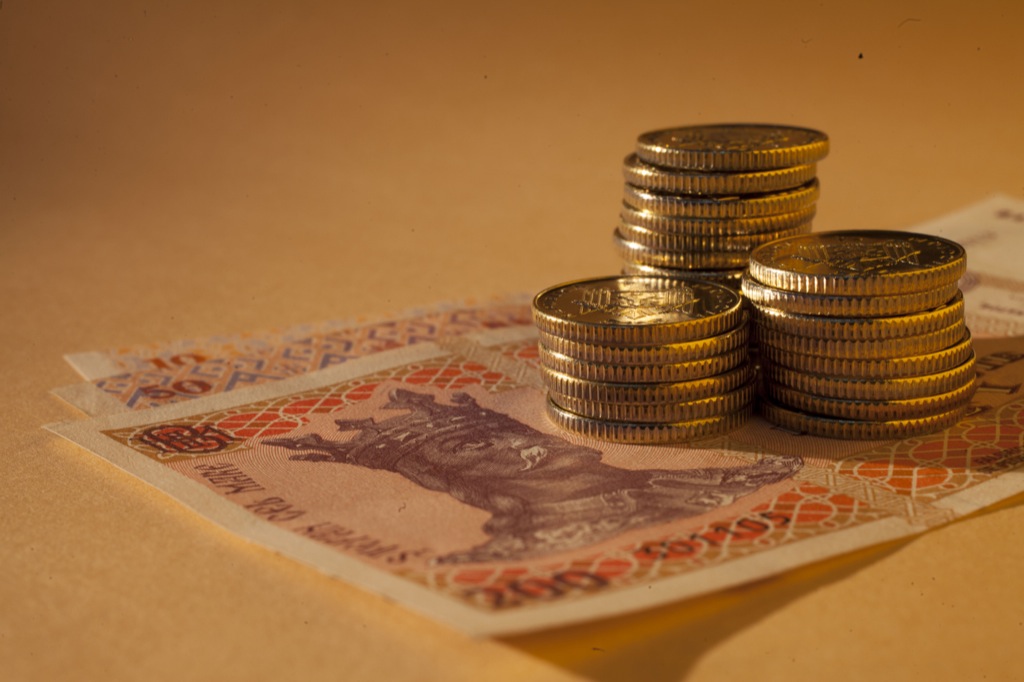
Banca Naţională a Moldovei, are dreptul exclusiv de a emite pe teritoriul Republicii Moldova bancnote şi monede metalice ca mijloc de plată. BNM pune în circulaţie bancnote şi monede metalice, prin intermediul sistemului bancar.




Banca Naţională este unica instituţie care efectuează licenţierea, supravegherea şi reglementarea activităţii instituţiilor financiare.


Banca Națională supraveghează sistemul de plăţi în Republica Moldova şi promovează funcţionarea stabilă şi eficientă a sistemului automatizat de plăţi interbancare.


Banca Naţională este o persoană juridică publică autonomă şi este responsabilă faţă de Parlament.

BNM publică statistici privind masa monetară, sectorul bancar, balanța de plăți, situația pieței valutare, etc. pentru a asigura transparența în procesul de elaborare și adoptare a deciziilor BNM, a asigura continuitatea în comunicare și predictibilitatea BNM pe piață, pentru sporirea credibilității BNM în calitate de bancă centrală dar și pe piața financiar-bancară din Republica Moldova.


The Executive Board of the National Bank of Moldova, at its meeting of March 15, 2022, adopted by unanimous vote the following decision:
1. To increase the base rate applied to major short-term monetary policy operations by 2.00 percentage points, from 10.50% to 12.50% annually.
2. To increase interest rates:
a) on overnight loans by 2.00 percentage points, from 12.50% to 14.50% annually;
b) on overnight deposits by 2.00 percentage points, from 8.50% to 10.50% annually.
3. To maintain the required reserves ratio from the financial means attracted in freely convertible currency at the current level of 30.0% of the calculation base.
The decision was based on the analysis and evaluation of the macroeconomic information available after the forecast round in January 2022, which, although generally confirmed some hypotheses and conclusions reflected in the Inflation Report No 1, 2022, also signalled the accentuated persistence of the risk of the forecast deviation in the context of external and internal factors.
Tense events in the region are worsening regional and global economic conditions, with severe repercussions on already high global inflation. In this context, there has been an excessive increase in quotations on international markets associated with energy, food, and metal resources by overlapping with disruptions in production and supply chains. International stock markets and financial markets are experiencing increased volatility. In addition, the humanitarian crisis caused by the wave of refugees from Ukraine is manifesting itself. At the same time, tensions in the region involve major uncertainties and risks, which could adjust inflation forecasts upwards. Against this background marked by inflationary pressures, both the central banks of the reserve currencies and those of Central and Eastern Europe signal or continue the process of tightening monetary policy.
Price shocks are inevitable for any economy, but more vulnerable are the countries dependent on quotations and developments on international markets in terms of import prices, of which the Republic of Moldova is a part.
Thus, the annual inflation rate in February 2022 evolved as expected, being 1.9 percentage points higher than in January 2022 and recording the anticipated level of 18.5%. However, at the level of the subcomponents of inflation, there are significant deviations between the actual and projected values, which, although adjusted for compensation purposes, signal major risks to the inflationary process for the following periods.
It should be noted that the medium-term evolutionary path of GDP is affected by the risks and uncertainties associated with the situation in the region, mainly determined by the duration, magnitude of the war, and possible escalations. In this sense, one can see the impact on increasing the consumption of the population due to refugees on the one hand and the contraction of remittances from both the CIS space, amid tensions in the region, and other states, in the context of increasing living costs internationally and limiting the savings capacity of our compatriots working abroad, thereby reducing sources of consumer finance on the other hand.
The lending activity continues to generate pressure on the inflationary process, registering high growth rates in February (+ 49.7%), although the annual growth rate of loans granted in national currency moderated slightly. At the same time, due to the restrictive decisions started in July 2021, the weighted average interest rates on new loans granted and new deposits attracted in the national currency continued the upward trend in February 2022. Thus, the weighted average rate on loans and deposits was 9.22% and 4.97% annually, respectively, increasing by 0.13 and 0.11 percentage points, respectively, compared to January this year.
We are currently witnessing an increase in the risks and uncertainties at global, regional, and national level generated by the conflict in the region, and the prospects for economic conditions in the context of these events are precarious. The implications of these events determine an unprecedented situation in the Republic of Moldova, the national economy being subject to structural changes.
In this context, the positive deviation for the first two months of the forecast for food and fuel prices, the escalation of the situation in the region which has led to a sharp acceleration in oil and natural gas prices, possible distortions in supply chains, and increased demand, outline the risk of a positive deviation for both the short-term (first quarter of 2022) and medium-term inflation forecast.
Thus, following the analysis and findings made during the meeting, and taking as a benchmark the assessment of the risk of deviation from the inflation forecast, the Executive Board of the NBM decided to increase the base rate and the rates related to standing facilities by 2.0 percentage points.
The decision was taken in the context of a radical change in the external and internal conditions and the need to maintain the gradual adjustment of monetary policy against the background of persistent inflationary pressures on the development of the consumer price index in the short and medium term.
The decision aims to alleviate inflationary pressures, anchor inflationary expectations, and protect the deposits and savings of the population.
At the same time, today's decision is aimed at tempering the effects associated with the crisis in the region from the perspective of reducing pressures on the depreciation of the national currency due to increasing current account and trade deficit and is directed to reducing capital outflow.
At the same time, the NBM reiterates that it will carefully monitor the development of inflation components and factors likely to affect its dynamics, as well as the risks and uncertainties associated with the short- and medium-term forecast. Also, the NBM mentions that, to achieve the fundamental objective of ensuring and maintaining price stability, as a monetary authority, it reserves the legal right to intervene in due course by adjusting monetary policy instruments.
It should be noted that the NBM carefully monitors the situation in the banking system of the Republic of Moldova, reiterating that it remains stable and viable, and the adequacy of foreign exchange reserves gives the NBM the area of reaction to ensure financial stability in the event of a crisis.
In the coming period, the NBM will carefully monitor the level of liquidity in the banking sector and, if necessary, will inject sufficient liquidity into the market.
The next meeting of the Executive Board of the NBM on the promotion of monetary policy will take place on May 6, 2022, according to the approved schedule.


