Bine ați venit pe pagină oficială a Băncii Naționale a Moldovei!



Bine ați venit pe pagină oficială a Băncii Naționale a Moldovei!
Cele mai populare rapoarte statistice:

Banca Naţională şi membrii organelor de conducere ale acesteia sunt independenţi în exercitarea atribuţiilor stabilite de lege şi nu pot solicita şi nici accepta instrucţiuni de la autorităţile publice sau de la orice altă autoritate.



Banca Naţională informează publicul despre evoluția inflației anuale, strategia de politică monetară,rezultatele analizei macroeconomice, evoluţiei pieţei financiare şi informaţia statistică, inclusiv privind masa monetară, acordarea creditelor, balanţa de plăţi şi situaţia pieţei valutare.
Pentru asigurarea şi menţinerea stabilităţii preţurilor pe termen mediu, Banca Naţională a Moldovei menţine inflaţia (măsurată prin indicele preţurilor de consum) la nivelul de 5.0 la sută anual cu o posibilă abatere de ± 1.5 puncte procentuale, fiind considerat nivelul optim pentru creşterea şi dezvoltarea economică a Republicii Moldova pe termen mediu.



Stabilitatea financiară se realizează prin consolidarea rezilienței sistemului financiar, limitarea efectului de contagiune și diminuarea acumulării de riscuri sistemice, contribuind, astfel, la sustenabilitatea sectorului financiar și creșterea economică.



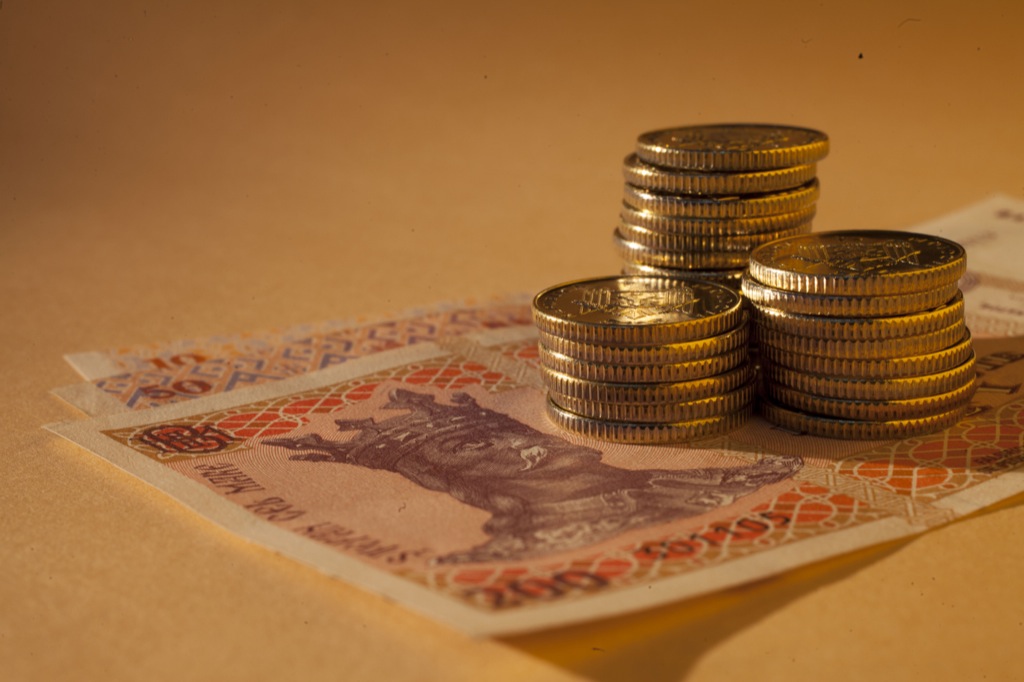
Banca Naţională a Moldovei, are dreptul exclusiv de a emite pe teritoriul Republicii Moldova bancnote şi monede metalice ca mijloc de plată. BNM pune în circulaţie bancnote şi monede metalice, prin intermediul sistemului bancar.




Banca Naţională este unica instituţie care efectuează licenţierea, supravegherea şi reglementarea activităţii instituţiilor financiare.

Banca Națională supraveghează sistemul de plăţi în Republica Moldova şi promovează funcţionarea stabilă şi eficientă a sistemului automatizat de plăţi interbancare.

Banca Naţională este o persoană juridică publică autonomă şi este responsabilă faţă de Parlament.

BNM publică statistici privind masa monetară, sectorul bancar, balanța de plăți, situația pieței valutare, etc. pentru a asigura transparența în procesul de elaborare și adoptare a deciziilor BNM, a asigura continuitatea în comunicare și predictibilitatea BNM pe piață, pentru sporirea credibilității BNM în calitate de bancă centrală dar și pe piața financiar-bancară din Republica Moldova.


NBM Governor Octavian Armașu presents the Monetary Policy Decision
The Executive Board of the National Bank of Moldova, at its ordinary meeting of May 05, 2022, adopted by unanimous vote the following decision:
The Executive Board of the NBM approved the Inflation Report, May 2022, for publication.
At the meeting, the Executive Board of the NBM reviewed the new medium-term forecast round, which reflects the risks and uncertainties identified at the time of the Inflation Report, May 2022. At the same time, the detailed analysis of domestic and external macroeconomic developments was assessed, mainly, the inflationary process, economic activity, and the stance of monetary policy. The Inflation Report is to be published on May 13, 2022, according to the adopted timetable.
Russia's military aggression against Ukraine has increased the uncertainty about subsequent global macroeconomic developments and significantly marred the economic sentiment. In many economies, inflation has continued to rise, reaching the highest levels in decades. High commodity prices, lengthy disruptions in global and regional supply chains and international transport remain the main factors contributing to rising prices. Due to the economic effects of the Russian aggression, external inflation forecasts have been significantly revised upwards. Against the backdrop of such inflation, many central banks in advanced economies, as well as those in Central and Eastern Europe, are tightening monetary policy, especially by raising interest rates, despite the risk of stagflation (coexistence of high inflation and economic stagnation) taking shape, and the rhetoric of transient inflationary pressures has been abandoned.
The impact on prices is unavoidable for every economy, but more affected are the countries heavily dependent on international markets through import prices, as is the Republic of Moldova.
The average annual inflation rate in the first quarter of 2022 continued to grow, but at a faster pace than expected, being 7.4 percentage points higher than in the fourth quarter of 2021 and reaching the level of 19.1%. The acceleration of prices was due to the increase in international and regional quotations for food and energy resources, which led to an increase in their prices on the internal market and the adjustment of tariffs for network gas and heating. Significant deviations between actual and projected values in the subcomponents of inflation, although partially offset, outline prominent risks for the continuation of the positive dynamics of inflation in the next period. In addition, the war in the region will affect foreign trade, and CIS products will be replaced by more expensive ones on the domestic market.
As of April 1, 2022, the new electricity tariffs have entered into force, which will have a significant direct impact and will generate side effects on all goods and services. Moreover, there are prerequisites for a more pronounced increase in electricity prices in the context of the war in the region and the increase in international prices for natural gas, which will also lead to a significant adjustment of the tariff for network gas. The tariffs for public transport services in Chisinau are likely to be adjusted as well. At the same time, inflation will be determined by multiple unadjusted tariffs, which have been directly or indirectly subsidized.
In the fourth quarter of 2021, the GDP was 18.9% higher than in the same period of 2020. This development was mainly supported by domestic demand from the population in the context of increasing disposable income, a favorable environment with still relatively low interest rates, a rich harvest in 2021, but also a positive economic activity in the region.
Statistical data for the first quarter of 2022 show an increase in economic activity similar to that of the fourth quarter of 2021. Thus, in January-February 2022, in annual terms, industrial production increased by 4.5%, imports - by 40.1%, and exports - by 56.8%. Wholesale trade1 increased by 41.0% and retail trade2 - by 5.9%.
In the fourth quarter of 2021, the annual growth rate of the national wage fund was 12.0% in nominal terms, and that of the average number of employees - 1.6%, the economically active population decreased by 0.8%, and the unemployment rate was 2.6%.
Monetary conditions, although insufficient, are becoming slightly restrictive in both rates and liquidity as a result of the series of anti-inflationary measures started in July 2021, the application of which remains appropriate in the near future as well. In the first quarter of 2022, the weighted average rate on loans was 9.34%, and that on deposits - 5.05%, up 0.9 and 1.21 percentage points, respectively, compared to the fourth quarter of 2021. On the other hand, lending still generates considerable inflationary pressures against a backflow of bank deposits. In the first quarter of 2022, in annual terms, new loans in national currency increased by 37.1%, while new deposits attracted decreased by 8.6%.
The GDP developments in the medium term will be affected by the persistence of risks and uncertainties related to the situation in the region, determined by the duration and extent of the war, its implications being imminent for the Republic of Moldova. It is complicated to estimate and accurately analyze the multiple factors in the context of their increased volatility.
The current inflation forecast has been revised upwards over the entire comparable period (second quarter 2022 - fourth quarter 2023) compared to the previous forecast round. The annual inflation rate will increase until the third quarter of this year, when it will reach its maximum level, after which it will follow a downward trend towards the end of the forecast horizon.
The high growth rates of inflation in the Republic of Moldova are influenced by the lack of own energy resources, as well as by the higher share of food and energy resources in the CPI than in many other countries. High and persistent inflation adversely affects the outlook for economic development and growth.
Risks to inflation developments continue to be pro-inflationary, driven in particular by the sharp rise in food and other commodity prices, the war in the region which has led to a sharp acceleration in oil and natural gas prices, along with actual and possible disruptions of supply chains. Likewise, the side effects of rising tariffs will generate additional inflationary pressures on all components of inflation. On the demand side, there is an increase in wages, pensions, new loans, and a deepening of the persistent fiscal deficit, which allow high consumption to be maintained.
Today's decision to raise the base rate in combination with the increase in the required reserves ratio was taken to alleviate persistent inflationary pressures, anchor inflationary expectations, stimulate savings over consumption, and reduce the pressure on the depreciation of the national currency due to the widening current account deficit and capital backflow.
At the same time, the increase of the reserve requirements in Moldovan lei and in freely convertible currency will contribute to the increase of interest rates on deposits and to the decrease of new loans granted, thus reducing the pressures from aggregate demand. In addition, the decision seeks to encourage intermediation in national currency and to maintain official reserve assets at an appropriate level.
We reiterate that the NBM is carefully monitoring the inflationary process, including the associated factors, risks, and uncertainties, and will adjust its monetary policy instruments in a timely manner to achieve the fundamental objective of ensuring and maintaining price stability. In the period ahead, the NBM will closely monitor the level of liquidity in the banking sector and, if necessary, will definitively sterilize excessive liquidity.
The next meeting of the Executive Board of the NBM on the promotion of monetary policy will take place on June 14, 2022, according to the approved schedule.
1. Turnover of enterprises with wholesale trade as main activity.
2. Turnover of enterprises with retail trade as main activity.


