
Bine ați venit pe pagină oficială a Băncii Naționale a Moldovei!



Bine ați venit pe pagină oficială a Băncii Naționale a Moldovei!
Cele mai populare rapoarte statistice:

Banca Naţională şi membrii organelor de conducere ale acesteia sunt independenţi în exercitarea atribuţiilor stabilite de lege şi nu pot solicita şi nici accepta instrucţiuni de la autorităţile publice sau de la orice altă autoritate.



Banca Naţională informează publicul despre evoluția inflației anuale, strategia de politică monetară,rezultatele analizei macroeconomice, evoluţiei pieţei financiare şi informaţia statistică, inclusiv privind masa monetară, acordarea creditelor, balanţa de plăţi şi situaţia pieţei valutare.


Pentru asigurarea şi menţinerea stabilităţii preţurilor pe termen mediu, Banca Naţională a Moldovei menţine inflaţia (măsurată prin indicele preţurilor de consum) la nivelul de 5.0 la sută anual cu o posibilă abatere de ± 1.5 puncte procentuale, fiind considerat nivelul optim pentru creşterea şi dezvoltarea economică a Republicii Moldova pe termen mediu.




Stabilitatea financiară se realizează prin consolidarea rezilienței sistemului financiar, limitarea efectului de contagiune și diminuarea acumulării de riscuri sistemice, contribuind, astfel, la sustenabilitatea sectorului financiar și creșterea economică.




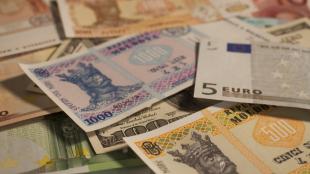
Banca Naţională a Moldovei, are dreptul exclusiv de a emite pe teritoriul Republicii Moldova bancnote şi monede metalice ca mijloc de plată. BNM pune în circulaţie bancnote şi monede metalice, prin intermediul sistemului bancar.




Banca Naţională este unica instituţie care efectuează licenţierea, supravegherea şi reglementarea activităţii instituţiilor financiare.



Banca Națională supraveghează sistemul de plăţi în Republica Moldova şi promovează funcţionarea stabilă şi eficientă a sistemului automatizat de plăţi interbancare.


Banca Naţională este o persoană juridică publică autonomă şi este responsabilă faţă de Parlament.

BNM publică statistici privind masa monetară, sectorul bancar, balanța de plăți, situația pieței valutare, etc. pentru a asigura transparența în procesul de elaborare și adoptare a deciziilor BNM, a asigura continuitatea în comunicare și predictibilitatea BNM pe piață, pentru sporirea credibilității BNM în calitate de bancă centrală dar și pe piața financiar-bancară din Republica Moldova.


1. to decrease the base rate applied on main short-term monetary policy operations by 2.0 percentage points from 15.0 to 13.0 percent annually;
2. to decrease the interest rates:
- on overnight loans by 2.0 percentage points from 18.0 to 16.0 percent annually;
- on overnight deposits by 2.0 percentage points from 12.0 to 10.0 percent annually;
3. to maintain the required reserves ratio from financial means attracted in freely convertible currency at the level of 14.0 percent of the base.
4. to maintain the required reserves ratio from financial means attracted in MDL and non-convertible currency at the current level 35.0 percent of the base;
The analysis of the recent statistic data shows the downward trend of the annual inflation rate for the fourth consecutive month, although it is still above the upper limit of the range of ± 1.5 percentage points from the 5.0 percent target.
The annual inflation rate was 8.3 percent in April 2016 or by 1.1 percentage points less compared to the previous month. This slowdown was mainly due to the decrease of the contributions from food prices and core inflation.
The deceleration of the annual inflation rate in April is in line with the latest forecast of the NBM (published in May 2016) and validates the correctness of monetary policy decisions taken in 2015.
The annual rate of core inflationСore inflation is calculated by the NBS, excluding prices that are outside the influence of monetary policy promoted by the NBM, such as food and beverages, fuel, products and services with regulated prices. Data prepared and published from January 2012 are calculated by the NBS according to the modification of Annex no.2 of “Methodology for the calculation of core inflation index”, approved by joint order of the National Bank of Moldova and National Bureau of Statistics N8-07-01203/6 of 19 January 2012 (the modification refers to the inclusion of prices for remote communication services and medicines in regulated prices).[1] was 9.7 percent in April 2016, decreasing by 0.5 percentage points compared to the previous month.
The unfavourable dynamic of macroeconomic indicators in the first quarter of 2016 shows the further contraction of economic activity in the reporting period and reveals the persistence of disinflationary pressures from the aggregate demand. In the first quarter of 2016, exports decreased by 18.5 percent compared to the same period of 2015 and imports by 8.9 percent. At the same time, the agriculture and industry recorded slight positive evolutions. Thus, the agricultural production recorded an increase of 4.0 percent and indutrial production increased in real terms by 1.1 percent.
In terms of consumer demand, the annual average real wage growth in the economy in January-March 2016 was minus 1.8 percent, by 4.4 percentage points higher than in the fourth quarter of 2015. Money transfers to individuals through the banks of the Republic of Moldova fell by 6.5 percent in January-April 2016 and in April 2015 by 3.2 percent, in nominal terms, compared with the same periods of 2015.
In April 2016, lending and saving processes recorded similar developments. The volume of new loans granted during the reporting period decreased by 22.5 percent, while new attracted deposits increased by 18.1 percent compared to the same period of last year. The total balances of loans and deposits decreased at the end of April 2016 by 10.1 percent and 2.3 percent, respectively, compared to the same period of last year.
The average rate of new loans granted in national currency increased by 0.15 percentage compared to March 2016, accounting for 15.67 percent. The rate of new deposits attracted in MDL decreased in April 2016 by 0.84 percentage points, reaching the level of 13.86 percent.
The monetary policy continues to be affected by the complexity of risks and uncertainties associated with the development of internal and external environment. The external risks associated with disinflationary pressures are marked by the weak economic activity of the euro area countries and the recession faced by the Russian Federation - the main external trade partners of the Republic of Moldova. The external risks are propagated through the channel of remittances in favour of population and external trade, leading to lower foreign currency income of population and domestic exporters in the short-term, which reflects the further inflation development. Potential risks to inflation arise from the increased volatility of international prices for raw materials and the uncertainties regarding the oil prices. At the same time, main internal risks are associated with the postponement of the state budget and fiscal policy approval for 2016. Thus, analysing the balance of risks, the annual rate of price growth is projected to gradually reduce, also due to the high base of comparison in 2015.
In assessing the inflation outlook in the short and medium term, within the meeting held on 26 May 2016, the members of the Executive Board of the NBM decided by unanimous vote to decrease the policy rate by 2.0 percentage points from 15.0 to 13.0 percent annually.
The decision is aimed at anchoring inflation expectations in the context of restoring and maintaining the inflation rate close to the target of 5.0 percent over the medium-term, with a possible deviation of ± 1.5 percentage points. The gradual calibration of monetary policy conduct, supported by the expectations on inflation rate decrease, aims to ensure adequate real monetary conditions for the stimulation of lending and savings and for boosting the domestic demand, along with further adaptation of domestic economic environment to the volatility and uncertainty related to external environment.
In order to support the proper functioning of the interbank money market, the NBM will continue to manage firmly the liquidity excess through sterilization operations, according to the announced schedule.
At the same time, National Bank will continue to offer banks liquidity, according to the schedule announced for 2016, through REPO operations with the term of 14 days, at a fixed rate equal to the base rate of the National Bank plus a margin of 0.25 points percentage.
NBM will further monitor and anticipate the domestic and international economic environment developments, so that by the flexibility of operational framework specific for the inflation targeting strategy to ensure price stability in the medium term.
The next meeting of the Executive Board of the NBM on monetary policy will take place on 30 June 2016, according to the announced schedule.
[1]Core inflation is calculated by the NBS, excluding prices that are outside the influence of monetary policy promoted by the NBM, such as food and beverages, fuel, products and services with regulated prices. Data prepared and published from January 2012 are calculated by the NBS according to the modification of Annex no.2 of “Methodology for the calculation of core inflation index”, approved by joint order of the National Bank of Moldova and National Bureau of Statistics N8-07-01203/6 of 19 January 2012 (the modification refers to the inclusion of prices for remote communication services and medicines in regulated prices).


