
Bine ați venit pe pagină oficială a Băncii Naționale a Moldovei!



Bine ați venit pe pagină oficială a Băncii Naționale a Moldovei!
Cele mai populare rapoarte statistice:

Banca Naţională şi membrii organelor de conducere ale acesteia sunt independenţi în exercitarea atribuţiilor stabilite de lege şi nu pot solicita şi nici accepta instrucţiuni de la autorităţile publice sau de la orice altă autoritate.



Banca Naţională informează publicul despre evoluția inflației anuale, strategia de politică monetară,rezultatele analizei macroeconomice, evoluţiei pieţei financiare şi informaţia statistică, inclusiv privind masa monetară, acordarea creditelor, balanţa de plăţi şi situaţia pieţei valutare.

Pentru asigurarea şi menţinerea stabilităţii preţurilor pe termen mediu, Banca Naţională a Moldovei menţine inflaţia (măsurată prin indicele preţurilor de consum) la nivelul de 5.0 la sută anual cu o posibilă abatere de ± 1.5 puncte procentuale, fiind considerat nivelul optim pentru creşterea şi dezvoltarea economică a Republicii Moldova pe termen mediu.




Stabilitatea financiară se realizează prin consolidarea rezilienței sistemului financiar, limitarea efectului de contagiune și diminuarea acumulării de riscuri sistemice, contribuind, astfel, la sustenabilitatea sectorului financiar și creșterea economică.



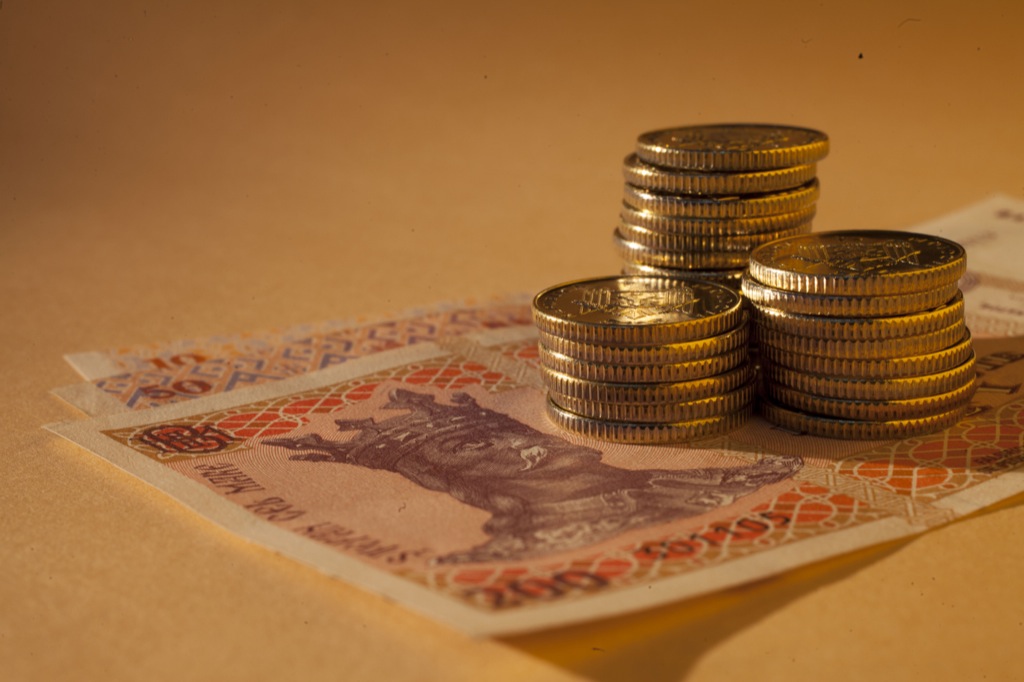
Banca Naţională a Moldovei, are dreptul exclusiv de a emite pe teritoriul Republicii Moldova bancnote şi monede metalice ca mijloc de plată. BNM pune în circulaţie bancnote şi monede metalice, prin intermediul sistemului bancar.




Banca Naţională este unica instituţie care efectuează licenţierea, supravegherea şi reglementarea activităţii instituţiilor financiare.
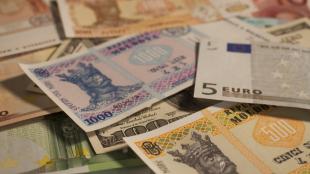


Banca Națională supraveghează sistemul de plăţi în Republica Moldova şi promovează funcţionarea stabilă şi eficientă a sistemului automatizat de plăţi interbancare.


Banca Naţională este o persoană juridică publică autonomă şi este responsabilă faţă de Parlament.

BNM publică statistici privind masa monetară, sectorul bancar, balanța de plăți, situația pieței valutare, etc. pentru a asigura transparența în procesul de elaborare și adoptare a deciziilor BNM, a asigura continuitatea în comunicare și predictibilitatea BNM pe piață, pentru sporirea credibilității BNM în calitate de bancă centrală dar și pe piața financiar-bancară din Republica Moldova.


The Executive Board of the National Bank of Moldova, at its meeting on 6 November 2025, adopted by unanimous vote the following decision:
The decision is adopted with the aim of continuing the recent monetary policy easing measures. Thus, the prudent adjustment of monetary policy seeks to bring inflation back and keep it within the medium term within the range of ±1.5 percentage points from the target of 5.0 percent considered the optimal level for economic growth and development in the Republic of Moldova.
By deciding to reduce the required reserve ratios in MDL and freely convertible foreign currency simultaneously, the NBM intends to cover the banking system's liquidity needs and lower credit costs, thereby encouraging consumption and investment. At the same time, this measure will have a gradual impact, contributing to lower interest rates on the money, deposit, and credit markets.
The current round of medium-term inflation forecasts largely confirms the assumptions and conclusions described in previous forecast rounds. Therefore, annual inflation will show a downward trend until the middle of next year, after which it will evolve relatively steadily, remaining close to the inflation target until the end of the forecast period, predominantly in the lower part of the target range.
Annual inflation continued its downward trend from previous periods, falling from 8.2 percent in June 2025 to 6.9 percent in September 2025 and remaining above the upper limit of the ±1.5 percentage point range from the 5.0 percent inflation target. At the same time, the average annual inflation rate in the third quarter of 2025 was 7.4 percent, 0.5 percentage points lower than in the previous quarter. The annual inflation rate was similar to the value anticipated in the August 2025 Inflation Report, and confirmed the main assumptions underlying its forecast.
External environment. Despite considerable shocks and economic and geopolitical tensions, the global economy proved resilient in the third quarter of 2025. At the same time, persistent uncertainties, trade fragmentation, and the reshaping of global supply chains are expected to have a negative impact on global economic growth. Low consumer and business confidence and intensifying concerns about the sustainability of public finances, are also evident. Under these circumstances, the trend of monetary policy easing by major central banks continues. Negotiations to end the war in Ukraine have made no progress. The ceasefire agreement in the Gaza Strip is a prerequisite for a peace agreement in the region. In this context, in the third quarter of 2025, Brent oil prices fluctuated around 69 USD/barrel. The decline in oil prices is driven by global oversupply generated by increased exports from Venezuela, increased production in the Middle East, and uncertainties surrounding trade negotiations between the US and China. Natural gas prices in Europe will tend to decline moderately in the medium-term due to robust global supply. Average international food prices are also showing signs of stabilization.
Economic activity. In the second quarter of 2025, annual GDP dynamics returned to positive territory after negative values in the second half of the previous year and the beginning of the current year. Thus, in April-June 2025, GDP increased by 1.1 percent compared to the same period in 2024, mainly due to the positive impact of domestic demand from both the population, in the context of real income growth, and economic agents. Net external demand partially mitigated this effect. It is also worth mentioning the positive impact on GDP dynamics generated by the industry and construction sectors, which was partially offset by negative developments in the real estate sector.
According to operational data published by the NBS, economic activity in the first half of 2025 was at the same level as in the same period of 2024.
The operational data published by the NBS for the first two months of the third quarter of 2025 outline some premises for the continuation of the positive evolution of economic activity. Industrial production remained positive, recording a 4.9 percent increase, while domestic retail and wholesale trade increased by an average of 10.6 percent and 11.4 percent, respectively. In July-August 2025, exports increased by 21.9 percent and imports by 17.7 percent in comparison with the same period of the previous year.
Global agricultural production in the third quarter of 2025 increased by 14.7 percent compared to the same quarter of the previous year.
From the perspective of consumer financing sources, transfers of funds to individuals increased by 15.5 percent annually in September 2025, and the wage fund in the second quarter of 2025 recorded a 10.8 percent increase in nominal terms.
Monetary conditions. In the third quarter of 2025, the weighted average interest rates on new loans and deposits in MDL continued their upward trend. Thus, the weighted average interest rate on new loans was 9.36 percent annually, and that on deposits was 4.96 percent annually, up by 0.37 and 0.05 percentage points, respectively, compared to the second quarter of 2025. During the third quarter of 2025, the positive annual growth in the volume of loans and deposits in MDL moderated.
It should be noted that in the third quarter of 2025, excess liquidity amounted to 4.8 billion MDL, decreasing by 2,355.2 million MDL compared to the second quarter of 2025.
Forecast. The annual inflation rate will follow a downward trend until the first half of 2026, then rise slightly toward the end of the forecast period, except for the last quarter. In the fourth quarter of 2025, the annual inflation rate will exceed the upper limit of the variation range, and starting with the first quarter of 2026, it will return to the range where it will remain until the end of the forecast period.
The average annual inflation for 2025 and 2026 will be 7.7 percent and 4.3 percent, respectively, remaining unchanged for 2025 and increasing by 0.4 percentage points for 2026. The current inflation forecast, compared to that in the August 2025 Inflation Report, has been revised upwards for the entire comparable period, except for the fourth quarter of 2025 and the first quarter of 2026, where it is slightly lower. The downward revision of the current forecast, compared to the previous one, during the first two consecutive quarters of the comparable period is determined by a downward estimate of short-term inflation for the fourth quarter of 2025, lower aggregate demand in the fourth quarter of 2025, and slightly lower imported inflation. As for the upward revision, it is driven by less negative aggregate demand starting in the first quarter of 2026 and higher food prices on the international market in the first and second quarters of 2027.
Risks and uncertainties. The current forecast is affected by a number of risks and uncertainties, including those related to the timing and magnitude of tariff adjustments for regulated services, uncertainties regarding the volume and method of providing compensation to households for energy resources during the cold season, and how these compensations are reflected by the NBS, the vulnerability of domestic fruit and vegetable prices to weather conditions, uncertainties regarding agricultural production in the coming years, negative demographic trends, and labor shortages in the national economy.
Meanwhile, ongoing geopolitical tensions at the regional and global levels are impacting the international economic environment: energy and raw material prices, supply chains, and external demand. Furthermore, protectionism and economic sanctions affecting international trade and the monetary policies implemented by the world's major economies will influence the evolution of the national economy and inflation.
The November 2025 Inflation Report, which contains an analysis of the domestic and external economic situation, as well as a medium-term inflation forecast, will be presented by the NBM Governor and published on 13 November 2025.
The next meeting of the NBM Executive Board on monetary policy will be held on 12 December 2025, according to the approved schedule.


